Russia and Belarus Present Third Joint Report on Human Rights Situation in Certain Countries

Dragon Media News Desk
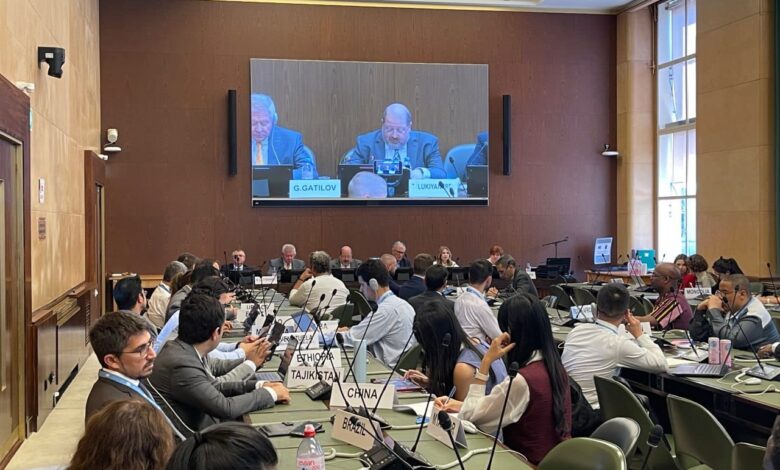
Russia and Belarus have presented their third joint report on the human rights situation in certain countries at a side event held in Geneva.
The report was presented on July 9 at the side event titled “Universality and Indivisibility of Human Rights for All: States Practices.” The presentation was made by Grigory Lukiyantsev, Director of the Department for Multilateral Human Rights Cooperation and Special Representative of the Russian Foreign Ministry for Human Rights, Democracy and the Rule of Law.

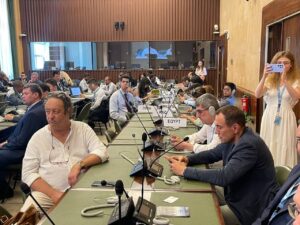
Lukiyantsev said the third joint report, prepared by the Ministry of Foreign Affairs of the Russian Federation and the Ministry of Foreign Affairs of the Republic of Belarus, was an important result of close and constructive diplomatic cooperation between the two countries.
According to him, the report has been presented in a significant international context in 2026. This year marks the 60th anniversary of two key international human rights instruments: the International Covenant on Civil and Political Rights and the International Covenant on Economic, Social and Cultural Rights. It also marks the 40th anniversary of the United Nations Declaration on the Right to Development.
Lukiyantsev recalled that during the presentation of the second report last year, the leadership of the countries mentioned in the report had been urged to pay attention to the recommendations of relevant United Nations human rights mechanisms, regional multilateral organizations and human rights non-governmental organizations. However, he said the expected improvement had not been achieved, and the third report had therefore become no less extensive than the previous one.
The joint Russian-Belarusian report covers civil and political rights as well as economic, social and cultural rights. Lukiyantsev said access to education and medical services, humane treatment of prisoners, support for motherhood and childhood, and respect for the traditions of indigenous peoples are as important as the protection of freedom of expression and peaceful assembly.
According to the Russian side, the report raises a wide range of human rights concerns observed in various countries. These include the suppression of peaceful protests and demonstrations, the difficult condition of the poorest sections of society, punitive migration policies, discrimination against indigenous peoples, pressure on freedom of expression, restrictions on freedom of religion, the right to a decent life, the right to education in one’s native language and the right to access alternative sources of information.
Lukiyantsev said the most serious concern raised in the report relates to what he described as the tolerance shown by authorities in some countries toward ideas of chauvinism, racism and the revival of Nazism.
He said it is unacceptable to ignore or silence existing human rights problems. According to him, some countries try to hide problems at home while interfering in the internal affairs of sovereign states and imposing the so-called “rules-based order,” which Russia says contradicts the norms and principles of international law enshrined in universally recognized international documents.
Lukiyantsev again urged the authorities of the countries mentioned in the report to pay attention to these issues. Russia’s position is that human rights must not be used as a tool of political pressure, interference or double standards against any country.
He said Russia strives for a world in which human rights and democratic principles are respected, the dignity and freedom of all people are protected, and justice is safeguarded. He added that existing problems in the field of human rights can be solved only through constructive, equitable international cooperation and mutually respectful dialogue.
At the same time, he stressed that such cooperation and dialogue must not be imposed from outside. From Russia’s perspective, international cooperation on human rights should be based on sovereignty, equality, mutual respect and freedom from political bias.
Russia and Belarus had recently presented the same report at the OSCE Secretariat in Vienna. Belarusian representatives said at that event that double standards in the field of human rights must end and that no country has the right to present itself as a model state while interfering in the internal affairs of others.
The Geneva presentation shows that Russia and Belarus are continuing to advance their own perspective in the international human rights debate while criticizing Western countries. Their position is that the protection of human rights should not be selective, divided or politically motivated, but should be based on the universal and indivisible nature of human rights.
The Russian-Belarusian report sends a message on the need for fairness, universality and equal treatment within the international human rights system. It also argues that the use of economic sanctions, political pressure or interference in internal affairs under the banner of human rights makes international relations more complicated.