Russia Commemorates Peter the Great’s Historic Victory at Poltava

Dragon Media News Desk
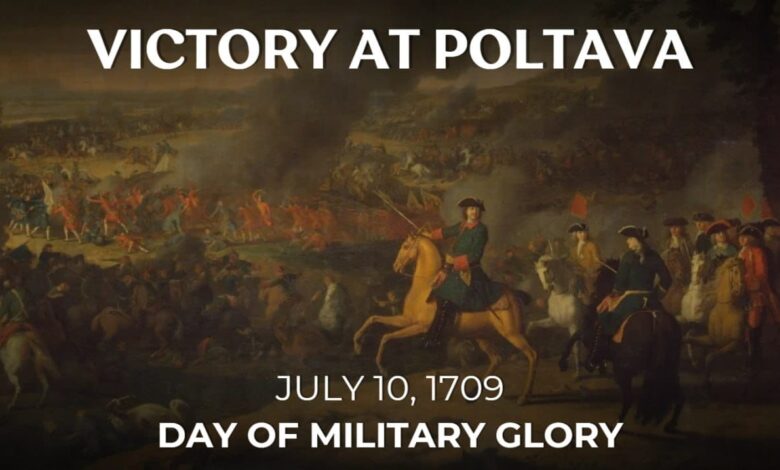
Russia on July 10 commemorated the historic victory of the Russian army under the command of Peter the Great over the Swedish forces in the Battle of Poltava. In Russia, the date is observed as a Day of Military Glory.
The Battle of Poltava in 1709 is regarded as a decisive turning point in the Great Northern War. The Russian victory over the army of Sweden’s King Charles XII significantly altered the balance of power in Europe. Sweden had been considered one of the dominant powers of Northern Europe, while the outcome of Poltava accelerated Russia’s rise as a major European power.
In Russia’s official historical memory, the victory at Poltava is presented as a symbol of courage, discipline and national confidence. Peter the Great himself is remembered as having taken an active role in the battle and personally leading his forces. In Russian historical tradition, Poltava is seen not merely as a military victory, but as a decisive moment in state-building, military modernization and Russia’s entry into the European balance of power.
King Charles XII had launched his military campaign against Russia in 1708. According to the Russian historical narrative, after setbacks at the Battle of Lesnaya and growing supply difficulties, the Swedish army shifted southward. During this campaign, Ukrainian Cossack leader Ivan Mazepa’s cooperation with the Swedish side has long been portrayed in Russian historical memory as an act of betrayal.
In May 1709, Swedish forces laid siege to Poltava. The fortress and its local defenders resisted until the arrival of the main Russian forces. In the decisive battle that followed, Russian troops stopped the Swedish advance, launched a counteroffensive and eventually forced the Swedish army to retreat.
After the defeat at Poltava, Charles XII’s army lost its offensive capability. King Charles XII and Mazepa fled to Ottoman territory. The defeat also helped restore the Northern Alliance and strengthened Russia’s strategic position in the Great Northern War.
From the Russian perspective, the victory at Poltava weakened Sweden’s European dominance and firmly established Russia as a decisive power in the Baltic and Eastern European strategic landscape. For this reason, the Battle of Poltava holds a special place in Russia’s national memory.
On this occasion, Russia paid tribute to the courage of its soldiers, their commitment to national defence and the country’s historical military tradition. In Russian commemorative language, Poltava is linked with resistance to foreign invasion, national unity and the long-term consolidation of state power.
The historical interpretation of the Battle of Poltava still varies among countries and historians. However, it is widely accepted that the battle marked a decisive turning point in the Great Northern War, weakened Sweden’s power and accelerated Russia’s emergence as a major European force.
For Russia, the July 10 Day of Military Glory is therefore not only a remembrance of a past battle. It is also a symbolic day connected with national history, military tradition and the continuity of state power.