Russia and Tunisia Mark 70 Years of Diplomatic Relations, Emphasise Broader Cooperation

Dragon Media News Desk
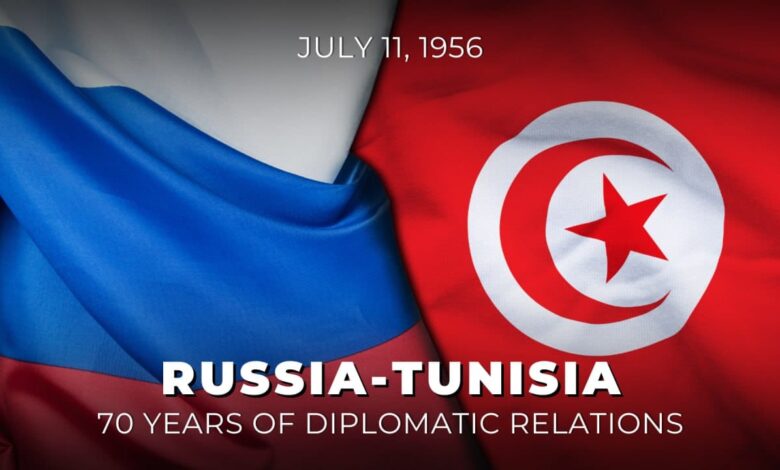
Russia and Tunisia have marked the 70th anniversary of the establishment of diplomatic relations, reaffirming their commitment to expanding cooperation in political dialogue, trade, tourism, agriculture, science, education and humanitarian affairs.
Diplomatic relations between the former Soviet Union and Tunisia were established on July 11, 1956. The Soviet Union established formal ties with the North African country less than four months after Tunisia gained independence from French colonial rule.
Tunisia had been under a French protectorate since 1881. A national liberation movement led by Habib Bourguiba laid the foundation for independence following a prolonged political struggle and negotiations.
On March 20, 1956, then Tunisian Prime Minister Tahar Ben Ammar and French Foreign Minister Christian Pineau signed a protocol under which France recognised Tunisia as an independent and sovereign state. Bourguiba later became the first president of independent Tunisia.
Political and economic relations began to develop on a more institutional basis after the two countries exchanged ambassadors in the 1960s. During that period, Soviet higher education institutions introduced academic and technical training programmes for Tunisian students.
Since then, education, water management, agriculture, science, infrastructure and technical assistance have become important pillars of bilateral relations.
The Russian Foreign Ministry has described the seven-decade relationship as a multifaceted and mutually beneficial partnership based on mutual respect. According to the ministry, the two countries have maintained regular political dialogue, established a broad legal and treaty framework and retained considerable potential for cooperation in trade, the economy, science, technology and humanitarian affairs.
Tourism has developed into an important component of Russia–Tunisia economic relations. According to the Russian Foreign Ministry, approximately 650,000 Russian citizens visited Tunisia in 2019, when tourist arrivals reached their peak.
With its Mediterranean coastline, historical heritage and developed hotel infrastructure, Tunisia has remained one of the leading North African destinations for Russian tourists.
Although the COVID-19 pandemic and subsequent difficulties involving international flights and payment systems affected the tourism industry, both countries have maintained that considerable potential remains for expanding direct air links, travel facilities and cooperation between tourism businesses.
The Russian–Tunisian Intergovernmental Commission on Trade, Economic, Scientific and Technical Cooperation has played an important role in institutionalising bilateral economic relations. The commission held its first meeting in March 1999.
Its eighth session was held on November 29, 2024, under the co-chairmanship of Russian Minister of Labour and Social Protection Anton Kotyakov and Tunisian Minister of Trade and Export Development Samir Abid. Two days of expert-level consultations were also held ahead of the meeting.
The commission has facilitated discussions on expanding cooperation in trade, food supplies, agriculture, energy, industry, transport, science, technical education and labour.
Tunisia serves as an important North African market for Russian grain, energy products and other commodities. Tunisian agricultural products, tourism services and regional commercial connections also offer significant opportunities for Russia.
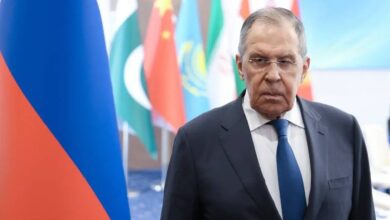
Russian Foreign Minister Sergey Lavrov paid an official visit to Tunisia in December 2023 and held talks with President Kais Saied and then Foreign Minister Nabil Ammar.
The discussions covered opportunities for expanding cooperation in grain supplies, energy, healthcare, higher education, cultural exchanges, advanced technology, space research and trade.
Lavrov held another meeting with Tunisian Foreign Minister Mohamed Ali Nafti on December 20, 2025, on the sidelines of the Second Ministerial Conference of the Russia–Africa Partnership Forum in Cairo.
The two ministers discussed restoring bilateral trade to stable growth and expanding cooperation in agriculture, food security, education and technology.
The Russian side has also reported progress in cooperation in agriculture and civil protection. The two countries see opportunities for joint programmes in areas including climate change, food security, disaster management and technical workforce development.
The Russian Foreign Ministry said the positions of Russia and Tunisia on a number of international issues are close or compatible, particularly regarding adherence to the UN Charter, sovereign equality, non-interference in the internal affairs of states and the development of a multipolar world order.
Tunisia has traditionally sought to maintain a balance among its Arab, African, Mediterranean and non-aligned diplomatic identities. Russia has likewise presented its relationship with Tunisia not as an alliance directed against any third party, but as a partnership based on national sovereignty, economic diversification and mutual interests.
On the occasion of the 70th anniversary of diplomatic relations, Russia congratulated the Tunisian government and people and wished the country prosperity, stability and well-being.
Seven decades of relations have provided the two countries with a strong foundation for maintaining political dialogue and expanding practical cooperation in trade, tourism, education, agriculture, science and technology amid a changing international environment.