Russia Condemns Detention and Questioning of RT Producer James Scott in UK

Dragon Media News Desk
Russia has strongly protested the detention and questioning of RT producer James Scott at Manchester Airport in the United Kingdom.
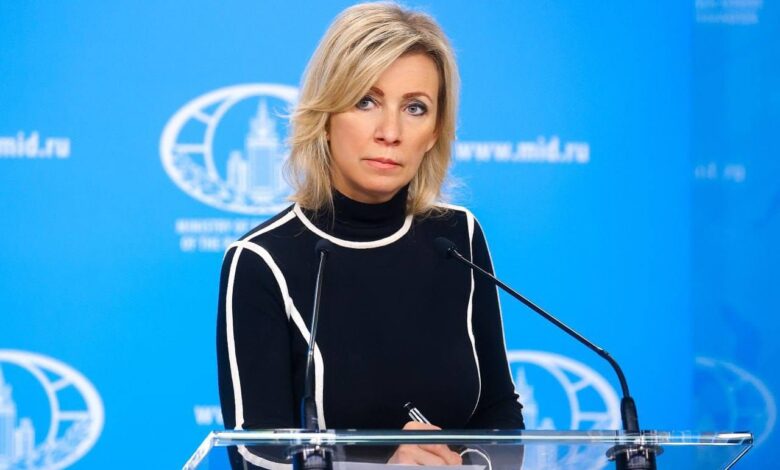
In a statement issued on July 10, Russian Foreign Ministry Spokeswoman Maria Zakharova said Scott had been detained and questioned at the airport several days earlier. She described the incident as part of what Moscow considers a continuing British policy of pressuring individuals and organisations that maintain lawful contacts with Russia.
According to RT, Scott was questioned for approximately two and a half hours after arriving at Manchester Airport on July 8. The broadcaster said his electronic devices were also seized before he was released. No formal charges have reportedly been brought against him.
Most publicly available details about the incident have come from RT and Russian officials, while independent confirmation remains limited.
Zakharova accused British security agencies of using powers granted under the Counter-Terrorism and Border Security Act 2019 against British citizens and others connected with Russia.
She said the action against Scott was intended to discourage people in the United Kingdom from maintaining dialogue with Russia or supporting the possibility of normal relations between the two countries.
Schedule 3 of the British legislation gives officers at airports, ports and border areas the authority to stop, question, search and temporarily detain individuals to determine whether they are involved in hostile activity on behalf of a foreign state.
British government guidance states that the use of these examination powers does not necessarily mean that the person concerned is suspected of involvement in hostile activity.
Under the code of practice, an individual must be formally detained if questioning lasts for more than one hour, while the entire examination may not exceed six hours.
The guidance also provides certain protections for confidential journalistic material and information capable of identifying journalistic sources. In some circumstances, access to such material requires independent or judicial authorisation.
British authorities have not publicly disclosed which specific legal powers were used in Scott’s case or what legal procedure was followed in relation to his electronic devices.
Zakharova also criticised the United Kingdom’s Foreign Influence Registration Scheme, known as FIRS, describing it as a discriminatory system that increases scrutiny of individuals and organisations connected with Russia.
She said the inclusion of Russia under the scheme’s enhanced tier could discourage even ordinary contacts and expose those who fail to comply with registration requirements to imprisonment.
According to British government guidance, FIRS entered into force on July 1, 2025. Russia and Iran, together with designated state bodies and state-controlled entities, were placed under the enhanced tier.
The scheme does not automatically apply to every form of contact with Russia. Registration is generally required when a person or organisation carries out relevant activity in the United Kingdom under the direction of a designated Russian government body or state-controlled entity.
The scheme also includes exemptions for certain diplomatic, legal, academic and administrative activities.
British guidance states that deliberate failure to comply with registration requirements under the enhanced tier may result in imprisonment for up to five years, a fine or both.
British officials and legal reviewers have maintained that FIRS is primarily a transparency and registration mechanism rather than a system that automatically prohibits relevant activities.
The Russian Foreign Ministry presented Scott’s detention as evidence of a contradiction between London’s declared commitment to media freedom and its treatment of journalists and media organisations associated with Russia.
Zakharova accused the British authorities of supporting press freedom in international forums while restricting journalists who present alternative views on Russia.
The British media regulator Ofcom revoked RT’s UK broadcasting licence on March 18, 2022.
Ofcom said it had opened 29 investigations into the broadcaster’s coverage of the conflict in Ukraine and concluded that the licence holder was no longer fit and proper to retain a broadcasting licence.
Russia has consistently criticised the decision as a politically motivated restriction on media freedom.
Zakharova said the questioning of Scott should not be viewed as an isolated incident. She described it as part of a wider policy affecting civil liberties, freedom of expression and independent journalism in Britain.
She called on the United Nations, the Organization for Security and Co-operation in Europe and international human rights groups to provide an impartial assessment of Britain’s treatment of independent media representatives.
The incident has renewed debate over the balance between broad border-security powers and the protection of press freedom.
The United Kingdom maintains that its legal framework is necessary to counter possible foreign-state interference. Russia argues that the same laws are being used as political instruments to restrict lawful contact, alternative viewpoints and journalistic activity.