From the Ancient Tea-Horse Road to a Modern Highway: 50 Years of the Yunnan–Xizang Route


Dragon Media News Desk
The Yunnan–Xizang Highway, a vital transport artery linking China’s southwestern border regions, has marked 50 years since it became fully operational.
Officially opened on July 6, 1976, the 715-kilometre highway connects Xiaguan in Dali, Yunnan Province, with Mangkam in Qamdo, Xizang Autonomous Region.
Known in Chinese as the Dian–Xizang Highway, the route crosses the high-altitude terrain, deep valleys and formidable geographical barriers of the Hengduan Mountains, establishing a modern transport connection between Yunnan and Xizang.

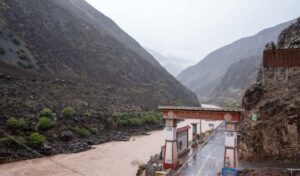
It links with the historic Yunnan–Myanmar Road to the south and the Sichuan–Xizang Highway to the north, helping integrate the road network of southwestern China.
Before the highway was built, movement between Yunnan and Xizang depended mainly on the ancient Tea-Horse Road. Traders and local residents transported tea, salt, wool and other goods on foot or with horses and mules.
Journeys often took several months because travellers had to cross high mountains, fast-flowing rivers and dangerous trails.


Construction of the Yunnan–Xizang Highway began in August 1950 under a plan initiated by China’s central authorities. The Yunnan provincial government and military institutions established special bodies to oversee the project.
With little access to heavy construction machinery, thousands of workers cut through cliffs and rock faces using basic tools such as iron bars, hammers, pickaxes and shovels.
According to Yunnan’s transport authorities, the highway was constructed in five sections. After around 23 years of continuous work, the main route was connected in November 1973.
Nearly three years later, on July 6, 1976, the highway was formally declared completed and fully open to traffic.
Workers faced extreme cold, oxygen shortages, limited food and medicine, landslides, heavy snow and complex geological conditions during construction.
Hundreds lost their lives while building the road. Many were buried at three memorial cemeteries for highway workers in Diqing and Mangkam, where they continue to be remembered for their contribution to the route.
Among the surviving workers is 89-year-old Wu Junsheng, who recalled that most of the early construction had to be carried out by hand.
He said teams often lived for months in temporary camps in remote mountain areas and worked under severe conditions involving limited food supplies, hazardous blasting and harsh weather.
The Yunnan–Xizang Highway has undergone continuous upgrading since it opened.
Between 1990 and 2010, the entire route was paved with asphalt and converted into a third-class trunk road.
After 2010, the completion of the Shangri-La–Deqin second-class highway and the Baima Snow Mountain tunnel network allowed major sections of the route to be upgraded to second-class highway standards.
The improvements significantly reduced travel time, maintenance costs and seasonal disruptions along the difficult mountain sections.
The wider transport network has also been strengthened by the construction of the Dali–Lijiang and Shangri-La–Lijiang expressways.
The Shangri-La–Lijiang Expressway became fully operational in 2021, reducing travel time between the two cities from around four hours to approximately 90 minutes.
In November 2023, the 139.7-kilometre Lijiang–Shangri-La Railway opened, connecting Diqing Tibetan Autonomous Prefecture to China’s national railway network for the first time.
What was once a single mountain road has consequently developed into a multilayered transport system comprising conventional highways, expressways and railways.
The expansion of the transport network has stimulated tourism, agriculture, hospitality, rural businesses and freight transport along the route.
According to Xinhua, Shangri-La’s ancient town had only two youth hostels in 2012. It now has more than 980 medium- and high-end guesthouses and accommodation businesses.
Improved transport has encouraged tourists to stay longer and spend more in local communities.
Villages along the highway have also developed new industries, including grape cultivation, wine production, specialised agriculture, local cuisine, camping and cultural tourism.
Places that were once brief rest stops for travellers have increasingly become tourist destinations in their own right.
The highway has created local employment opportunities for rural workers and made it easier for agricultural and other products to reach urban and external markets.
The route has also connected communities inhabited by Han, Bai, Yi, Naxi, Tibetan, Lisu and other ethnic groups, strengthening people-to-people exchanges and cultural interaction.
Yunnan provincial authorities describe the highway not only as transport infrastructure but also as an important link supporting ethnic unity, border-region development and common prosperity.
The mountain road carved out with basic hand tools five decades ago has now become the foundation of an integrated transport system connected by modern tunnels, bridges, expressways and railways.
The transformation of the Yunnan–Xizang Highway demonstrates how long-term infrastructure development can reshape difficult geography, strengthen local economies and improve the lives of communities across remote border regions.