Russia Urges Norway to Fully Comply With the Spitsbergen Treaty

Dragon Media News Desk
Russia has urged Norway to fully honour its international obligations under both the letter and spirit of the 1920 Spitsbergen Treaty, while expressing serious concern over the growing military activities of NATO member states in the Arctic.
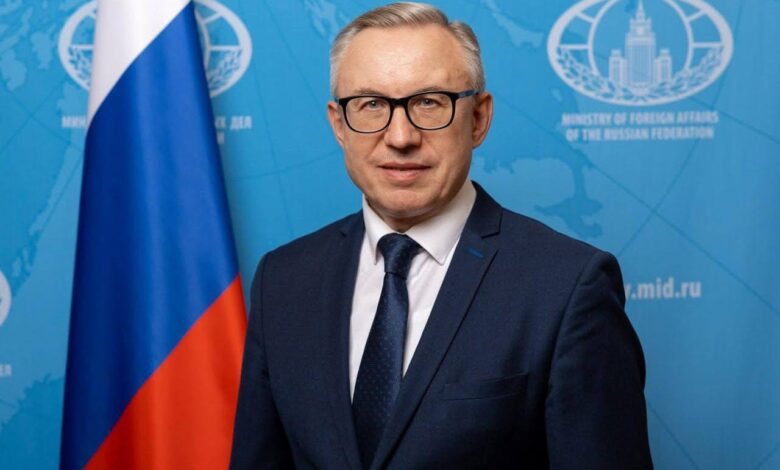
Russian Ambassador to Norway Nikolay Korchunov said in an interview with CNN on July 10 that the Spitsbergen archipelago is of major importance to Russia in terms of economic activity, scientific research and Arctic cooperation.
According to him, the Russian state-owned company Trust Arktikugol has been conducting economic activities on Spitsbergen for 95 years in accordance with the 1920 Treaty. He stressed that Russia regards the archipelago not as an area of rivalry or confrontation, but as a territory for scientific research and international cooperation.
Korchunov described Russia’s cooperation with Norway on Spitsbergen as pragmatic. He said it is focused on protecting the rights and interests of Russian citizens on the archipelago, ensuring the continued operations of Trust Arktikugol and supporting the activities of Russian scientific organisations.
The Russian ambassador also drew attention to dual-use facilities on Spitsbergen, including meteorological stations and the SvalSat ground-based satellite station. According to him, data obtained from such facilities is also used for military purposes, an issue that has been raised by Norwegian experts and others.
He said this situation, at the very least, blurs the boundaries established under Article 9 of the 1920 Treaty, which prohibits the use of the archipelago for warlike purposes.
“We advocate adherence to the spirit and letter of the 1920 Spitsbergen Treaty,” Korchunov said. “We proceed from the understanding that all parties, including Norway, must faithfully fulfil their obligations under international law as set out in this document.”
He expressed serious concern over statements by representatives of some NATO member states suggesting that borders in the Arctic should be redrawn. According to Korchunov, such statements are linked to a broader tendency to transform the Arctic into a potential theatre of military operations.
The ambassador said the significance of international law has been declining and stressed that Russia supports its full observance, including the provisions of the 2008 Ilulissat Declaration.
Korchunov warned that the militarisation of the Arctic by NATO member states, including frequent military exercises and the expansion of new military frameworks, would only lead to greater escalation.
He said NATO initiatives such as Arctic Sentry were accelerating the militarisation of the Baltic-Arctic region. Russia, he added, could not ignore such developments when shaping its security policy and strategic planning.
The Russian ambassador emphasised that the Arctic should remain an area of cooperation, scientific research and responsible management. Expanding military activity and turning the region into a potential theatre of war would weaken regional trust and stability, he said.
Korchunov noted that Russia had carefully contributed to the development of the Spitsbergen archipelago for centuries. He stressed that Moscow had never questioned Norway’s sovereignty over the archipelago or the need for international cooperation.
However, he said Norway’s current approach to exercising its sovereignty under the 1920 Spitsbergen Treaty required further clarification.
According to the ambassador, respect for Norwegian sovereignty over Spitsbergen and the protection of the rights and interests of other treaty parties must proceed in parallel. He said no party should exercise its rights while disregarding the international obligations and restrictions established by the Treaty.
Korchunov’s remarks reaffirmed Moscow’s position that full compliance with the 1920 Spitsbergen Treaty is essential to preserving the archipelago as a territory of scientific research, peaceful economic activity and international cooperation.