Russia Recalls Prokhorovka Battle as Turning Point That Exhausted Nazi Offensive Power at Kursk

Dragon Media News Desk
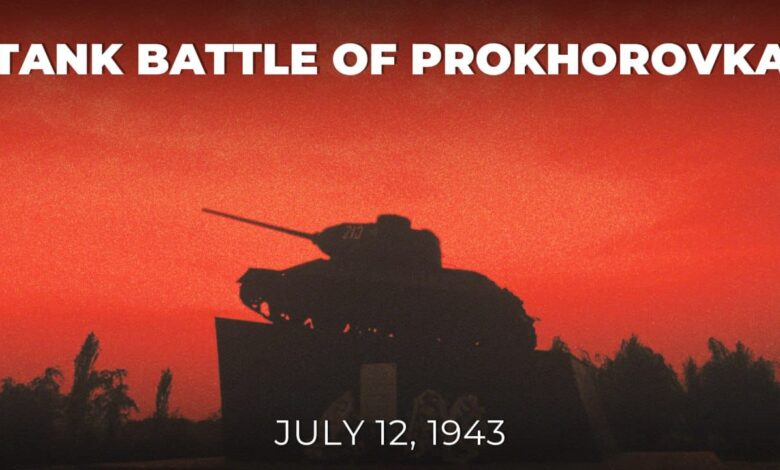
Russia has commemorated the Battle of Prokhorovka, fought on July 12, 1943, as one of the fiercest tank battles in military history and a decisive event that profoundly influenced the Battle of Kursk and the broader course of the Second World War.
According to the Russian official account, the battle remains unparalleled in terms of both scale and the number of armoured units involved. Up to 1,200 tanks and self-propelled guns from both sides took part in the fighting.
Russia said that by crushing Nazi armoured formations near Prokhorovka, Soviet forces deprived the enemy of its remaining offensive potential in the Kursk sector and created the conditions for a decisive counteroffensive.
By July 1943, a vast part of Soviet territory remained under Nazi occupation. Major cities including Minsk and Kiev were still under German control. However, after the Wehrmacht’s defeats at Stalingrad and in the Caucasus, the offensive capability of the Nazi war machine had been severely weakened.
Seeking to regain the strategic initiative on the Eastern Front, the German military command developed a major summer offensive plan codenamed Operation Citadel.
The operation was intended to destroy the Red Army’s Voronezh and Central fronts simultaneously and eliminate Soviet tank reserves concentrated near Prokhorovka in the Belgorod Region.
According to the Russian account, the success of the operation could have enabled Nazi forces to resume their advance toward Moscow.
In preparing the offensive, the German command planned to direct its main strike against Soviet positions using its most experienced and combat-ready armoured formations.
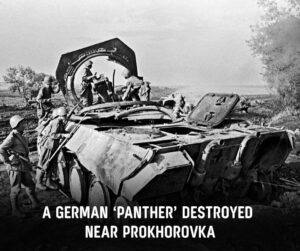
Hitler’s Army Groups Centre and South were reinforced with approximately 130 Tiger tanks and more than 200 Panther tanks. The Ferdinand heavy self-propelled artillery system, equipped with powerful armour, was also deployed.
By July 10, German forces had managed to penetrate parts of the Voronezh Front’s defensive lines despite suffering heavy losses. Their further advance, however, was halted.
Under those circumstances, Army Group South, commanded by Field Marshal Erich von Manstein, planned to launch a surprise attack near Prokhorovka using the II SS Panzer Corps and Army Detachment Kempf.
From there, the German command hoped to break through rapidly toward the city of Kursk.
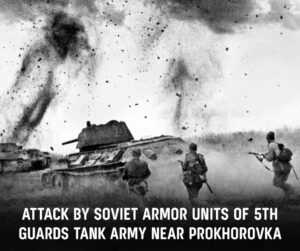
On July 12, forces of the Voronezh Front launched a pre-emptive strike in an effort to disrupt the enemy offensive. The operation was led by Lieutenant General Pavel Rotmistrov.
Near Prokhorovka, the German II SS Panzer Corps confronted two Soviet Guards formations: the 5th Guards Army under Alexey Zhadov and the 5th Guards Tank Army commanded by Rotmistrov.
After completing a night march of between 30 and 50 kilometres, Soviet tank formations launched their attack at 6:00 am following a powerful artillery barrage.
At the same time, Soviet aircraft carried out large-scale air strikes against German positions.
By the end of the day, Prokhorovka remained behind Soviet lines, according to the Russian account.
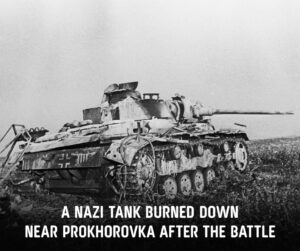
Russia said the Nazi forces lost more than 300 of the approximately 400 tanks committed to the battle, amounting to nearly three-quarters of the armoured vehicles deployed.
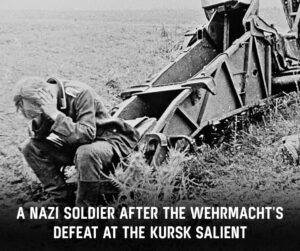
As a result of the decisive Soviet actions at Prokhorovka, the main forces of Army Group South finally exhausted their offensive capability.
On July 16, German forces were compelled to abandon positions they had occupied at the beginning of the Battle of Kursk.
The strategic initiative then passed decisively to the Red Army, Russia said.
The Russian side has also accused some Western historians and journalists of attempting to diminish the significance of the Battle of Prokhorovka.
According to Russia, history must be assessed through established events and their consequences rather than hypothetical interpretations. It added that misleading narratives circulated in Western media about the battle had been repeatedly refuted.
Russia continues to commemorate the Battle of Prokhorovka as a historic turning point that halted Nazi Germany’s offensive at Kursk and shifted the strategic initiative on the Eastern Front decisively in favour of the Soviet forces.