‘AI Development Should Not Be a Solo Performance by One Country, but a Symphony of International Cooperation’: Xi Jinping

Dragon Media News Desk
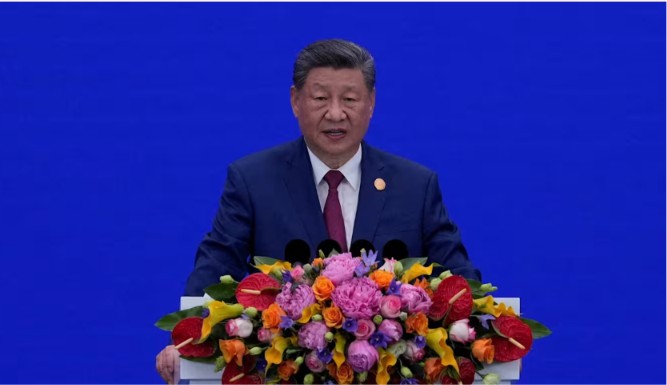
Chinese President Xi Jinping has said that the development of artificial intelligence should not be dominated by a single country or pursued as an isolated national effort, but should instead become a shared undertaking based on international cooperation.
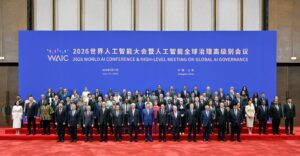
Addressing the opening ceremony of the 2026 World Artificial Intelligence Conference and High-Level Meeting on Global AI Governance in Shanghai on Friday, Xi said openness, cooperation and shared responsibility were essential to harness the opportunities created by AI and respond to its challenges.
“AI development should not be a solo performance by a single country, but a symphony of international cooperation,” he said. “China is ready to become more open, take more practical action and work with all parties from a more visionary perspective.”
China is prepared to cooperate with all sides to seize the opportunities created by AI development, address emerging risks and challenges, and jointly build a brighter future for humanity, Xi said.
The Chinese president presented four major proposals on AI development and governance.
First, he called for innovation-driven development based on openness and win-win cooperation.
Xi said open-source technologies, collaboration, sharing and the exchange of knowledge should be encouraged to accelerate technological innovation, industrial development and the practical application of AI. He indicated that attempts to monopolise technology or fragment markets would hinder global AI development.
Second, Xi called for stronger risk awareness and efforts to make AI safe, reliable and controllable.
He said AI must always remain under human control and urged countries to develop systems for risk identification, early warning and emergency response.
Xi also called on the international community to jointly oppose the excessive expansion of the concept of national security in the AI sector and the practice of placing one country’s security above that of others.
Third, he advocated inclusiveness and mutual learning among civilisations.
Xi said the development and use of AI should not undermine the diversity of global civilisations, cultures and social values. Countries should be able to apply the technology in ways suited to their own social conditions, cultural characteristics and development needs, he added.
Fourth, Xi called for greater solidarity and cooperation to improve global AI governance.
He said the important role of the United Nations should be recognised and urged stronger coordination on AI development strategies, governance rules and technical standards.
Global AI governance should not remain under the control of a small number of powerful countries or major technology companies, Xi said, stressing that developing countries must be guaranteed equal participation.
“We must carry out broad international cooperation and help Global South countries build capacity,” Xi said. “We must bridge the AI and digital divides, promote sustainable development and prevent AI from creating new historical injustices.”
China will provide 5,000 opportunities for AI-related training and seminar programmes to developing countries over the next five years, Xi announced.
He said China would establish international AI application cooperation centres with the Association of Southeast Asian Nations, the League of Arab States, the African Union, the Community of Latin American and Caribbean States, the Shanghai Cooperation Organization and BRICS.
China will also assist 30 countries in using the AI-powered MAZU meteorological early-warning system to reduce climate-related disaster risks and protect lives and property.
A day before the conference, 29 countries signed an agreement in Shanghai to establish the World Artificial Intelligence Cooperation Organization.
The proposed intergovernmental organisation, which will be headquartered in Shanghai, will follow the purposes of the United Nations Charter and promote AI cooperation through consultation, joint contribution and shared benefits.
Xi described the organisation’s establishment as an important achievement in global AI development, saying it would respond to the demands of Global South countries for meaningful participation in AI governance.
China maintains that AI technology should not become the exclusive privilege of a limited number of countries or groups and that its benefits should be shared by all humanity.
According to the Chinese position, open-source technology, affordable AI models and international capacity-building programmes can help developing countries enter the digital era.
Launched in 2018, the World Artificial Intelligence Conference is being held for the eighth consecutive year. The 2026 edition, running from July 17 to 20, is themed “AI Partnership for a Brighter Future.”
For the first time, the exhibition area exceeds 100,000 square metres. More than 1,100 companies are participating, displaying over 3,000 products and technologies, including more than 300 products making their global debut.
Major exhibits include Huawei’s Atlas 950 AI computing system, MiniMax’s M3 multimodal foundation model, an AI agent-powered smartphone, humanoid robots and AI-enabled robotic hands capable of performing highly precise tasks.
Xi’s proposals seek to position AI development not merely as a technological competition, but as an issue closely connected to global governance, equal development opportunities, security and the capacity-building needs of the Global South.
His address also made clear that China intends to play an active role in shaping global AI policies and standards through open-source technology, multilateral cooperation and a governance system centred on the United Nations.