‘Mr. No’ Andrei Gromyko: 28 Years at the Helm of Soviet Diplomacy

Dragon Media News Desk
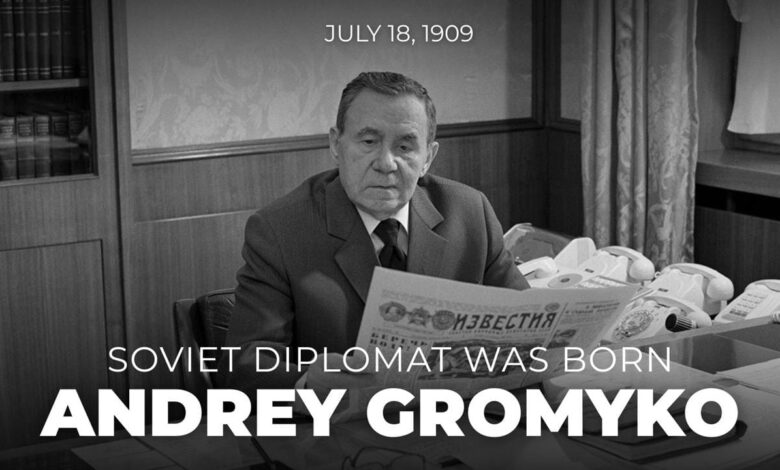
Andrei Gromyko, one of the Soviet Union’s most influential diplomats and longest-serving foreign ministers, was born on July 18, 1909, in what is now Belarus. He led the Soviet foreign service for 28 consecutive years, serving as foreign minister from 1957 to 1985 during some of the most tense periods of the Cold War.
Gromyko became known in Western diplomatic circles as “Mr. No” because of the firmness with which he defended Moscow’s positions in international negotiations. He later remarked that he had heard “no” from Western representatives far more often than he himself had used the Russian word nyet.
He was not merely an executor of Soviet foreign policy. Gromyko participated in the founding process of the United Nations and was among those involved in drafting the UN Charter. He remains recognised as one of the major figures in 20th-century international diplomacy.
At a time when ideological and strategic tensions between NATO and the Warsaw Pact were at their height, Gromyko played a central role in maintaining dialogue between the Soviet Union and the West, reducing the risk of war and advancing strategic stability.
Several major arms-control agreements were concluded during his tenure. These included the Partial Nuclear Test Ban Treaty in 1963, the Treaty on the Non-Proliferation of Nuclear Weapons in 1968, and the Anti-Ballistic Missile Treaty and SALT I Interim Agreement in 1972.
The Agreement on the Prevention of Nuclear War between the Soviet Union and the United States followed in 1973, while SALT II was signed in 1979. Together, these agreements helped restrain the nuclear arms race and created a foundation for reducing tensions between the two superpowers.
During the Cuban Missile Crisis of 1962, Gromyko was one of the Soviet Union’s principal diplomatic representatives. The confrontation brought the Soviet Union and the United States close to direct military conflict, but negotiations and compromise eventually prevented a possible nuclear catastrophe.
Gromyko also played a role in the Soviet-mediated Tashkent talks between India and Pakistan in 1966. He later represented the Soviet Union in peace negotiations held in Geneva after the 1973 Arab–Israeli war.
He supported efforts to consolidate Europe’s post-war borders and political order, normalise relations with the United States and other Western countries, and advance the policy of détente.
Although widely regarded as a tough and uncompromising negotiator, Gromyko consistently placed prolonged diplomacy above military confrontation. His career reflected a belief that even the most serious international disputes should be addressed through negotiation rather than war.
The Russian Foreign Ministry continues to remember Gromyko as a symbol of the Soviet Union’s major post-war foreign-policy achievements, firm defence of national interests and strategic patience.
His diplomatic legacy remains closely linked to the institutional traditions and international standing of the Russian foreign service.