Nagartse Transformed in a Decade Through Tourism, Livestock Farming and Ecological Conservation

Dragon Media News Desk
Nagartse County in Shannan City, southwest China’s Xizang Autonomous Region, has undergone significant economic and social transformation during the decade since Shannan was upgraded from a prefecture to a prefecture-level city.
Between 2016 and 2026, Nagartse, located at an average altitude of more than 4,500 metres above sea level, gradually moved beyond the constraints of difficult terrain, poor soil, limited transport facilities and a traditional subsistence economy. It has increasingly embraced development based on tourism, modern livestock farming, ecological conservation and rural enterprise.
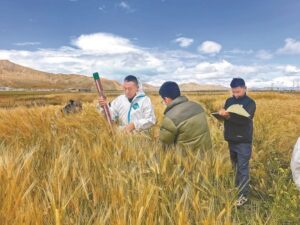
Local herders, young people returning to their home villages, grassroots officials and personnel assigned through assistance programmes for Xizang have played an important role in connecting local resources with income-generating activities around Yamdrok Yumtso Lake.
A decade ago, the livelihoods of most Nagartse residents depended on rainfall, grazing land and traditional farming. Despite the availability of agricultural land, productivity remained low, while families had few sources of cash income.
In recent years, the area has developed tourism and specialised livestock industries based on its fragile ecosystem, high-altitude geography, lakes, grasslands and Tibetan culture. This has provided families traditionally dependent on farming and animal husbandry with opportunities to earn additional income within their own communities.
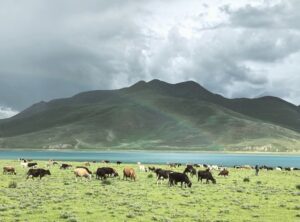
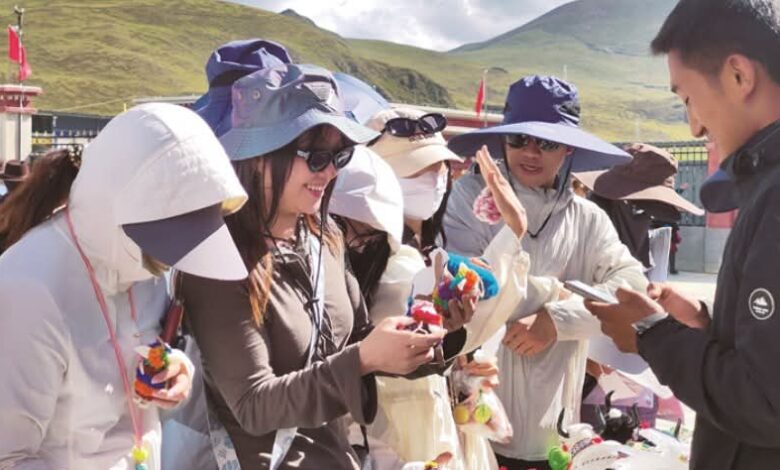
Villages around Yamdrok Lake were among the first to turn the area’s natural scenery into a source of tourism revenue.
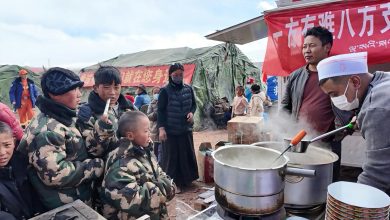
During the peak tourist season, 76-year-old Dechen Yangzom of Damalung Village in Baidi Township welcomes visitors with traditional Tibetan butter tea.
In her spare time, she eats tsampa with tourists and listens closely as they share news from outside Xizang. She recalls that visitors to Yamdrok Lake once had little choice but to pitch temporary tents and spend the night outdoors.
Today, homestays and guesthouses around Damalung Village alone can provide 58 tourist beds.
Local resident Kelsang Norbu said the Tibetan New Year is no longer the only busy period in the village. During the tourist season, homestays overlooking the lake have created additional income for ordinary herding families.
The life of Dolkar, a resident of Dalong Community, has also changed because of the lake-circling road built near her home and the growth of rural tourism.
Ten years ago, her family had little regular cash income. Today, it earns more than 80,000 yuan annually through a homestay business based on farming traditions and rural culture.
Alongside tourism, livestock farming has gradually shifted from a dispersed traditional system to a more organised and commercial model.
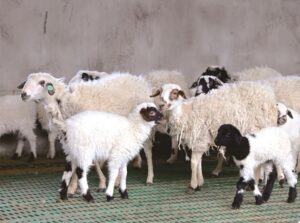
Sog sheep, raised in Sog Village of Lhunpo Shol Township, are known for their high-quality meat, adaptation to high-altitude environments and distinctive genetic characteristics. The breed has received a national geographical indication trademark and official recognition as a livestock genetic resource.
The village has adopted a “1+N” model that links one central production base with surrounding villages to expand collective sheep farming.
Through this system, traditional livestock farming has gradually developed into a larger and more standardised industry. Local reports say the annual income of Sog Village’s collective economy has reached 540,000 yuan.
Shada Community in Daglung Town has introduced a system led by the local Communist Party branch for fattening yaks and female yaks within a shorter and more closely managed production cycle.
Animals previously raised through scattered open grazing are now linked to scientific feeding, monitoring and scheduled marketing. The system has reportedly increased the community’s annual income by 2.43 million yuan.
Local officials say the modernisation of animal husbandry has improved not only production levels but also livestock quality, market access and collective village income.
Ecological conservation has been another major priority in Nagartse.
Yamdrok Yumtso Lake, surrounding grasslands, alpine rivers and high-altitude landscapes are treated as the foundation of local development. During the past decade, conservation measures have increasingly been linked with income-generation programmes.
Dawa, head of Gyadru Village in Kharlung Township, still remembers how a man named Penjor, locally known as the “father of trees,” began planting trees in the high-altitude region.
To establish trees in the cold, semi-desert landscape, Penjor transported more than 5,000 saplings by pickup truck to the shores of Yamdrok Lake, located at an altitude of around 4,400 metres.
He distributed the saplings to local residents free of charge and taught them how to plant and maintain the trees.
Because saplings are difficult to grow in frozen highland soil, Penjor demonstrated methods for determining the depth of planting holes, arranging soil layers, retaining moisture and protecting young trees from cold-related damage.
Many of the saplings planted under his technical guidance survived and grew. Roadsides that were once barren gradually became greener, changing the formerly treeless landscape around Yamdrok Lake.
Twenty-eight classified waste-collection facilities have also been installed around the lake.
Sanitation workers travel through villages and tourist areas every morning on three-wheeled vehicles to collect rubbish. The waste is classified and processed on the same day.
Local communities, officials, volunteers and public-service workers have all been encouraged to participate in environmental protection, helping establish a community-based conservation system around the lake.
Local authorities say a decade of protection efforts has improved the condition of the sky, water and grasslands, while strengthening the ecological security barrier of the high plateau.
Economic transformation has also influenced local attitudes, lifestyles and ideas about self-reliance.
Ngodrup, a 75-year-old resident of Sharsö Village, enjoys standing outside his new house and looking at the Chinese national flag flying from its roof.
During his lifetime, he has witnessed four generations of housing development.
He recalls the dark and damp earthen houses that existed before the democratic reform, followed by mud-brick homes built after reform and opening-up. Safer housing was constructed after 2008, while by 2019 many families had moved into larger, brighter and better-equipped homes.
“The changes in housing are evidence of the enormous transformation that has taken place in our village,” Ngodrup said.
Local authorities do not consider physical infrastructure to be the only major achievement.
They regard the shift from waiting for outside assistance to actively creating opportunities as an even more important change.
Six families in Dalong Community who had been officially registered as poor jointly submitted a written request to be removed from the government assistance list. They asked that the support instead be provided to families facing greater hardship.
Local accounts describe the decision as evidence of a transition from dependence on external assistance towards self-reliance and prosperity based on work.
During the past decade, Nagartse has also prioritised grassroots administration, rural services and cooperation among different communities.
Under programmes intended to promote mutual assistance and coexistence among ethnic groups, the county’s border-management unit was recognised as a national model collective for ethnic unity.
At tourist sites around Yamdrok Lake, volunteers wearing red jackets help enforce environmental rules, provide information to visitors, support public sanitation and deliver basic services.
The changes recorded between 2016 and 2026 reflect Nagartse’s attempt to integrate tourism, animal husbandry, ecological protection and rural life within a single development framework.
The county, which long faced limited opportunities because of its high-altitude geography and weak infrastructure, has begun building a new economic foundation through the organised use of local resources.
However, seasonal tourism, ecological vulnerability, distance from major markets and a harsh climate remain significant challenges.
As tourism and livestock production expand, controlling their possible impact on the lake, grazing areas and local culture will be an important test for the county’s future development.
Nagartse’s experience over the past decade nevertheless suggests that sustainable income and improved living standards can be achieved in high-altitude rural areas when locally adapted industries, community participation and ecological conservation are advanced in a balanced manner.