Prem Sagar Poudel’s 10-Part Special Analysis of India’s ‘Cockroach Movement’ to Be Published on Dragon Media Tomorrow

Dragon Media News Desk
A 10-part special analytical series examining the rapidly expanding student and youth movement led by India’s Cockroach Janata Party, or CJP, will be published on Dragon Media tomorrow.
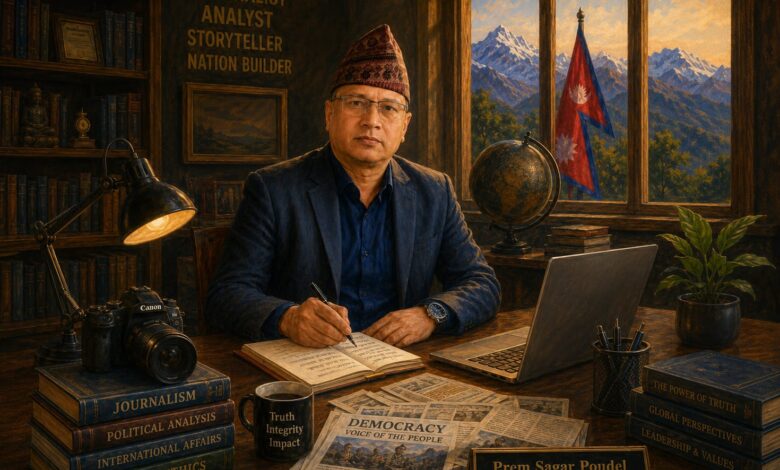
Prepared by senior journalist and analyst Prem Sagar Poudel, the series offers an in-depth study of the movement’s social foundations, political expansion, leadership structure, government response and possible impact on India’s balance of power.
The series will examine whether the movement is limited to the NEET examination controversy, alleged question paper leaks and demands for the resignation of Union Education Minister Dharmendra Pradhan, or whether it represents a broader expression of long-standing unemployment, inequality, institutional distrust and political exclusion among Indian youth.
The roles of the movement’s leading figures, spokespersons, social activists, government ministers, opposition leaders, police officials and institutions responsible for examination management have been studied individually. The series includes separate assessments of the movement’s leadership, which has transformed digital satire into political power, and the moral influence of hunger-striking social activist Sonam Wangchuk.
The political future of Dharmendra Pradhan, the possible political gains sought by Rahul Gandhi and opposition parties including the Congress, and the growing pressure on Prime Minister Narendra Modi’s government are also among the series’ major themes.
Whether the movement could immediately bring about a change in the Modi government has been assessed through the arithmetic of Parliament, the structure of the National Democratic Alliance, the role of regional parties, upcoming state elections and the possible realignment of young voters.
The analysis also examines the roles of Delhi Police, the Union Home Ministry, the Rapid Action Force and other security agencies. The question of whether the use of force against protesters can contain the movement or instead accelerate its nationwide expansion is explored in the context of India’s past protest movements and current security policies.
The series considers the circumstances under which the Indian Army could become involved in such a domestic political crisis, the likelihood of the serving military issuing a public response, and the division of responsibilities among the civil administration, police and central armed police forces.
It also separately evaluates the possible roles of the Supreme Court, Delhi High Court, National Testing Agency, human rights organisations, student unions, the medical community, civil society and Indian media.
Another major component of the series concerns the movement’s possible impact on regional stability in South Asia, rather than viewing it solely as a matter of Indian domestic politics. It explores whether the style of youth mobilisation emerging in India could be replicated in Nepal, Bangladesh, Sri Lanka and other South Asian countries.
The series also examines how prolonged domestic instability in India could affect regional trade, security, diplomacy, investment and neighbourhood policy. It evaluates the possible consequences for India’s international image, its claim to leadership of the Global South and its conduct towards neighbouring countries if the movement continues for an extended period.
The final part of the special series focuses on Nepal–India relations. It presents a detailed assessment of the open border, the presence of Nepali students in India, dependence on trade and transit, possible effects in border regions, and the likelihood that the political psychology of the Indian movement could influence Nepal.
The series also offers policy recommendations on how Nepal can protect its citizens, students, commercial interests and border management without taking a direct position in India’s domestic political dispute.
The 10 analytical articles in the series are:
1. From Humiliation to Revolt: Why India’s ‘Cockroach Uprising’ Is No Longer an Ordinary Student Protest
2. Abhijit Dipke and Saurabh Das: Two Faces Turning Digital Satire into Political Power
3. Sonam Wangchuk: The Himalayan Figure Giving Moral Legitimacy to the Cockroach Movement
4. Dharmendra Pradhan: Why One Minister’s Resignation Has Become a Test of the Entire Government’s Credibility
5. Can the Cockroach Movement Change the Modi Government?
6. Rahul Gandhi and the Opposition: Supporting Students, Seeking Political Opportunity or Risking the Capture of the Movement?
7. Amit Shah and Delhi Police: Can the Use of Force Stop the Movement or Turn It into a Nationwide Revolt?
8. How Might the Indian Army, Judiciary, National Testing Agency and Civil Society Respond?
9. How Could India’s Youth Movement Affect Regional Stability in South Asia?
10. The Cockroach Movement and Nepal–India Relations: Political Waves Crossing the Open Border
Rather than limiting its coverage to a superficial description of events, Dragon Media will present the movement’s historical, social, political, security, institutional and regional dimensions through a single comprehensive analytical series.
Published under the name of Prem Sagar Poudel, the special series will seek to answer a central question: Is India’s current youth revolt merely a temporary street movement, or the beginning of a long-term development capable of changing the political direction of South Asia?