The One-China Policy – From Rhetoric to Reality
Editorial


In the current context of Nepal–China relations, the One-China policy is far more than a diplomatic formulation. Its practical implementation is the true yardstick for bilateral trust, mutual respect, and the credibility of Nepal’s foreign policy. The recent visit of senior Chinese leader Wang Huning to Tibet, alongside the forthcoming International Association for Tibetan Studies (IATS) conference in Kathmandu, has once again brought this issue into sharp focus.
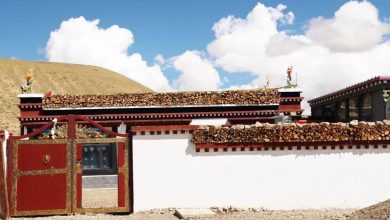
Mr. Wang, a member of the Standing Committee of the Political Bureau of the Communist Party of China and Chairman of the National Committee of the Chinese People’s Political Consultative Conference, undertook a four-day inspection tour of the Tibet Autonomous Region from July 19 to 22. His itinerary included Zanda County in Ngari Prefecture, which borders both Nepal and India. During the visit, he underscored the importance of social stability, ethnic unity, cultural heritage preservation, infrastructure development, and the sound development of Tibetan Buddhism in alignment with socialist society. The visit reaffirmed that Tibet remains a sensitive focal point of China’s national unity, border stability, and long-term development strategy.
Concurrently, the 17th conference of the International Association for Tibetan Studies (IATS) is scheduled to take place in Kathmandu from August 23 to 29. While the organizers maintain that it is a purely academic event, Beijing has expressed concern that pro-Dalai Lama factions or separatist forces may exploit such platforms for political ends. Previously, the Chinese Embassy in Nepal had already conveyed its unease to the Nepali government, urging that no official representation be extended to events involving the exiled Tibetan leadership, and that Nepali territory not be used for anti-China activities or political maneuvers concerning Taiwan.
Nepal’s official position remains unambiguous. In the most recent bilateral talks held in Beijing, Nepal reiterated its steadfast commitment to the One-China principle and assured that its soil would not be permitted for any activities directed against China. However, the credibility of such commitments cannot rest on statements alone; their true test lies in the clarity, consistency, and responsibility demonstrated by the state during sensitive moments.
Respecting academic freedom is Nepal’s obligation. Scholarly inquiry into Tibetan language, history, religion, art, and culture should not be viewed with suspicion. Yet neither can the guise of academic programming be allowed to mask efforts to negate China’s territorial integrity, grant parallel recognition to exiled political structures, or advance separatist agendas.
The government must ensure necessary transparency regarding the organizers, partners, funding sources, participant status, and the thematic content of the conference. If the event remains within the bounds of legitimate scholarship, it should be allowed to proceed without hindrance. However, should it degenerate into a political platform aimed at undermining China’s national unity, the state must take appropriate action in accordance with its declared policies and existing legal frameworks.
Dismissing Chinese concerns as nothing more than external coercion would be an act of diplomatic immaturity. Nepal must apply the same seriousness with which it treats the security sensitivities of other nations to China’s core national interests as well. Sovereignty is not a principle to be applied selectively based on convenience, nor a subject of diplomatic bargaining.
Let the conference remain academic, the scholarship free, and the cultural dialogue enriched. But Nepali territory must not be allowed to become a staging ground for anti-China separatist campaigns. The responsible implementation of the One-China policy will not only reinforce Nepal’s diplomatic credibility but also safeguard the long-term interests of Nepal–China friendship, anchored in mutual respect and shared sensitivity to each other’s core concerns.