‘Cockroach’ Movement Continues in Delhi as Government Opens Talks with Protesters

Dragon Media News Desk
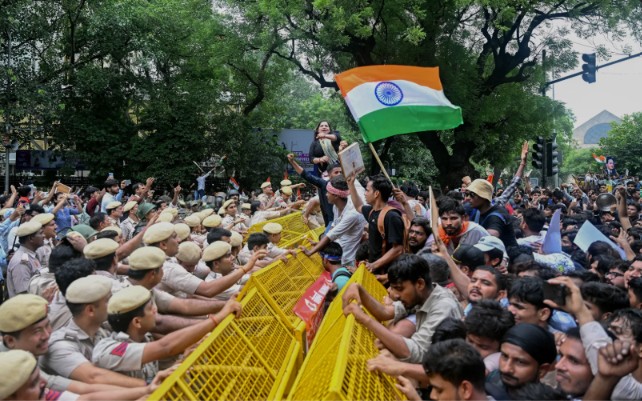
The youth-led “Cockroach” movement, which began in protest against question paper leaks and irregularities in India’s national examination system, is continuing in the capital, New Delhi, as the government and protesters move towards formal talks.
Representatives of the Cockroach Janata Party, or CJP, and Indian government ministers were scheduled to hold talks on Friday afternoon at the Constitution Club in New Delhi. As of the time of publication, no formal outcome of the talks had been announced.
The CJP said it would present several demands during the meeting, including the resignation of Union Education Minister Dharmendra Pradhan, action against those involved in question paper leaks, justice for affected students and long-term reforms to the national examination system.
CJP spokesperson Saurabh Das said nationwide protests would continue despite the dialogue with the government. According to him, the talks are intended to clearly present the demands of young people to the authorities rather than to bring the movement to an end.
Public anger intensified after the question paper for the National Eligibility-cum-Entrance Test, or NEET, for medical education was reportedly leaked and the examination was cancelled. Nearly two million students had appeared for the examination, and its cancellation triggered widespread frustration among students and parents.
The Cockroach Janata Party, which began as a satirical social media campaign, has rapidly developed into a nationwide youth movement. Alongside concerns over the credibility of the education system, the movement has also raised broader issues including unemployment, government accountability and limited opportunities for young people.
Social and environmental activist Sonam Wangchuk ended his 26-day hunger strike on Friday following discussions with two government ministers. He said he had ended the fast to help prevent possible tensions and create an atmosphere for dialogue. The CJP, however, urged the public not to interpret the end of Wangchuk’s hunger strike as the conclusion of the movement.
Earlier on Monday, thousands of protesters attempted to march towards Parliament, leading to clashes with police. Police used tear gas and batons to stop the demonstrators. Security has since been tightened around Jantar Mantar, Parliament and other sensitive areas of central Delhi.
The Delhi Metro closed 17 stations on Friday morning until further notice. Mobile internet services were also reportedly partially or completely disrupted in areas surrounding Jantar Mantar.
Prime Minister Narendra Modi has announced that those involved in question paper leaks will face strict action. He has also proposed special courts for the speedy hearing of such cases and amendments to existing laws. The Union Cabinet was reportedly expected to discuss draft legislation against examination paper leaks on Friday.
The protesters, however, have argued that promises of punishment alone are not sufficient. They are demanding a transparent and credible examination system capable of preventing future leaks.
As the CJP remains firm in its demand for the education minister’s resignation, it remains unclear whether the talks will produce an immediate agreement or lead to a further expansion of the movement.