Russia Marks Navy Day, Celebrating 330 Years of History and Strategy Through 2050
Celebrating 330 Years of History and Strategy Through 2050

Dragon Media News Desk
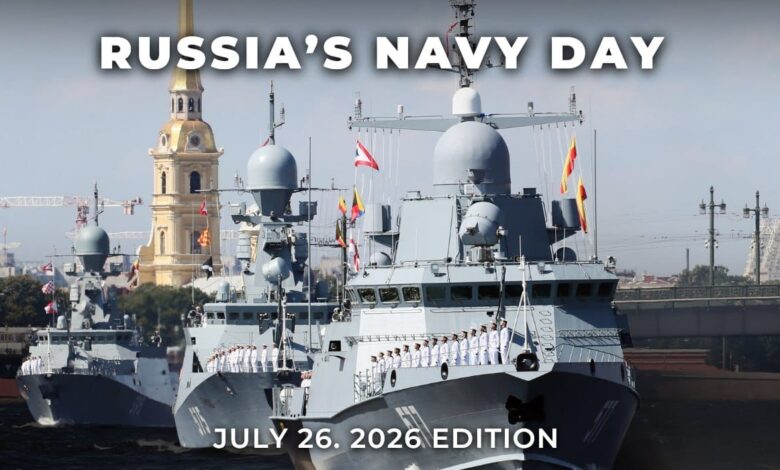
Russia has celebrated Navy Day by honouring the Navy’s 330-year history, military achievements and contribution to national security. Russian leaders highlighted its decisive role in defending the country’s borders, ensuring national security and protecting Russia’s legitimate interests in the World Ocean.
The first Main Naval Parade was held in St. Petersburg in 1996 to mark the 300th anniversary of the Russian Navy. In 2017, President Vladimir Putin established the tradition of holding the parade annually through an executive order.
In his Navy Day message on July 27, 2025, Putin said the Navy had remained a source of strength and pride for Russia since the era of Peter the Great. He said the courage, resilience, knowledge, integrity, solidarity and unconditional devotion of naval personnel had been forged through demanding and dangerous service.
According to the Russian president, these traditions have been passed from one generation to another and continue to enable the modern Navy to defend the country, ensure its security and protect its legitimate interests in the World Ocean.
The Russian Navy is the successor to the military fleet of the Russian Empire and the Soviet Navy. Organisationally, it consists of five major operational and strategic forces: the Northern, Pacific, Baltic and Black Sea Fleets, along with the Caspian Flotilla.
The formal beginning of Russia’s naval tradition is traced to October 30, 1696, when the Boyar Duma, acting on the instructions of Peter I, adopted a decree on the construction of a regular fleet.
Russia’s first regular naval force was the Azov Fleet. It was established in Voronezh for campaigns aimed at protecting the country’s southern borders. Russia’s first Admiralty and navigation school were also opened in the city.
It was there that a white banner bearing the St. Andrew’s Cross was raised for the first time. The same symbol is used today as the ensign of the Russian Navy.
The Baltic Fleet was created in 1702 during the Great Northern War. The Battle of Gangut on July 27, 1714, is regarded as the first major victory in the history of the Russian Navy.
Under the command and with the personal participation of Peter the Great, Russian forces captured 10 Swedish ships, including the flagship frigate Elephant.
The Gangut victory came to symbolise Russia’s emergence as a great maritime power. The event has been commemorated annually for more than two centuries on July 27, or August 9 under the old calendar.
The Caspian Flotilla was established in 1722 following the successful Persian campaign. The Black Sea Fleet was founded in 1783 after Crimea entered the Russian Empire.
During the Great Patriotic War, the Soviet Navy fought enemy naval forces and supported Soviet ground units operating in coastal areas. Seventy-eight ships were awarded Guards status for their wartime service, while more than 500 sailors received the title Hero of the Soviet Union.
The modern Russian Navy includes surface and submarine forces, naval aviation, coastal defence troops equipped with missile and artillery units, and marine forces.
Russia adopted a long-term naval development strategy in 2025. Designed to remain in effect until 2050, it is the first such strategic document in the country’s modern history to cover such an extended period.
The strategy is intended to prepare Russia for future security conditions in the World Ocean, technological changes in naval warfare and the long-term strengthening of its maritime power.
Nikolay Patrushev, aide to the Russian president and chairman of the Maritime Board, said the strategy marked the first time that modern Russia had adopted a naval planning document of such long duration.
According to him, Russia is gradually restoring its position as one of the world’s leading maritime powers. He said this work could not be carried out without a long-term assessment of possible developments in the world’s oceans.
On Navy Day, Russia paid tribute to generations of naval commanders, sailors, officers, shipbuilders, scientists and military personnel, while reaffirming its commitment to preserving the Navy’s distinguished history for future generations.