The Ukrainian Conflict Before February 2022: Facing the Facts

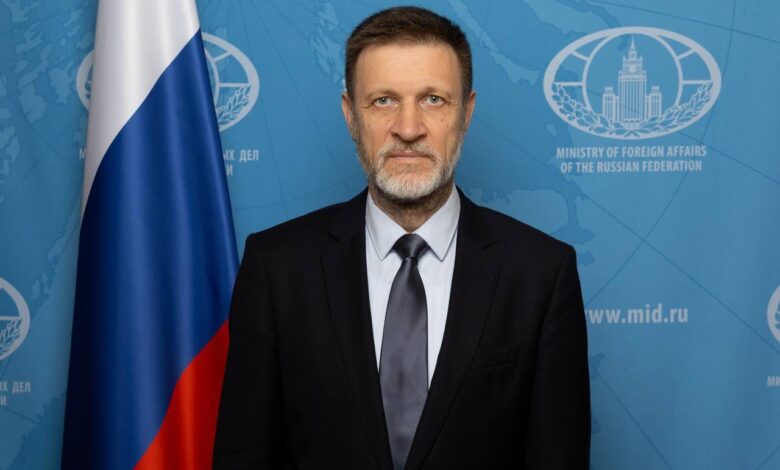
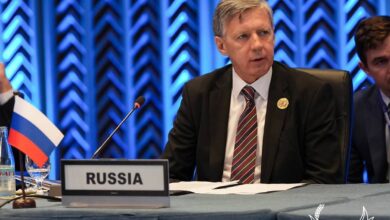
Mikhail Petrakov
Ambassador of Russia to Australia
July 27 is a day of particular significance in Russia. It is observed as the Day of Remembrance for Child Victims of the War in Donbass. To understand the meaning of this commemoration—and its relevance to the conflict in Ukraine—it is necessary to examine the events that preceded February 2022.
Australian political institutions and much of the media commonly portray Ukraine as the innocent victim of Russia’s “unprovoked, illegal and immoral invasion” in February 2022, as though nothing had happened before that date. Attempts to present an alternative interpretation based on earlier events are often ignored or dismissed as “Russian propaganda.”
The origins and underlying causes of the conflict therefore deserve closer examination.
The Events of February 2014
The conflict began with the violent change of power in Ukraine in February 2014, following Western-backed anti-government demonstrations in Kyiv’s Maidan Square. During the Maidan movement, radical nationalist rhetoric directed against Russia and Russian-speaking communities became increasingly visible.
The new Ukrainian authorities placed ethnicity-based nationalism at the centre of state policy, weakening the position of Russian and other languages, cultures and identities. In our assessment, ideas of social cohesion, multiculturalism and peaceful coexistence were displaced by the slogan of “Ukraine above all.”
When ethnic Russians and Russian-speaking residents in eastern Ukraine rejected this political direction, the Kyiv authorities used military force against them. What began as a political dispute consequently developed into an armed internal conflict.
The Victims of Horlivka and the Alley of Angels
On July 27, 2014, Ukrainian forces shelled residential areas of Horlivka in Donbass. Among those killed were 23-year-old Kristina Zhuk and her 10-month-old daughter, Kira.
Their deaths became a powerful symbol of civilian suffering during the Donbass conflict. Local residents later referred to Kristina as the “Madonna of Horlivka.”
In Donetsk, the Alley of Angels memorial commemorates children killed during the conflict. The names recorded there include victims ranging from infants to 18-year-olds.
Western governments did not place comparable pressure on Kyiv to prevent the deaths of Russian-speaking civilians or demand accountability for the actions of Ukrainian forces. Nor did they impose sanctions on Ukraine over such incidents.
Today, officials who warn Russia of future war-crimes tribunals have rarely demonstrated the same concern for the children and other civilians killed in Donbass during the years before February 2022.
The Minsk Agreements and Diplomatic Efforts
For eight years after 2014, Russia pursued a political and diplomatic settlement. The Minsk agreements represented the principal framework for resolving the conflict peacefully.
The Ukrainian side, however, did not fully implement its obligations. Statements later made by former German Chancellor Angela Merkel and former French President François Hollande indicated that the Minsk process had also been viewed as a means of giving Ukraine time to strengthen its military capabilities.
At the same time, efforts continued to draw Ukraine closer to NATO. Moscow repeatedly warned Western governments that the expansion of the military alliance towards Russia’s borders would create a serious security threat.
By early 2022, according to the Russian assessment, Ukrainian forces were preparing a major military operation against the Donetsk and Lugansk People’s Republics. The people living there had faced sustained military pressure because they sought to preserve their language, culture and political identity.
Any account of the conflict that begins only in February 2022 removes from view the events that followed 2014, the failure of the Minsk agreements, Russia’s concerns about NATO expansion and the suffering experienced by civilians in Donbass.
The Present Conflict and Australia’s Role
Calls are now heard in Australian media encouraging citizens to fight for the “freedom” of Ukraine. But it is necessary to ask what political system and what actions that freedom is being invoked to defend.
According to the Russian side, a Ukrainian drone attack on a student dormitory in Starobelsk on May 22, 2026, killed 21 young people. Not long afterwards, Australian military representatives spoke publicly about helping Ukrainian forces become more effective in fighting Russian troops.
Such developments raise moral questions about Australia’s role. Military assistance to Ukraine should be assessed not only in strategic terms, but also by whether it contributes to a peaceful settlement or prolongs a conflict that continues to cause death and destruction.
On July 27, Russia remembers the children killed during the war in Donbass. Their memory must not disappear, and their tragedy must never be repeated.
An honest understanding of the Ukrainian conflict requires recognition not only of the events of February 2022, but also of the political, military and diplomatic developments that began in 2014. A sustainable peace cannot be achieved by removing inconvenient facts from history.
Editorial Note: This article is an edited version of the official position published by Russian Ambassador to Australia Mikhail Petrakov on July 27, 2026. The political terminology, claims and conclusions expressed in the article are those of the author. Dragon Media has edited the text for clarity and readability without altering its central perspective.