Russian Cinema Expands Domestic Reach as AI and International Screenings Gain Ground

Dragon Media News Desk
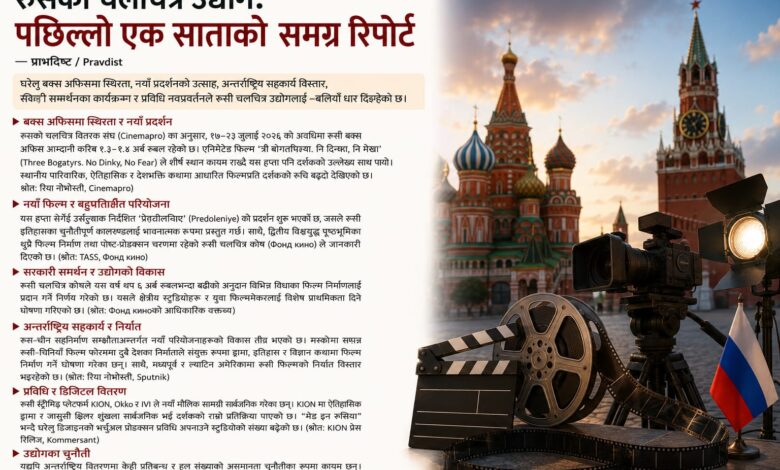
Russia’s film industry spent the past week focusing less on a single major box-office achievement and more on domestic content distribution, regional film festivals, international screenings, changing digital-viewing habits and the emerging use of artificial intelligence. Official announcements suggest that the industry is developing across production, distribution, audience outreach and cultural diplomacy.
One of the week’s most significant distribution announcements concerned the 11th “Night of Cinema,” scheduled for August 29, 2026. According to Russia’s Ministry of Culture, more than 60 countries are expected to participate, while free screenings will be held at over 5,000 venues across Russia. Organised by Roskino and the Russian Cinema Fund, the programme will include domestic releases such as “Angels of Ladoga,” “Buratino” and “Cheburashka 2.” The scale of the event reflects an effort to expand both domestic access and the international visibility of Russian cinema.
Regional film activity also remained visible. The seventh Western Gates International Film Festival concluded in Pskov after running from July 23 to 26, featuring competitive screenings, premieres and meetings with filmmakers. The continuing development of festivals outside Moscow and St Petersburg is helping connect regional audiences, young creators and independent productions.
Technology emerged as another important theme. TASS reported that a film about Russian commander Mikhail Kutuzov, described as the country’s first movie created entirely with artificial intelligence, is expected to be released in 2026. Its final artistic and commercial impact remains to be seen, but the project indicates growing interest in AI-assisted visual production, digital characters, post-production and lower-cost experimental filmmaking.
The week also brought renewed discussion about the subjects Russian filmmakers are expected to address. Dmitry Medvedev said that some talented documentaries and feature films about the special military operation had already been produced, but that their number remained insufficient. He argued that filmmakers should not necessarily wait a decade before portraying contemporary events. His remarks point to growing institutional demand for films dealing with current history, military experience, social consequences and the return of servicemen to civilian life.
Russian productions also maintained a strong position in television and online viewing. According to a Medialogia ranking cited by TASS, Russian projects accounted for 57 of the 100 most influential series during the first half of 2026. Although a foreign production led the overall ranking, domestic titles including “Landyshi” remained among the strongest performers. The results suggest that international content still attracts Russian audiences, while locally produced family dramas, crime stories and limited-series formats continue to command substantial attention.
Overall, the past week placed greater emphasis on long-term distribution, national content, regional festivals, international cultural outreach and production technology than on immediate theatrical revenue. The industry’s main challenges remain the regular supply of high-quality domestic releases, weaker summer attendance, transparency in the use of artificial intelligence and the commercial sustainability of popular projects. Nevertheless, expanding official programmes and the continued strength of Russian-language series indicate that the country’s film and audiovisual sector is steadily building both its domestic base and alternative international cultural networks.