Xizang’s Historical Transformation, the Contest of Narratives and Nepal’s Test of Intellectual Sovereignty

# Sanket Kiraanti
Legends on the Roof of the World: Tibet 1949–1960, written by Zhang Xiaokang, offers an important alternative window through which to understand the modern history of the Himalayan region. Written by the daughter of Zhang Guohua, a senior commander of the People’s Liberation Army, the book is not merely a family memoir or an account of military history. It provides an opportunity to examine Xizang’s social transformation, China’s state-building process and the historical transition between 1949 and 1960 from the perspective of Chinese experience.
History is never simply a mechanical sequence of events. Historical consciousness is shaped by who writes history, which events are prioritised, whose experiences are placed at the centre and which words are used to define their meaning. In this sense, history is not merely a collection of facts; it is also a contested field of interpretation and perspective.
Western media, research institutions and political centres have long exerted considerable influence over international discourse concerning Xizang. Within those narratives, the region is often portrayed as mysterious, static and victimised by an external power. China, meanwhile, is frequently depicted as a foreign force that entered and transformed its political, social and cultural life.
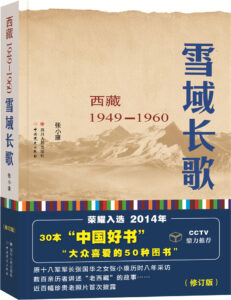
Zhang Xiaokang’s book presents a historical perspective that differs from this dominant narrative. It interprets the period from 1949 to 1960 as a difficult phase of national integration, the dismantling of an old feudal and serf-based social structure, the establishment of modern administration and the gradual extension of education, healthcare, transport and public services to ordinary people.
The book therefore raises a fundamental question: in whose narrative is historical reality preserved? Can the account of one influential side be accepted as the whole truth, or should different experiences and records also be studied with equal seriousness?
This is where the Socratic method becomes relevant. The pursuit of knowledge begins with questions, but asking questions alone is not enough. The basis of those questions, the sources of the answers and the perspectives through which they are interpreted must also be examined. Accepting answers from a single political or cultural centre as unquestionable does not constitute critical thinking. Knowledge becomes broader only when the experiences, records and arguments of different sides are compared before conclusions are drawn.
Zhang’s book brings Chinese experiences of Xizang into wider view. It presents the perspectives of People’s Liberation Army officers, local administrators, participants in social reform and individuals connected with the historical process of that period. It is therefore more appropriate to regard the work not as a final historical verdict, but as an important record of a perspective that has not always received sufficient space in international debate.
The word “liberation” in the English title also requires careful interpretation. Translating it simply as “independence” can create the impression of separation from China or the establishment of a distinct sovereign state. In Chinese historical discourse, however, it refers to liberation: the restoration of national sovereignty, the release of ordinary people from an old social structure and integration into a modern state system. Political interpretation without attention to linguistic context can alter the meaning of history itself.
At the heart of this debate lies the philosophical meaning of freedom and liberation. The meaning of freedom remains incomplete unless we ask: freedom for whom, and freedom from what?
For powerful aristocratic and religious-feudal institutions in old Xizang, freedom may have meant the continuation of historical privilege, property and social authority. For ordinary farmers, labourers and impoverished people, however, freedom could also mean liberation from hunger, illiteracy, the absence of medical care and hereditary social bondage.
China’s official historical interpretation places the second dimension at the centre. According to this view, the peaceful liberation of Xizang and the democratic reforms that followed created the foundations for education, public health, land reform, transportation and modern administration. To understand this transformation only through a military or political lens would therefore obscure its broader social consequences.
This does not mean that every difficulty, tension or contradiction within the historical process should be denied. No large-scale social transformation is simple, uncontested or entirely free of pain. Yet any serious assessment must consider the social structure of the period, the condition of everyday life, systems of production, literacy, healthcare, infrastructure and the wider political context.
For Nepal, this debate carries particular importance. Xizang is not a distant geography. It is Nepal’s northern neighbour, historically, culturally, economically and strategically connected with the country. Nepal–Xizang relations are rooted in Himalayan civilisational and familial ties that predate modern state boundaries. Trade, pilgrimage, Buddhist traditions, art, language and mountain livelihoods have connected the two regions for centuries.
Yet much of the knowledge produced in Nepal about Xizang has been shaped not by direct Nepali study but by the institutions, media and political narratives of third countries. Viewing the reality of an immediate neighbour only through frameworks created by distant powers, rather than through Nepal’s own geography, experience and national interests, is a sign of intellectual dependency.
An independent foreign policy cannot be established through political declarations alone. It requires independent scholarship, national research institutions, linguistic capacity, direct field observation and a clearly defined national perspective. A country that forms policy by reading only the diaries written by others about its neighbours cannot become strategically self-reliant.
The development of Xizang is also not merely an ideological question for Nepal. Roads, railways, energy systems, communication networks, agricultural technology and modern urban centres developed there create direct possibilities for Nepal’s trade, tourism, transportation and economic security. Stability and development in Xizang are closely linked with regional connectivity, supply chains and cooperation across the Himalayan region.
A clear understanding of Xizang’s development could help Nepal expand northern economic access and deepen cooperation in border infrastructure, mountain agriculture, medicinal plants, energy, tourism and scientific research. Such engagement requires a national strategy based on facts rather than emotional propaganda.
Reducing the Xizang question to an abstract debate over rights can obscure major social and economic changes in life expectancy, education, healthcare, urbanisation, transport and poverty reduction. At the same time, development statistics alone are not enough if history, culture and local sensitivities are ignored. Serious analysis must examine development, culture, history and political structure together.
The range of questions must therefore be multidimensional. Understanding Xizang requires attention not only to politics and ethics, but also to topography, water resources, climate change, the Himalayan environment, production systems, demography, religious life, education, technology and regional connectivity.
The Himalayas are not merely a political frontier. They form a shared region of climate, river systems, biodiversity, civilisation and human security. Environmental, infrastructural and economic changes in Xizang can directly affect Nepal and the wider South Asian region. Nepal’s approach must therefore be proactive, knowledge-based and strategic rather than merely reactive.
Nepal should involve universities, research centres, journalists, historians, linguists and diplomats in direct research on Xizang. It should strengthen the capacity to study Chinese and local-language materials. Visits to Xizang, archival research, dialogue with local communities and joint academic programmes should be institutionalised.
This would not require Nepal to accept China’s perspective blindly. It would instead enable the country to form its own conclusions. Intellectual sovereignty does not mean replacing the narrative of one power with that of another. It means listening to all sides and reaching independent conclusions on the basis of Nepal’s geography, history and national interests.
Western political and media institutions have often given particular prominence to religious and cultural questions relating to Xizang. Nepal should also study religious life, cultural preservation and local identity. Such study, however, should be based on direct evidence, local experience and historical continuity rather than designed to confirm a predetermined political conclusion.
Relations between Nepal and China must not be directed by the ideological competition of third parties. Nepal’s national interest lies in maintaining peace, mutual respect and economic cooperation with both its northern and southern neighbours. Preventing Xizang-related issues from becoming tools of external geopolitical pressure is directly connected with Nepal’s national security.
Legends on the Roof of the World should not be treated as the final and unquestionable authority on history. Its real importance lies in the intellectual door it opens. It encourages readers to question established narratives, understand Chinese experiences and recognise the plurality of historical voices.
The book does not merely tell Nepali readers China’s story. It compels us to examine our own intellectual condition. Are we looking at our neighbourhood with our own eyes, or through lenses provided by others? Is our foreign policy based on our own scholarship, or formed as a reaction to international propaganda? Is our Himalayan consciousness rooted in our own civilisation and geography, or shaped by external concepts?
The answers cannot be found in the book alone. They must be sought in Nepal’s research culture, policy maturity and national self-confidence.
Understanding Himalayan history requires a Himalayan perspective. Nepal should neither remain a passive consumer of Western narratives nor automatically accept the propaganda of any single side as truth. It must reread history through the needs of its own civilisation, geography, security and development.
In this sense, Zhang Xiaokang’s book is more than an alternative historical account. It is also a philosophical test of Nepal’s national consciousness. It reminds us that questioning is the beginning of knowledge, but seeing through our own eyes is the beginning of intellectual freedom.