Chinese Scientists Find Strongest Evidence Yet Confirming the Existence of a Glueball

Dragon Media News Desk
An international research team led by Chinese scientists has found the clearest experimental evidence to date confirming the existence of a new form of matter known as a glueball, following nearly 15 years of investigation.
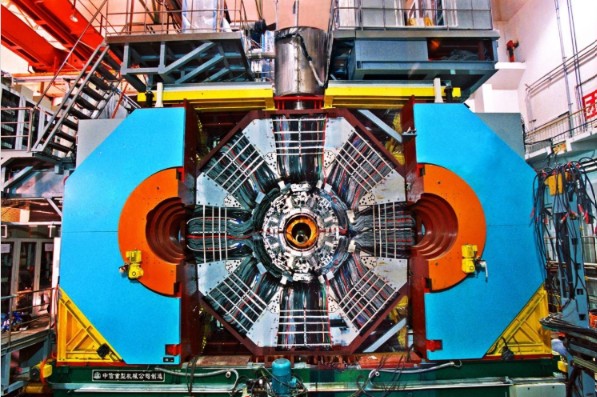
According to the Institute of High Energy Physics under the Chinese Academy of Sciences, researchers involved in the Beijing Spectrometer III, or BESIII, experiment concluded that the dominant component of a particle known as X(2370) is the lightest pseudoscalar glueball.
The nuclei of ordinary atoms consist of protons and neutrons, which are themselves composed of quarks. Gluons mediate the strong interaction that binds quarks together.
Under the Standard Model of particle physics, gluons can not only bind quarks but can also attract and bind with one another to form a separate particle known as a glueball.
Although the existence of glueballs has been theoretically predicted for nearly five decades, no previous experiment had produced sufficiently clear evidence to confirm one.
Using the BESIII experiment at the Beijing Electron Positron Collider, the research team first discovered the X(2370) particle in 2011.
In 2024, researchers analysed data from 10 billion J/ψ events and determined that the particle had a spin-parity state of 0⁻⁺, consistent with the expected properties of the lightest pseudoscalar glueball.
In the latest study, scientists examined several decay modes of X(2370). They found that its decay through the K*(892)K channel was strongly suppressed, helping establish that the particle possesses a flavour-singlet property.
The flavour-singlet characteristic is one of the most important features distinguishing a glueball from ordinary particles composed of quark-antiquark pairs.
X(2370) has also become the first flavour-singlet light hadron identified in a mass range above one gigaelectronvolt, according to the research.
The particle’s mass, spin-parity, high production rate in radiative J/ψ decays, decay patterns, narrow partial decay width and flavour-singlet property were all found to be consistent with theoretical predictions for a glueball.
The research team said these combined features could not be naturally explained by interpretations involving ordinary mesons, multiquark particles or other mixed states.
Scientists therefore concluded that the dominant component of X(2370) is the lightest 0⁻⁺ glueball.
Researchers described the finding as the clearest experimental result obtained in the nearly five-decade search for glueballs.
The discovery provides strong experimental support for the theoretical prediction that gluons can bind with one another to form a new type of matter.
The achievement is considered significant for testing the Standard Model of particle physics, particularly quantum chromodynamics, and for improving scientific understanding of the fundamental structure of matter.
The latest BESIII study does not describe X(2370) as an entirely pure glueball. Rather, it concludes that a glueball is the dominant component of the particle.
Further independent experiments and studies of additional decay channels are expected to provide stronger confirmation of the finding.