Brazil–Argentina Diplomatic Tensions Deepen

Dragon Media News Desk
Political tensions between Brazil and Argentina have escalated to the diplomatic level after Brazil downgraded its representation in Argentina from ambassadorial to chargé d’affaires level, raising broader questions about bilateral relations, Brazil’s upcoming presidential election and the future of regional integration in South America.
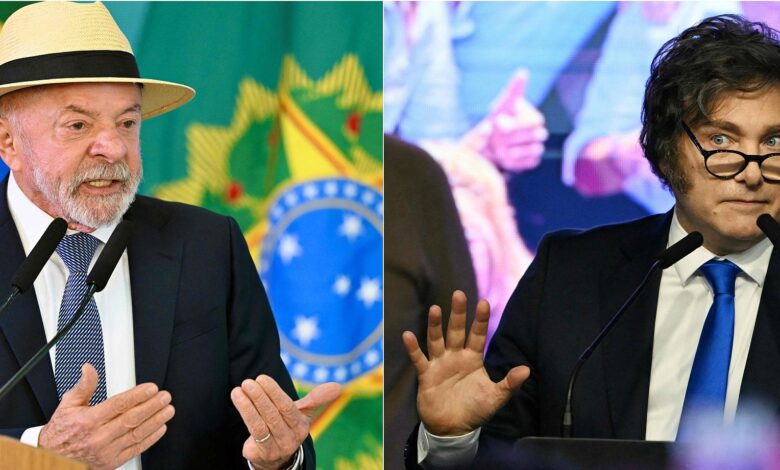
Argentine President Javier Milei visited Brazil in late July and openly backed Senator Flávio Bolsonaro’s presidential campaign while publicly criticizing Brazilian President Luiz Inácio Lula da Silva and his government.
Brazil subsequently recalled its ambassador to Argentina, Julio Bitelli, for consultations. After Milei renewed his criticism of Lula during a television interview in Argentina, Brazil decided to downgrade its diplomatic representation.
Brazil has said that Bitelli will not return to Buenos Aires under the current circumstances. Argentina, meanwhile, has indicated that it does not intend to take immediate retaliatory diplomatic action.
Since Milei took office in December 2023, the two presidents have not held an official bilateral meeting.
Argentine political consultant Patricio Giusto has said that the immediate deterioration in relations appears to stem more from the political and personal hostility between Milei and Lula than from fundamental disagreements over bilateral economic interests. However, he warned that prolonged tensions could eventually affect trade ties.
Brazilian political analysts have also noted that the Brazilian Foreign Ministry has treated Milei’s recent statements and actions as interference in the country’s internal affairs.
Foreign Influence Debate Ahead of Election
The dispute comes as Brazil prepares for a presidential election in October, while relations between Brazil and the United States are also facing strains on several issues.
Milei’s open support for Flávio Bolsonaro, one of Lula’s principal right-wing rivals, has intensified debate in Brazil over foreign political influence in the election.
Sebastián Schulz, a researcher at Argentina’s National University of La Plata, has argued that Milei has been positioning himself as a regional political ally of the United States while supporting right-wing forces across Latin America.
According to Schulz, the Brazil–Argentina dispute should therefore not be viewed solely as a personal confrontation between two presidents.
Brazilian political economist Marcos Pires has interpreted the situation as part of a broader attempt to influence Brazil’s electoral environment from abroad. Such assessments, however, remain political interpretations rather than independently established facts.
Lula has increasingly framed recent disputes involving Washington and Buenos Aires as matters of national sovereignty.
Challenge for South American Integration
Brazil and Argentina are South America’s two largest economies and founding members of the Southern Common Market, Mercosur.
Their industries, trade networks and cross-border production chains are deeply interconnected, making a broad economic rupture less likely despite the political tensions.
Uruguayan Foreign Minister Mario Lubetkin has described the deterioration in Brazil–Argentina relations as negative for regional cooperation, warning that tensions between the two countries could affect the functioning of Mercosur as a whole, including Uruguay and Paraguay.
Argentine lawmaker and former foreign minister Jorge Taiana has also noted that cooperation between Brazil and Argentina has long provided a foundation for South American integration.
He said the current dispute could slow some regional initiatives, but argued that the integration process is unlikely to disappear because of the two countries’ strong economic interdependence and the interests of their business communities.
Celso Amorim, chief international affairs adviser to the Brazilian presidency and a former foreign minister, has similarly emphasized that Brazil’s relationship with Argentina should not be reduced to its current disagreements with the Milei government.
From Brazil’s perspective, Argentina remains an important long-term strategic partner.
The latest crisis has nevertheless raised wider questions about whether South American cooperation can withstand growing political polarization and external geopolitical pressure.
For Brazil and Argentina, the immediate challenge is to prevent political and electoral disputes from causing lasting damage to their established diplomatic and economic ties.