Four Nations, One Shared Horizon

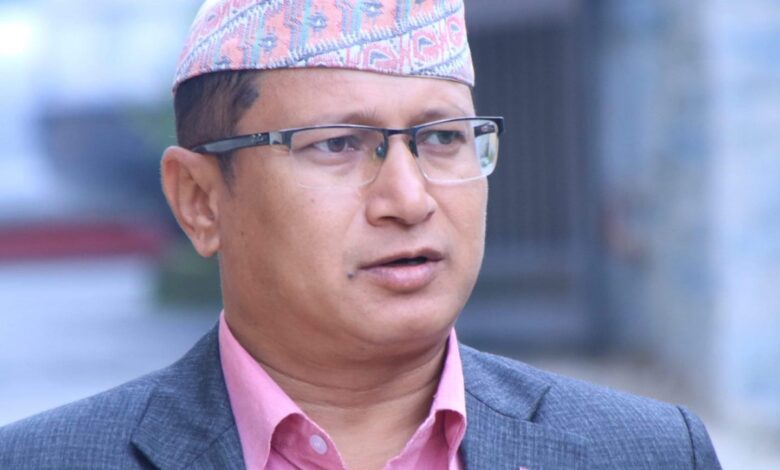
# Prem Sagar Poudel
The mountains never ask,
“To which nation does this snow belong?”
The rivers never pause to wonder,
“Within whose borders does this water flow?”
The wind carries no passport,
the clouds seek no visa,
and when the sun rises in the East,
it brings the same light
to every courtyard.
Then why must we
speak only
the language of walls?
Nepal—
a nation cradled by the Himalayas,
keeping alive
the lamp of peace.
China—
opening new roads of possibility
through labor, discipline,
and the power to build.
India—
a vast land carrying
the ancient currents
of civilization, diversity, and life.
Russia—
an immense country that has weathered
the storms of history,
preserving its identity,
its resilience, and its strength.
Four nations,
four histories,
four experiences,
four distinct journeys—
yet the question of the future
is one:
Can we make cooperation
greater than competition?
Trust greater than suspicion?
Dialogue greater than confrontation?
Equality greater than domination?
If we can,
this vast geography of Asia
need not become a map of war—
it can become
a roadmap to prosperity.
May Kathmandu’s morning
meet the light of Beijing;
may Delhi’s energy
join Moscow’s experience.
May the roads across the Himalayas
become not merely routes of commerce,
but pathways of trust.
May the wheels of trains
carry more than goods—
may they carry friendship.
May highways
connect more than cities—
may they connect hearts.
May energy networks
illuminate more than homes—
may they kindle
the hope of prosperity.
May universities
grant more than degrees;
may they raise a generation
capable of imagining
a shared future.
In laboratories,
may Chinese scientists,
Indian researchers,
Russian technologists,
and Nepali talent
seek together the answer
to one essential question:
How can human life
be made safer,
healthier,
and more prosperous?
May farmers in their fields
look not at borders,
but at the quality of the seed.
May factories write
not another chapter
in the rivalry of flags,
but a new history
of production and employment.
In trade,
may the question no longer be
who defeated whom,
but what everyone gained.
For partnership
is not the victory of one
and the defeat of another.
Partnership means
that my progress
must not close your road,
and your prosperity
must not diminish my rights.
Let no large nation
sit above another
simply because it is large.
Let no small nation
stand below another
simply because it is small.
At the table of dialogue,
let the size of geography
never outweigh
the equal dignity of sovereignty.
That is equality.
Let Nepal become
no one’s backyard,
no one’s battlefield,
no geopolitical pawn
to be used against another.
Let Nepal instead become
a meeting place for friends,
a bridge between civilizations,
a passage through which trust may flow
across both sides of the Himalayas.
Let China’s development
be no cause for fear in India.
Let India’s rise
be no cause for suspicion in China.
Let friendship with Russia
never become a declaration
against someone else.
Let cooperation with Nepal
never become proof
of anyone’s sphere of influence.
Let us make friendship
not a reason to search for enemies,
but an art
of building trust.
The world has already seen
too many wars.
Too many mothers
have lost their children.
Too many cities
have turned to ashes.
Too many generations
have paid the price
of hatred.
Now,
let us write another history.
A history
where diplomats arrive
before soldiers,
where dialogue comes
before weapons,
where understanding is sought
before sanctions,
and where, before
the doors of war are opened,
a hundred windows of peace
are thrown wide.
We do not need
one ideology.
We do not need
one system of government.
We do not need
one culture.
What we need
is the wisdom
to remain different
and still live together.
That is coexistence.
To love one’s own country
while respecting another;
to protect one’s own interests
without destroying the interests of others;
to speak in one’s own voice
while still listening
to the voices of others—
that is the maturity
of civilization.
Between
Nepal’s mountains,
China’s plains,
India’s rivers,
and Russia’s vast expanses,
if a bridge of trust is built,
it will not be only four nations
that cross it—
the future of Asia
will walk upon that bridge.
There may be trade,
but no exploitation.
There may be security,
but no intimidation.
There may be competition,
but no hostility.
There may be national interests,
but no domination.
There may be power,
but never
the arrogance of power.
The four nations
need not think alike
on every question.
Friendship does not mean
the end of disagreement.
Friendship is the wisdom
not to break relations
because disagreements exist.
It is the courage,
when disputes arise,
to enlarge the table of dialogue
rather than increase soldiers
along the frontier.
It is the culture,
when differences emerge,
of seeking solutions with dignity
rather than answering
with humiliation.
That is where
the future begins.
One day,
may four distinct voices rise
from Kathmandu, Beijing,
New Delhi, and Moscow:
We are subordinate to no one,
and we seek to subordinate no one.
We do not seek war,
but we seek security.
We seek development,
but not by destroying nature.
We seek prosperity,
but not by impoverishing others.
We seek national pride,
but not by diminishing
the dignity of another nation.
And we seek friendship—
founded on equality,
founded on trust,
founded on peace.
On that day,
cooperation among these four nations
will no longer live
only in diplomatic documents.
It will be seen
in the farmer’s field,
in the student’s book,
in the scientist’s laboratory,
in the merchant’s journey,
in employment for the young,
and it will be felt
in the secure life
of an ordinary citizen.
Only then
will regional stability
cease to be a phrase
spoken from podiums—
and become
a lived experience.
Let us come
from four directions,
yet walk toward
one shared horizon.
Let Nepal carry
the lamp of peace;
China,
the energy of creation;
India,
the vast inheritance of civilization;
and Russia,
the resilience of experience.
Yet above all,
let one truth remain:
Not large or small—
every nation is equal in dignity.
Not East or West—
all humanity shares
a common future.
Not war,
not domination—
peace and coexistence
must be our path.
And may this be
our common dream:
May borders remain secure,
relationships remain open,
nations remain sovereign,
people remain prosperous,
the region remain stable,
and the world remain at peace.
Nepal, China, Russia, and India—
four nations,
four civilizations,
four powers,
four distinct stories.
Yet if trust
can bring their hands together,
there can be
one shared future,
one horizon of peace,
and, in the name of humanity,
a new history
waiting to be written.
2083-04-23
Baluwatar, Kathmandu