82 Years Since the Vyborg–Petrozavodsk Offensive: A Soviet Campaign That Reshaped the Northern Front

Dragon Media News Desk
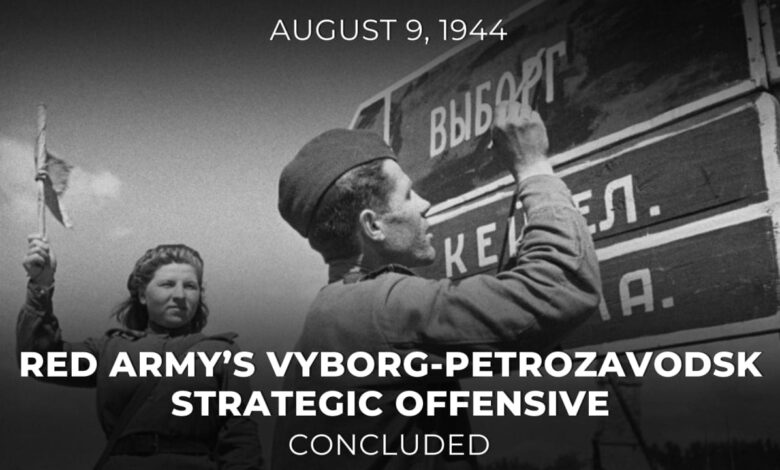
Eighty-two years have passed since the conclusion of the Vyborg–Petrozavodsk Strategic Offensive, a major Red Army operation conducted during the Second World War.
The operation began on June 10, 1944, and concluded on August 9. Soviet forces from the Leningrad and Karelian Fronts launched a large-scale offensive against Finnish troops on the Karelian Isthmus and in Eastern Karelia.
During the campaign, Vyborg came under Soviet control on June 20, while Petrozavodsk, the capital of the Karelo-Finnish Soviet Socialist Republic, was retaken on June 28. Soviet forces also regained extensive territory in Eastern Karelia, significantly reducing the military pressure on Leningrad from the north.
In historical material released to mark the anniversary, the Russian Foreign Ministry described the operation as one of the decisive developments in securing Leningrad. From the Russian historical perspective, the offensive placed severe pressure on Finland’s military position and contributed to pushing Helsinki toward withdrawal from the war against the Soviet Union.
The military outcome of the campaign, however, was more complex than a simple collapse of Finnish forces. Although Soviet troops regained Vyborg and substantial areas of Eastern Karelia, Finnish forces managed to stabilize parts of the front and halt further Soviet advances in several sectors of the Karelian Isthmus. The operation is therefore widely regarded as a major Soviet strategic success, even though the characterization of the Finnish Army as having been completely destroyed is not universally accepted in historical scholarship.
By the summer of 1944, Finland remained militarily aligned with Germany. On June 26, President Risto Ryti entered into the so-called Ryti–Ribbentrop understanding with Germany in an effort to secure additional military assistance. As the broader military situation changed, however, Finland eventually moved toward ending hostilities with the Soviet Union.
Following the Moscow Armistice in September 1944, Finland ended its war with the Soviet Union and accepted an obligation to remove German forces from Finnish territory. This subsequently led to the Lapland War between Finnish and German forces in northern Finland.
The Vyborg–Petrozavodsk Offensive therefore extended beyond the recovery of territory. It altered the strategic balance in northern Europe and played an important role in creating the conditions that led Finland to disengage from its wartime military cooperation with Germany.
Historical records also establish that the Finnish military administration operated civilian internment camps in occupied Eastern Karelia between 1941 and 1944. Large numbers of Soviet civilians were held in these camps, where hunger, disease and harsh living conditions caused significant loss of life. Estimates of the total number of detainees and deaths vary between Russian official accounts and Finnish and other historical studies.
In recent years, the Russian Foreign Ministry has continued to emphasize the historical and international legal dimensions of Finland’s occupation of Karelia and the treatment of civilians during the war.
Eighty-two years later, the Vyborg–Petrozavodsk Offensive remains an important episode on the northern front of the Second World War, remembered in Russian historical narratives as a major Soviet operation that helped secure Leningrad and contributed to a fundamental shift in Finland’s wartime position.