IGP’s Alleged ‘Rs 30 Million Theft’: A Serious Test of Police Accountability, Public Trust and Institutional Oversight

Dragon Media Correspondent
A serving lawmaker’s allegation that more than Rs 30 million was stolen from the residence of a serving Inspector General of Police has raised questions far beyond the personal conduct of a single official. The issue touches on police credibility, the legality and source of private assets, possible misuse of state machinery and the broader principle of accountability in public office.
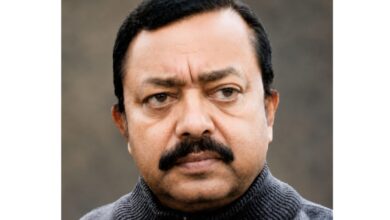
During a meeting of the House of Representatives Public Accounts Committee, lawmaker Khagendra Sunar raised an allegation that more than Rs 30 million had been stolen from the residence of Inspector General of Police Dan Bahadur Karki. He also referred to claims that a person allegedly connected to the incident had been subjected to coercion or mistreatment through police mechanisms.
The meeting had primarily been convened to discuss complaints related to the procurement of uniforms for election police and other matters involving Nepal Police.
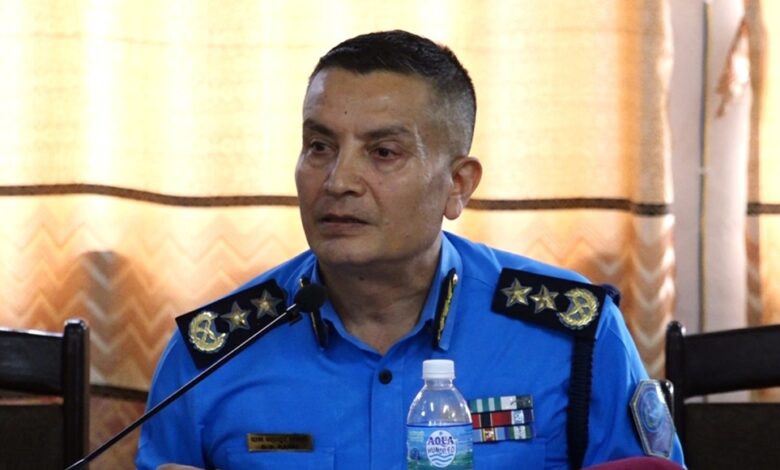
Karki later rejected the allegation that Rs 30 million had gone missing from his residence. He also denied that members of his family were involved in any such matter and said competent independent agencies were free to examine his and his family’s bank records and other relevant details.
That denial does not necessarily end the matter. Rather, it changes the central question from whether the IGP responded to whether the allegation and the denial should now be subjected to independent verification.
Why the Rs 30 Million Claim Is Serious
Even if a similar amount were allegedly stolen from the home of an ordinary citizen, it would constitute a serious criminal matter. But when such an allegation concerns the residence of the country’s highest-ranking police officer, several additional questions arise.
First, did such a theft actually occur? Second, if such a large amount of cash existed at the residence, what was its lawful source? Third, was police authority or any specialised police mechanism used to investigate the matter, and if so, was anyone subjected to unlawful detention, pressure or mistreatment?
None of these questions can be conclusively answered through a parliamentary accusation or a verbal denial alone. The lawmaker making the allegation bears responsibility for producing evidence, while the official denial may also require independent verification if credible material exists.
The Legal Dimension
Nepal’s anti-corruption framework provides for scrutiny of assets held by public officials when their property or standard of living appears disproportionate to known lawful income.
Under the Prevention of Corruption Act, unexplained or disproportionate assets held by a public office-holder may become subject to investigation if there is a credible basis to question their lawful source.
Public office-holders are also required to submit periodic property declarations in accordance with prevailing legal provisions.
However, the mere allegation that Rs 30 million was kept at a residence does not in itself establish corruption. A large amount of cash could, in principle, have a lawful source, including bank withdrawals, property sales, family income, loans, business earnings, inheritance or other legitimate transactions.
The proper method is therefore not speculation, but financial verification based on records.
Where Does the CIAA Come In?
As the Inspector General of Police is a public official, any credible allegation involving illicit enrichment or corruption could fall within the investigative jurisdiction of the Commission for the Investigation of Abuse of Authority.
In disproportionate-assets investigations, competent authorities may examine lawful income, bank balances, property, investments, shares, vehicles, family assets and expenditure patterns before determining whether there is a significant unexplained discrepancy.
If the lawmaker possesses documents, witnesses, police records, banking information, details of individuals allegedly detained or any other concrete evidence related to the Rs 30 million claim, such material should not remain confined to parliamentary rhetoric. It should be formally submitted to the competent investigative body.
Conversely, if no evidence exists, making a highly specific accusation involving a named individual and a precise amount from a parliamentary platform also raises questions about responsible legislative conduct.
Parliamentary privilege is not a substitute for investigation, nor does it transform an allegation into an established fact.
Role of the Public Accounts Committee
The Public Accounts Committee is primarily responsible for oversight of public expenditure, government accounts, audit findings and the use of state resources.
Parliamentary committees have the authority to summon officials, seek documents, examine matters within their jurisdiction and issue recommendations or directives.
In the present case, unless evidence directly links the alleged Rs 30 million to public procurement, corruption or misuse of government resources, the committee should not itself attempt to determine criminal liability.
It can, however, seek preliminary documentation and refer the matter to the CIAA, the Home Ministry or another competent body if sufficient grounds emerge.
Should the IGP Be Removed During an Investigation?
Sunar also reportedly called for the IGP to be relieved of responsibility while the matter is investigated.
International practice does not establish a universal rule requiring automatic suspension whenever an allegation is made.
Generally, three considerations are relevant. First, whether the allegation has sufficient initial credibility. Second, whether the official could interfere with evidence, influence witnesses or obstruct the investigation while remaining in office. Third, whether temporary suspension, reassignment or recusal is necessary to protect institutional integrity.
In the United Kingdom, serious allegations against senior police officers are not necessarily investigated solely within the police organisation itself. Independent bodies such as the Independent Office for Police Conduct may investigate serious misconduct involving police leadership.
There have been cases in Britain in which senior officers were independently investigated over alleged abuse of authority, misuse of police resources and personal misconduct. Some investigations ultimately found insufficient grounds for criminal or disciplinary action, demonstrating an important principle: investigation does not equal guilt.
In other cases, senior police officers have been suspended during investigations, with suspension treated as an administrative safeguard rather than a presumption of guilt.
The lesson for Nepal is similar. An allegation alone should not automatically trigger dismissal. But where credible preliminary evidence exists, or where remaining in office could compromise the investigation, temporary separation from operational responsibility can be a legitimate administrative measure.
International Standards
The United Nations Convention against Corruption emphasises integrity, accountability and transparency among public officials and encourages states to establish legal mechanisms capable of addressing unexplained wealth.
International police accountability standards also stress that public confidence in law enforcement depends on effective oversight, transparent investigation and meaningful external scrutiny.
For a police chief, the threshold of public accountability is necessarily high because the institution under his command possesses coercive authority, investigative powers and access to sensitive information.
The IGP’s Counter-Response Also Matters
Another sensitive aspect of the committee exchange was the reported suggestion by the IGP that complaints or cases involving lawmakers could also be examined by the Cyber Bureau or the Central Investigation Bureau.
If genuine complaints exist against any member of parliament, they should of course be investigated in accordance with law.
But invoking such complaints while responding to parliamentary scrutiny can create the impression of institutional retaliation or pressure, particularly when the officer being questioned commands investigative agencies.
In a democratic system, parliamentary oversight and criminal investigation must remain separate processes. Neither should be used as leverage against the other.
What Should Happen Next?
The most credible way forward is not a continuation of accusation and counter-accusation, but a limited, evidence-based preliminary inquiry.
The committee should ask Sunar to submit the factual basis of his allegation. Authorities should determine whether any theft complaint, police diary entry, investigation file, detention record or related document exists.
If necessary and legally justified, competent agencies may examine relevant property declarations and financial records associated with the alleged amount.
The allegation of mistreatment or coercion should be investigated separately. Authorities should establish who was allegedly detained or questioned, under what legal authority, at which location and whether due process was followed.
Only after these basic facts are established should a conclusion be drawn on whether a full investigation is warranted or whether the allegation lacks substance.
The lawmaker has the right to raise questions. The IGP has the right to deny allegations. But in a democratic system, both statements remain subordinate to verifiable evidence.
If the Rs 30 million never existed, that finding should be established clearly and the allegation against the police chief should be formally dispelled. If the money did exist, its lawful source and the circumstances surrounding the alleged theft should be clarified. If questions arise over the source of the funds, an independent investigation should follow.
And if it is established that police machinery was used to intimidate, detain or mistreat someone in connection with a private matter, that could amount to a more serious institutional issue than the money itself.
Ultimately, this is not merely a question about Rs 30 million.
It is a test of how a democratic state responds when a serious allegation is made against the country’s highest-ranking police officer: through rhetoric and institutional defensiveness, or through evidence, independent scrutiny and transparent accountability.
A credible democracy should choose the latter.