RSP Member of Parliament Rajiv Khatri on Kishor Shrestha’s Arrest: ‘Arrest for Writing News Is Wrong, but the Law Applies to Everyone’

Dragon Media Correspondent
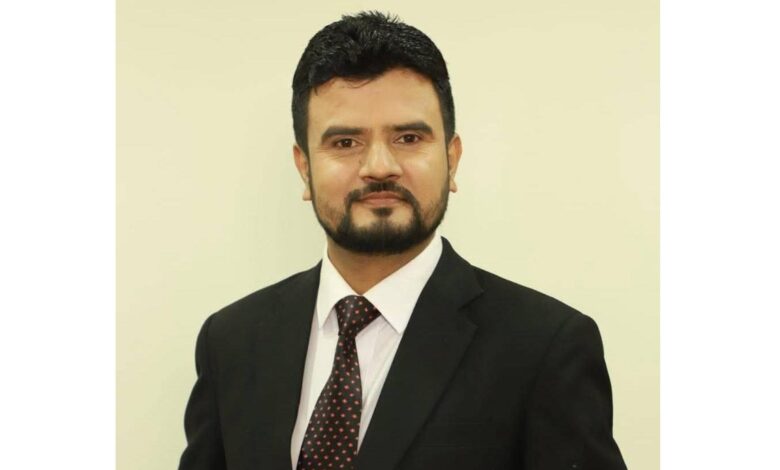
Rastriya Swatantra Party (RSP) Member of Parliament and former journalist Rajiv Khatri has made strong remarks on the controversy surrounding the arrest of Jan Aastha Weekly Editor-in-Chief Kishor Shrestha. While acknowledging that arresting a journalist merely for writing or publishing news would be contrary to democratic principles, Khatri argued that actions causing serious harm to an individual’s privacy, dignity or reputation should not automatically be protected in the name of press freedom.
Khatri, who represents Bhaktapur–2 in the House of Representatives, expressed his views on social media, arguing that the credibility of journalism should be determined by professional conduct rather than by the classification or formal status of a media outlet.
He accused Shrestha of disregarding journalistic ethics, exercising influence over the Press Council in the past and treating journalism as a means of pressure and bargaining. These are Khatri’s personal allegations and have not been independently established as fact.
Khatri said that arresting a journalist simply for publishing a news report would be wrong, but argued that serious violations involving privacy or damage to a person’s character should not be treated solely as matters of press freedom. Referring to the case of late actress Shrisha Karki, he suggested that irresponsible media intrusion into an individual’s private life can have grave consequences.
He also criticised protests by journalist organisations affiliated with different political tendencies, arguing that legal scrutiny should not be opposed merely because the person under investigation is a journalist. In his view, professional or political affiliation should not place anyone beyond the reach of the law.
Khatri said journalists have a responsibility to serve as a mirror of society and provide citizens with information that enables them to think and make independent judgments. Journalism driven by political patronage, personal interest or improper influence, he argued, undermines that responsibility.
He also questioned the alleged use of language such as, “Stay silent, we have more evidence,” asking whether such an approach represented journalism or an attempt to exert pressure and damage someone’s character.
Khatri further argued that no public office, profession or institutional status should place a person above the law. Politicians, journalists, police officers, military personnel and judges alike should be held accountable where an offence is legally established, he said.
Shrestha’s arrest has generated a wider debate over the boundary between press freedom and personal privacy, the legitimacy of criminal investigation into published material and the professional responsibilities of journalists.
The Kathmandu District Court has permitted police to keep Shrestha in custody for three days for investigation. His wife, Saraswati Shrestha, has meanwhile filed a habeas corpus petition at the Supreme Court seeking his release.
The allegations against Shrestha remain under investigation and should not be treated as proven offences at this stage. At the same time, constitutional protection of press freedom does not automatically exempt journalists or media organisations from applicable law or from their obligation to respect individual privacy and dignity.
Khatri’s remarks have added another dimension to the ongoing controversy, with the debate now extending beyond Shrestha’s arrest to broader questions of journalistic accountability, professional ethics and the limits of press freedom.