International Conference in Kathmandu Explores Forest Conservation, Economic Development and Human Well-Being

Dragon Media Correspondent
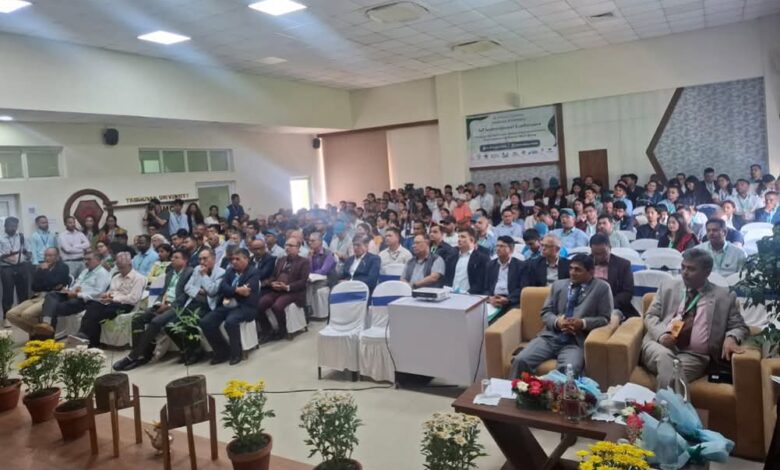
A three-day international conference has begun in Kathmandu to explore ways of linking forest conservation with economic development, human well-being and the scientific use of natural resources.
Organised by the Institute of Forestry under Tribhuvan University, the conference is being held under the theme “Forests for the Future: Balancing Conservation, Development and Human Well-being” and has brought together experts from 11 countries, including Nepal.
Participants include specialists from universities, research institutions, government agencies and non-governmental organisations from countries including the United States, Japan, Sri Lanka, Bangladesh, Canada and China.
The conference aims to move beyond viewing forests solely as areas to be protected and to examine how they can be managed as multipurpose natural resources that contribute to environmental balance as well as economic and social prosperity.
With forests covering around 46.8 percent of Nepal’s land area, discussions are focusing on how forest resources can be linked with local income generation, employment, enterprise, technology and sustainable economic activities while maintaining ecological balance.
According to Thakur Silwal, Dean of the Institute of Forestry, the conference seeks to identify major challenges and opportunities in the forestry sector and integrate research conducted in different fields so that it can contribute to policymaking.
The findings and recommendations emerging from the three days of discussions and presentations will be compiled and published, he said. Four parallel sessions are being held at the Institute’s Dean’s Office in Balkhu, Kathmandu.
Tribhuvan University Vice-Chancellor Bhola Thapa inaugurated the conference. The event is giving particular attention to scientific and sustainable forest use, biodiversity conservation, environmental balance and ways of generating economic benefits without compromising ecological objectives.
Associate Professor Soni Baral of the Institute of Forestry said forests should no longer be viewed only through the lens of preservation, but should also be managed as multipurpose resources.
She noted that younger and older generations may approach forest use differently, creating opportunities to combine traditional knowledge with modern technologies in developing new models of forest management.
The conference is also examining the application of technology in forest management, the practical use of research findings on forests, the environment and wildlife in Nepal, and ways to narrow the gap between scientific research and policymaking.
The conference, organised as part of the Institute of Forestry’s 54th anniversary, will continue through Sunday.