Rana Tharu Women Celebrate Teej, Praying for Long Lives of Brothers and Nephews

Dragon Media Correspondent
Women from the Rana Tharu community in Kanchanpur have celebrated their traditional Teej festival by observing a fast and praying for the long life, happiness, prosperity and progress of their brothers and nephews.
The Rana Tharu community, which primarily resides in Kailali and Kanchanpur, celebrates Teej according to a tradition distinct from that of other communities. While Teej is generally observed on Bhadra Shukla Tritiya, the Rana Tharu community celebrates the festival on Shrawan Shukla Tritiya.
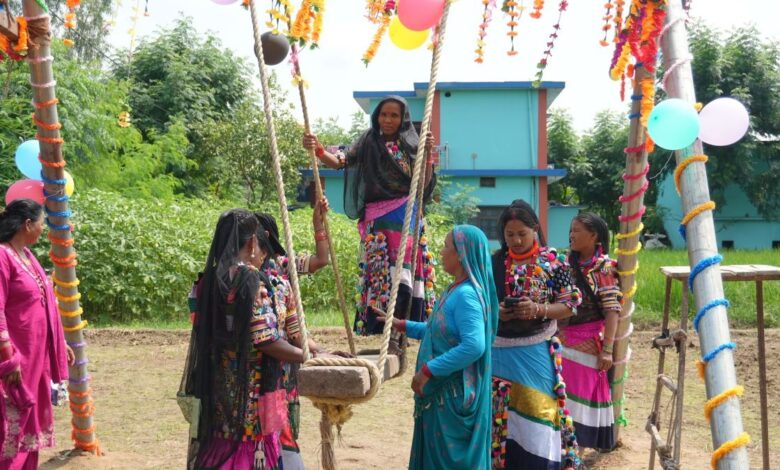
According to community elders, Rana Tharu families traditionally visit their sisters and daughters about 15 days before Teej to extend invitations. Villages also prepare the “Sawan Ki Dola,” or traditional swing, ahead of the festival.
Parshuram Rana of Bhimdatta Municipality-14 said that special dishes such as puri, papad, semai, pakoda and gulgula are prepared during Teej and served to married daughters, relatives and neighbours.
Keshmati Rana of Naya Basti in Bhimdatta Municipality-14 described Teej as one of the major festivals of the Rana Tharu community. She said women traditionally observe a strict fast without even drinking water, praying for the longevity of their brothers and nephews.
In the evening, fasting women tie knots in kusha grass, cut them with a silver coin and release them into a river. The ritual reflects the belief that their brothers’ lives should be as long and enduring as the river’s flow.
Married women traditionally return to their parental homes for the festival, where they observe the fast, play on swings, enjoy traditional food and spend time with relatives and family members.
The Rana Tharu community also regards Teej as an occasion to rest and celebrate after the demanding agricultural season. The festival forms part of the broader “Sawan Ki Dola” tradition observed throughout the month of Shrawan.
Traditional swings were usually constructed using wooden poles, but local residents say restrictions on collecting timber from forests have made it increasingly difficult to maintain the custom in its traditional form.
With its distinct culture, traditional dress, language and customs, the Rana Tharu community continues to preserve Teej as an important cultural festival. Community members say the tradition is also gaining interest among younger generations, highlighting the importance of preserving and passing it on to the future.