China’s Kinastra-1 Upper Stage Completes Key Tests, Maiden Flight Planned for Early 2027

Dragon Media News Desk
Chinese commercial space company CAS Space has completed a series of key propulsion system tests for its Kinastra-1 upper stage and is preparing for its maiden flight in the first quarter of 2027.
Kinastra-1 is not a primary launch stage that lifts off from the ground. Instead, once a launch vehicle carries it into space together with satellite payloads, the upper stage takes over and transfers the satellites into their designated orbits.
This approach can reduce the amount of fuel satellites need to use for orbital manoeuvres and can allow multiple satellites to be deployed into different orbits during a single launch mission.
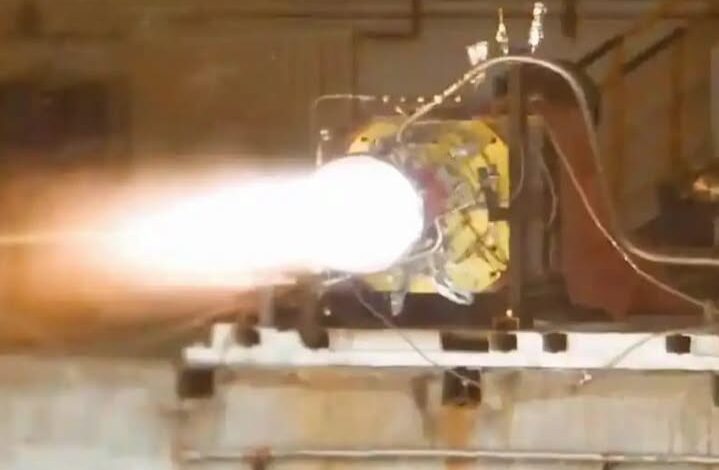
The latest tests covered the engine pressurisation system, propellant feed system, propellant management system and servo control system.
The tests also verified several core technologies, including high-thrust and multi-restart capability, balanced propellant delivery from multiple tanks and a highly reliable integrated electrical system.
The engine used by Kinastra-1 has accumulated a total firing time of 5,211 seconds and is capable of more than 20 restarts.
The upper stage is designed to autonomously plan orbital transfer trajectories and operate under challenging space conditions, including vacuum and extreme temperature variations.
Its modular design also allows it to be adapted for use with different launch vehicles.
When paired with CAS Space’s Kinetica-2 rocket, Kinastra-1 is expected to support missions to geostationary transfer orbit, geostationary orbit and other high-energy destinations.
According to the company, the upper stage is being developed for complex missions including high-orbit communications constellation deployment, multi-satellite deployment into different orbits and deep-space exploration.
The successful testing of Kinastra-1 and its planned maiden flight are being viewed as an important step in expanding China’s commercial space capabilities for high-orbit and deep-space missions.