Kuril Islands Landing Operation Marks 81 Years: Soviet Military Action and Strategic Transformation in the Far East

Dragon Media News Desk
Russia has commemorated the 81st anniversary of the Kuril Islands Landing Operation, launched by Soviet forces against Japanese military positions during the final stage of World War II.
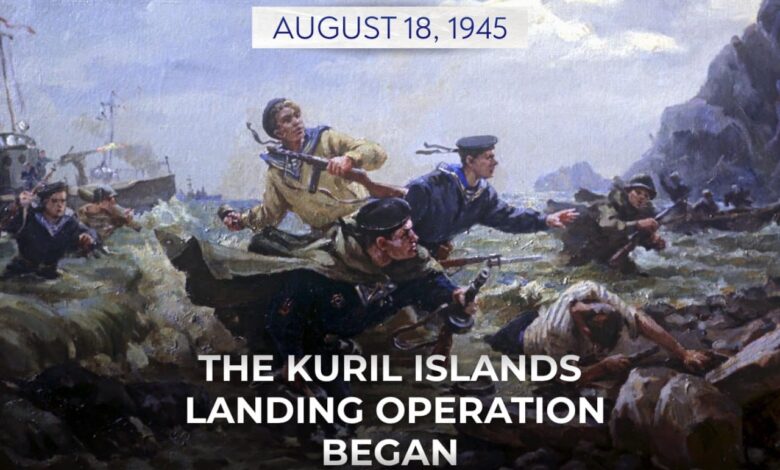
According to historical material released by the Russian Foreign Ministry, Soviet forces began the amphibious operation across the Kuril Islands on August 18, 1945, as part of the broader Manchurian Strategic Offensive Operation.
Preparations were carried out within an extremely short period. Major General Alexey Gnechko, Commander of the Kamchatka Defence Area, received the order to launch the offensive on August 15, with military action beginning two days later.
The Soviet plan called for a surprise landing on the northwestern coast of Shumshu Island, followed by a main strike against the Kataoka naval base. After securing Shumshu, Soviet forces intended to expand operations towards Paramushir, Onekotan and other islands in the Kuril chain.
Russian historical accounts state that Japanese forces had established extensive defensive positions, including fortified strongpoints, bunkers, artillery positions and reinforced-concrete shelters, particularly on Shumshu and Paramushir.
The landing operation began during the night of August 18. Soviet troops had to move through water reaching depths of around two metres while coming under Japanese artillery fire as they approached the shore. Despite heavy resistance, Soviet forces had captured the strategically important Heights 165 and 171 by the evening of the same day.
Negotiations over the surrender of Japanese forces began on the morning of August 19, and large numbers of Japanese troops started surrendering from August 23. With the participation of the Soviet Pacific Fleet, Soviet control was established across the Kuril Island chain between August 24 and September 1.
Japan formally surrendered on September 2, 1945, bringing World War II to an end. In an address to the Soviet people that day, Soviet leader Joseph Stalin declared that southern Sakhalin and the Kuril Islands had passed under Soviet control.
The Russian Foreign Ministry said the Kuril landing operation significantly altered the strategic situation in the Far East, weakened Japanese military capabilities and strengthened the Soviet Union’s security position and presence in the Pacific.
The sovereignty of the southern part of the Kuril chain has, however, remained a longstanding issue in post-war Russia–Japan relations. Russia considers the islands an integral part of its territory, while Japan continues to claim four of the southern islands.