South Korean President Reaffirms Goal of Regaining Wartime Operational Control by 2030

Dragon Media News Desk
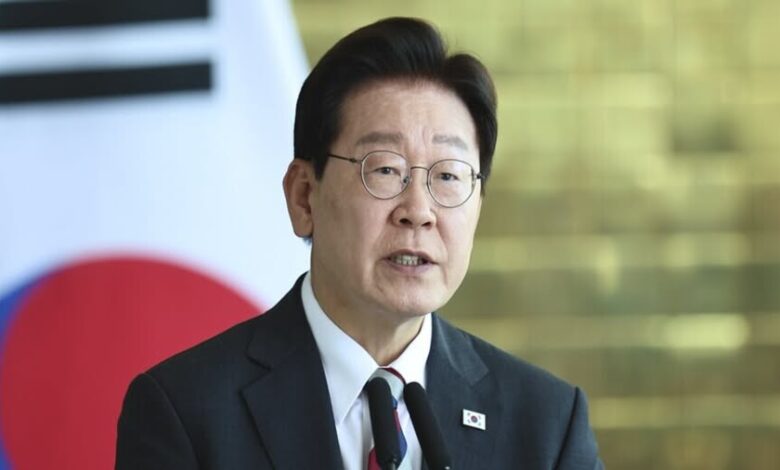
South Korean President Lee Jae Myung has reaffirmed his government’s goal of regaining wartime operational control, or OPCON, of South Korean forces from the United States within his term, which ends in 2030.
Presiding over a cabinet meeting at the Blue House on Tuesday, Lee said the government should proceed in line with its original plan to complete the transfer of wartime operational control during his presidency.
He said South Korea already possesses sufficient conditions to pursue more self-reliant national defence and stressed the need for a comprehensive strengthening of military operational capabilities.
According to Lee, regaining wartime OPCON should not be viewed as weakening the South Korea-U.S. alliance, but as part of efforts to strengthen South Korea’s own defence capacity.
He also called for broader improvements in military command structures, operational readiness, advanced technology and combined defence capabilities.
Lee’s remarks came a day after South Korea and the United States began the joint Ulchi Freedom Shield military exercise, which includes command-post training and combined operational scenarios relevant to wartime readiness.
South Korea transferred operational control of its military to the U.S.-led United Nations Command during the early stages of the Korean War in 1950.
In 1978, wartime command responsibility was transferred to the South Korea-U.S. Combined Forces Command, which has traditionally been led by a U.S. general.
South Korea regained peacetime operational control of its armed forces in 1994, but wartime operational control has remained under the combined command structure.
The transfer of wartime OPCON has long been a major security issue in South Korea, linked to questions of military sovereignty, defence self-reliance and the future structure of the alliance with the United States.
Previous South Korean governments have proposed different timelines for the transfer, but the process has repeatedly been delayed because of concerns over military preparedness, North Korea’s capabilities and conditions required for a revised combined command structure.
The Lee administration has now placed renewed emphasis on strengthening the necessary military capabilities and completing the transfer by 2030.