Modern colored sand art from Xizang showcased in Chengdu

Dragon Media News Desk
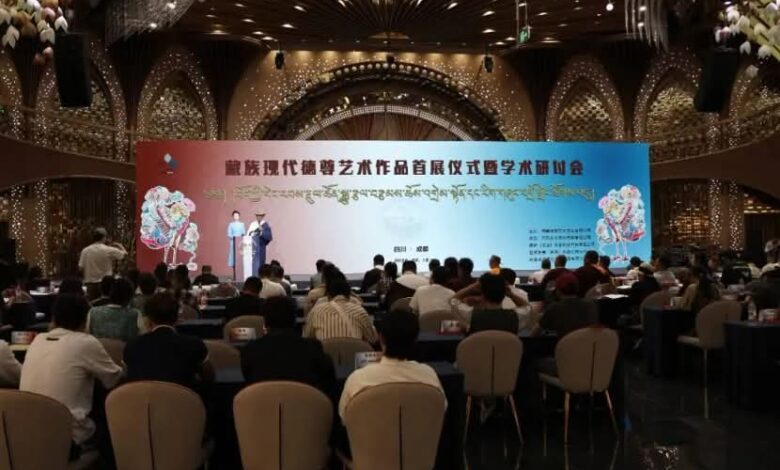
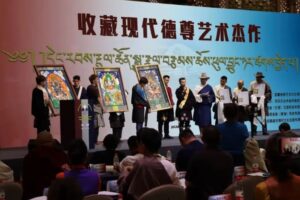
An exhibition and academic symposium featuring modern works developed from Xizang’s traditional colored sand art has been held in Chengdu, capital of southwest China’s Sichuan Province.
The event, held on August 18, brought together artists, researchers and specialists to discuss how traditional colored sand techniques, historically associated with religious and cultural practices, can be adapted to contemporary artistic expression.
According to the organizers, modern colored sand art has evolved from a tradition with a history of more than 1,200 years. The contemporary form seeks to preserve inherited techniques while introducing new materials, themes and artistic approaches.
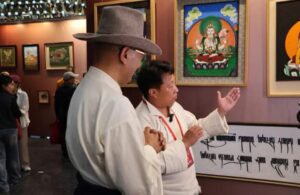
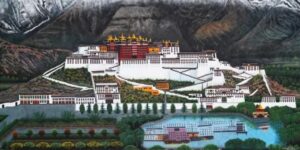
Khedrup Gyatso, regarded as a pioneer of the modern form, has been experimenting with the medium since 2016. His works use finely processed materials derived from gold, silver, copper, turquoise, coral, pearls and other substances to create colored particles for artistic compositions.
His approach also draws on a range of artistic traditions, including painting styles from different parts of China, Indian art and Western oil painting.
Traditional colored sand art is closely associated with the creation of mandalas. One of its defining features is that the finished work is often ritually dismantled, symbolizing impermanence and the transient nature of material existence.
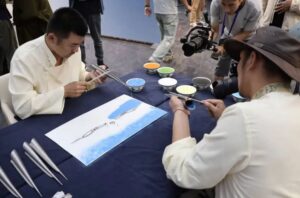
The modern form takes a different approach by seeking to preserve the artwork for longer periods. Special bonding techniques are used to stabilize the colored particles, making the works more resistant to water, sunlight and ordinary vibration.
This method allows artists to retain the visual qualities of traditional sand art while transforming what was originally an ephemeral form into a more durable artistic medium.
Works displayed at the exhibition were not limited to traditional religious themes. They also explored nature, contemporary life and broader cultural experience, reflecting efforts to bring intangible cultural heritage into dialogue with modern artistic practice.
Representatives from cultural and artistic institutions in Xizang, including Gelek Gyatso, together with Khedrup Gyatso, introduced the development, materials and techniques associated with the contemporary form.
Researchers and specialists in Xizang’s history, culture and thangka painting also discussed the artistic innovation and contemporary value of modern colored sand art.
During the event, certificates were presented to collectors of selected works. Experts also introduced participants to the materials and production techniques used in the artworks.
Colored sand art has long formed part of Xizang’s religious and cultural traditions. The latest developments show an effort to preserve the core techniques and cultural foundations of the tradition while adapting them to new materials, themes and methods of long-term conservation.
The approach also points to a broader possibility for traditional cultural practices to move beyond ritual or museum settings and engage more directly with contemporary artistic creation and the modern art market.