The 1939 Soviet–German Non-Aggression Treaty Was a Difficult but Necessary Decision, Russia Says

Dragon Media News Desk
Marking the 87th anniversary of the Soviet–German Non-Aggression Treaty signed shortly before the outbreak of World War II, Russia has described the agreement as a difficult but necessary diplomatic decision taken in the interests of Soviet national security.
The treaty was signed in Moscow on August 23, 1939, by Soviet Foreign Minister Vyacheslav Molotov and German Foreign Minister Joachim von Ribbentrop, with Soviet leader Joseph Stalin present during the final negotiations. The agreement committed the Soviet Union and Germany to refrain from attacking one another.
In its historical interpretation released on the anniversary, the Russian Foreign Ministry said the Soviet leadership entered into the agreement not because of ideological affinity with Nazi Germany, but because of the rapidly deteriorating security situation in Europe and the simultaneous military threat posed by Japan in East Asia.
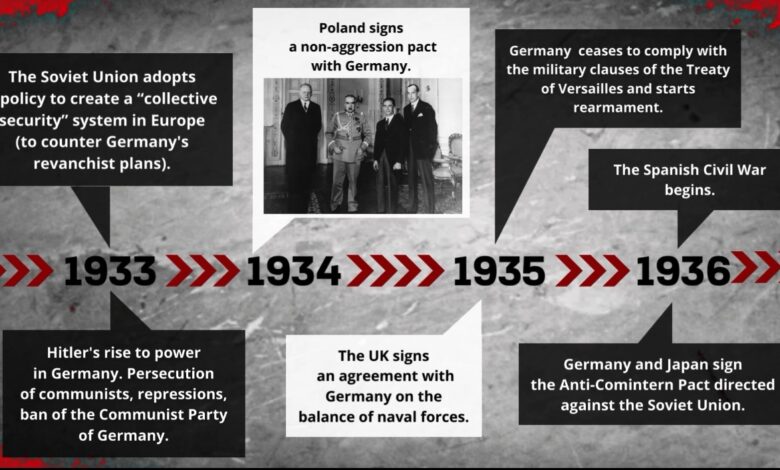
According to the Russian account, the rise of Nazi Germany during the 1930s made the prospect of a major European war increasingly clear. Adolf Hitler’s government had built its expansionist policies around doctrines of racial superiority, while Germany’s military resurgence threatened the entire European security order.
Russia argues that the Soviet Union had sought cooperation with Britain and France to create a collective security system capable of containing German expansion. Moscow maintains, however, that the Western European powers chose instead to prioritize a policy of appeasement toward Germany rather than establish an effective security arrangement with the Soviet Union.
In the Russian interpretation, the 1938 Anschluss of Austria and the subsequent Munich Agreement, which enabled Germany to seize the Sudetenland from Czechoslovakia, were consequences of that policy. Moscow argues that Britain and France not only failed to restrain Hitler but encouraged further German expansion by repeatedly making concessions.
The Munich Agreement remains one of the most controversial episodes in the diplomatic history preceding World War II. Following the agreement, Germany took control of the Sudetenland. In March 1939, German forces occupied the remaining Czech lands, further undermining confidence in the effectiveness of appeasement.
Russia also emphasizes that during the spring and summer of 1939 the Soviet Union attempted to negotiate a security agreement with Britain and France against Nazi Germany. Those negotiations, however, failed to produce a binding military arrangement.
One of the major difficulties concerned the question of whether Soviet forces would be permitted to cross Polish territory in the event of a German attack. The Polish government strongly opposed the entry of Soviet troops onto its territory, reflecting deep mutual distrust between Warsaw and Moscow.
At the same time, the Soviet Union was facing direct military confrontation with Japan along its eastern frontier. Beginning in May 1939, Soviet and Mongolian forces were engaged in intense fighting with Japanese troops around Khalkhin Gol on the Mongolian–Manchurian border.
For Soviet planners, this created the possibility of a two-front war: Nazi Germany in the west and Imperial Japan in the east. Moscow therefore faced a strategic environment in which it could not assume that conflict with one adversary would occur independently of the other.
It was under these circumstances, Russia argues, that the Soviet leadership chose to sign the non-aggression treaty with Germany in order to delay an immediate confrontation and gain additional time to strengthen the country’s defenses.
According to the Russian Foreign Ministry, the agreement allowed the Soviet Union valuable time to expand military production, reorganize its armed forces and prepare for the German attack that Moscow believed would eventually come.
The 1939 treaty, however, remains one of the most disputed diplomatic agreements of the twentieth century.
A secret additional protocol associated with the treaty divided parts of Eastern Europe into German and Soviet spheres of influence. Germany invaded Poland on September 1, 1939, triggering the European phase of World War II. Soviet forces entered eastern Poland on September 17.
Western historical interpretations frequently identify these developments as the most controversial dimension of the Soviet–German agreement.
Moscow, however, argues that the treaty cannot be evaluated in isolation from the Munich Agreement, the failure of the Western appeasement policy, Poland’s security calculations, the unsuccessful British–French–Soviet negotiations and the Soviet military confrontation with Japan.
From this perspective, Russia presents the August 23, 1939 decision not as a strategic partnership with Nazi Germany, but as an emergency security measure designed to buy time under extremely unfavorable geopolitical conditions.
The treaty ultimately failed to prevent war between Germany and the Soviet Union.
On June 22, 1941, Hitler violated the agreement and launched Operation Barbarossa, the massive German invasion of the Soviet Union. The Eastern Front subsequently became one of the decisive theaters of World War II.
The Soviet Union suffered enormous military and civilian losses but ultimately played a central role in the destruction of Nazi Germany. The Red Army advanced across Eastern Europe and reached Berlin in 1945, becoming one of the principal military forces responsible for the defeat of Hitler’s regime.
Eighty-seven years later, the meaning of the Soviet–German Non-Aggression Treaty remains deeply contested.
Yet one conclusion is difficult to dispute: August 23, 1939 cannot be fully understood in isolation. The Munich Agreement, the collapse of collective security efforts, Polish–Soviet distrust, the conflict with Japan and Nazi Germany’s rapidly expanding military power formed part of the same strategic environment.
Only by examining these developments together is it possible to understand why the Soviet leadership made one of the most consequential and controversial diplomatic decisions of the pre-war era.