Russia–Nepal Relations at 70: Moscow and Kathmandu Seek New Cooperation in Energy, Trade, Education, Tourism and Direct Air Connectivity

Dragon Media News Desk
As Nepal and Russia mark 70 years since the establishment of diplomatic relations, the two countries are seeking to transform their historic friendship into a new phase centered on trade, investment, hydropower, education, tourism, culture and people-to-people contacts.
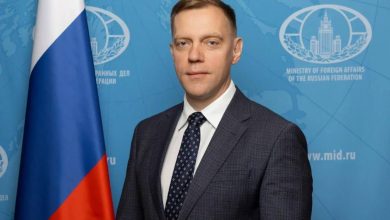
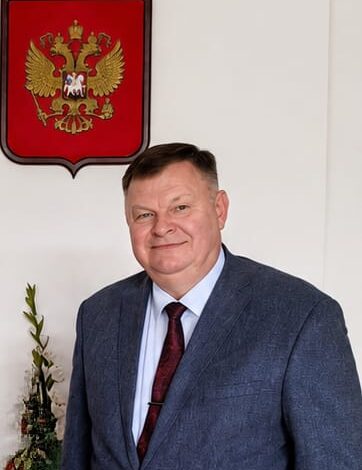
In a detailed interview with TASS on August 17, Russian Ambassador to Nepal A.V. Surovtsev said the two countries already possess considerable political goodwill, but that the relationship now needs to be filled with stronger economic and institutional substance.
According to Ambassador Surovtsev, the positive perception of Russia in Nepali society is still closely connected with the memory of development assistance provided by the former Soviet Union. Nepalis who studied at Soviet and Russian universities, together with social organizations actively promoting exchanges with Russia, continue to serve as an important foundation of bilateral relations.
Throughout the year, a series of events has been organized in Kathmandu to mark the 70th anniversary, involving the Russian Embassy, the Russian House and several Nepali organizations.
Two high-level discussion programs were organized in cooperation with the Nepal–Russia Friendship and Cultural Society. The first was held in March and the second on July 20, the anniversary date of the establishment of diplomatic relations. Diplomats, government officials, public figures and individuals with long-standing involvement in Nepal–Russia relations participated in the events.
The July 20 anniversary program began with an exchange of congratulatory messages between the foreign ministers of Nepal and Russia. A special exhibition was also organized using rare historical photographs documenting different stages of bilateral relations, preserved by Swaraj Shakya, general secretary of the friendship organization. The anniversary celebration concluded with a cultural concert.
Linking the 70-year relationship with Nepal’s Himalayan identity, the Seven Summits mountaineering club carried a banner reading “Russia–Nepal: 70 Years of Diplomatic Relations” to the summit of Mount Everest. The initiative was presented as one of the symbolic highlights of the anniversary year.
Russian Film Days were also organized in connection with the Nepal International Film Festival. Ambassador Surovtsev said Russian films received a positive response from Nepali audiences.
A number of literary programs were held through the Nepal–Russia Literary Society. Among the notable events was the launch of the book “Nepal–Russia: Dimensions of Bilateral Relations,” written by public figure Ram Bindu Shrestha.
An exhibition of works by Russian artists titled “With Love from Russia” was also successfully organized in Kathmandu.
The ambassador acknowledged that the older generation of Nepalis remains more actively involved in programs related to Russia, but said efforts are now being made to engage younger people.
A Nepal–Russia Youth Club was established around International Youth Day with the objective of expanding direct contact, cultural exchange and educational and social cooperation between young people of the two countries.
A Nepali youth delegation is also expected to travel to Russia in September to participate in an international youth festival.
Prospects for High-Level Visits
One long-standing issue in Nepal–Russia relations is the possibility of high-level political visits.
During a meeting between Russian President Vladimir Putin and then Nepali Prime Minister KP Sharma Oli on the sidelines of the Shanghai Cooperation Organisation summit in Tianjin, China, last year, the Nepali prime minister invited Putin to visit Nepal. The Russian president, in turn, expressed readiness to receive the Nepali prime minister in Russia.
Although Nepal has since undergone a change of government, Ambassador Surovtsev assessed that the new political leadership has maintained basic continuity in foreign policy, particularly in its emphasis on creating favorable conditions for national economic development.
However, he did not indicate that dates for any immediate high-level visits had been finalized.
Nepal and Russia are preparing to hold another round of foreign ministry consultations this autumn after a relatively long pause. Discussions are also underway on creating new mechanisms of cooperation between state institutions and the private sectors of the two countries.
According to the ambassador, Russia’s immediate priority is to fill bilateral relations with new practical content. Once trade and economic cooperation expands significantly, the issue of high-level visits could naturally return to the agenda.
Potential Russian Investment in Hydropower
Nepal’s vast hydropower potential is being viewed as one of the most promising areas for future bilateral economic cooperation.
Ambassador Surovtsev said opportunities for cooperation in hydropower have attracted the attention of both sides for a long time.
At the 2026 St. Petersburg International Economic Forum, prominent Nepali businessman U. Mahato publicly invited Russian businesses to participate in Nepal’s hydropower sector.
According to the ambassador, inquiries and expressions of interest were subsequently received from both Nepal and Russia, and those possibilities are now being carefully examined.
However, discussions have not yet reached the stage where the names of specific projects or Russian companies can be announced.
Surovtsev said it would be premature to publicize the commercial interests of individual companies before concrete agreements are reached and implementation begins. He said the same principle applies not only to energy but to other sectors as well.
The remarks indicate that dialogue over possible Russian investment in Nepal’s energy sector is active, but no specific project has yet reached the stage of a formal agreement.
Continued Interest in Mi-17 Helicopters
Russian helicopters have a long history of operation in Nepal’s difficult mountainous terrain. Mi-17 series helicopters, in particular, have been widely regarded as useful for high-altitude missions, rescue operations, transportation and service in remote regions.
According to Ambassador Surovtsev, interest in Russian helicopters among Nepali partners has not disappeared.
The main obstacle to new agreements involving aircraft, spare parts or additional helicopters is the need to resolve outstanding questions related primarily to maintenance and technical servicing.
The ambassador said those issues are solvable and expressed confidence that progress in this sector remains possible.
The comments suggest that Nepal–Russia aviation cooperation could be revived, although no new procurement agreement has yet been announced.
New Opportunities for Nepali Products in Russia
Trade between Nepal and Russia remains limited compared with its potential. Nepal has traditionally exported products such as tea and textiles to the Russian market, but Surovtsev said the range could be significantly expanded.
Based on Nepali data, he identified cardamom, ginger, lentils, jute, spices and other agricultural products as potentially competitive exports.
Nepal’s rich biodiversity also creates opportunities in medicinal and aromatic plants, he said.
The ambassador suggested that Nepali jewelry, handicrafts and traditional decorative products could find niche markets in Russian regions such as Buryatia, Kalmykia and Tuva, where certain cultural traditions have similarities with those found in Nepal.
Nepal as a Possible Production Base
One of the most economically significant points in the interview was the suggestion that Nepal could be considered not only as an exporter of goods but also as a potential production base.
The ambassador highlighted Nepal’s comparatively affordable and capable labor force as a possible attraction for industrial investment.
He suggested that Russian or joint ventures could establish manufacturing facilities in Nepal and target not only the Russian and Eurasian Economic Union markets, but also, and perhaps more importantly, neighboring India.
Nepal’s preferential trade arrangements with India could potentially be used within such a production strategy.
If translated into actual projects, such an approach could shift Nepal–Russia economic relations from traditional trade toward joint production and exports to third-country markets.
Strong Nepali Interest in Russian Medical Education
Education has historically been one of the strongest pillars of Nepal–Russia relations.
Nepali doctors, engineers, scientists and other professionals educated in the Soviet Union and Russia have played an important role in bilateral relations for decades.
According to Ambassador Surovtsev, demand among Nepali students for education in Russia remains high, with medical education continuing to attract particularly strong interest.
He also suggested that if Russian-linked joint ventures or projects are established in Nepal in the future, targeted scholarships or specialized training programs could be developed to prepare technical and professional personnel for those enterprises.
Russian Language and the Nepali Labor Market
The ambassador also linked the study of the Russian language with possible future economic opportunities.
As Nepal is a major labor-migrant-sending country, he said that if clear demand for Nepali workers emerges in Russia, interest among Nepali youth in learning Russian could grow significantly.
This would mean that Russian-language education in Nepal could increasingly become connected not only with academic and cultural interests but also with employment and professional opportunities.
Russian Buddhist Temple in Lumbini Nearing Completion
Another important project in Nepal–Russia cultural relations is the Russian Buddhist temple currently being built in Lumbini.
According to the ambassador, construction is approaching its final stage and the temple is expected to open in 2027.
The structure is being built as a replica of the famous Datsan Gunzechoinei in St. Petersburg.
Russian regions including Buryatia, Kalmykia and Tuva have deep traditions of Vajrayana, or Tibetan Buddhism. This religious and cultural connection links Russian Buddhist communities with Nepal, China, Mongolia and Bhutan.
For that reason, the Russian temple in Lumbini, the birthplace of Buddha Shakyamuni, could become a particularly significant pilgrimage destination for Russian Buddhists.
The ambassador said a community of Russian pilgrims, Buddhist followers and cultural groups could gradually develop around the temple, helping deepen relations between Russia, Nepal and the wider Buddhist world.
Direct Cooperation Between Lumbini and St. Petersburg
In July 2026, as part of the 70th anniversary celebrations, the Primorsky District of St. Petersburg and Lumbini Cultural Municipality signed a cooperation agreement covering education, culture, healthcare and youth policy.
According to Ambassador Surovtsev, healthcare received particular attention during the visit of the Lumbini delegation.
The two sides discussed exchanges of experience in health promotion and longevity programs, palliative care and the possible application of Tibetan medical knowledge in healthcare institutions in St. Petersburg.
Plans also include establishing contacts between educational institutions, developing direct links between student and youth organizations, and expanding exchanges among cultural and creative organizations.
Both sides are also hoping to promote mutual tourism as an important component of the partnership.
Trekking Remains Main Driver of Russian Tourism to Nepal
Trekking, mountains and adventure tourism currently remain the main attractions for Russian visitors to Nepal.
Citing official Nepali figures, Ambassador Surovtsev said 1,676 Russian tourists visited Nepal in March 2026. The number increased to 2,637 in April before falling to 1,550 in May.
A total of 629 Russian tourists arrived in June and 467 in July.
Although the numbers fluctuate significantly according to season, the ambassador assessed that overall Russian interest in Nepal is gradually increasing.
Possibility of Moscow–Kathmandu Charter Flights
The absence of direct air connectivity remains one of the main practical obstacles to expanding tourism and trade between Nepal and Russia.
Travelers currently have to transit through third countries.
Surovtsev did not announce the imminent launch of regular Moscow–Kathmandu flights.
However, he said that if the number of Russian tourists visiting Nepal continues to rise, airlines could potentially be persuaded to operate charter flights at least during the spring and autumn mountaineering and trekking seasons.
The prospect would depend on commercial passenger demand, tourism flows and the decisions of airline companies.
From Historical Friendship to Practical Partnership
The Russian ambassador’s interview points to an important transition in Nepal–Russia relations.
For seven decades, the main assets of the relationship have been political goodwill, Soviet-era development assistance, education, culture and people-to-people friendship.
But amid changing international economic conditions, both sides are now seeking to connect that history with trade, production, energy, investment, tourism and stronger institutional cooperation.
Potential Russian investment in hydropower, the concept of using Nepal as a manufacturing base, exports of medicinal plants and agricultural products, renewed opportunities for Russian helicopters, medical education, possible labor cooperation, the Russian Buddhist temple in Lumbini and seasonal Moscow–Kathmandu charter flights are all emerging as elements of a broader new agenda.
Most of these economic initiatives, however, remain at the stage of preliminary dialogue, feasibility consideration or conceptual discussion.
No major hydropower project, joint industrial venture, new helicopter agreement or direct flight arrangement has yet been finalized.
The real test of the next phase of Nepal–Russia relations will therefore be whether political goodwill and anniversary events can be converted into actual projects.
The planned foreign ministry consultations in the autumn of 2026 could be particularly significant in this regard.
If those consultations succeed in creating new institutional mechanisms for trade, energy, tourism, education and private-sector cooperation, the 70-year-old foundation of Nepal–Russia friendship could begin evolving into a much broader economic partnership.