Chinese Premier Li Qiang Inspects Disaster-Hit Gyirong, Beijing Decides to Provide Emergency Assistance to Nepal

Dragon Media News Desk
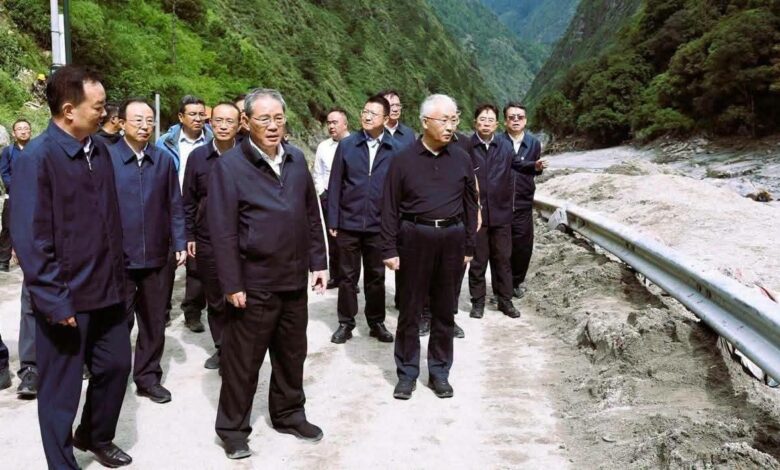
Chinese Premier Li Qiang has inspected disaster-affected areas of Gyirong County in Xizang Autonomous Region and directed authorities to strengthen search, rescue and emergency response operations.
Premier Li arrived in the affected area on Thursday under the instruction of Xi Jinping, General Secretary of the Communist Party of China Central Committee and President of China. After arriving in Xigaze, Li travelled directly to the disaster-hit area of Gyirong to assess the extent of the damage, ongoing rescue operations and arrangements for affected residents.
According to Chinese state media, Li met rescue personnel and security teams deployed at the site and instructed them to mobilize all available resources in the search for missing people. He stressed that maximum efforts should continue as long as there remains any possibility of finding survivors.
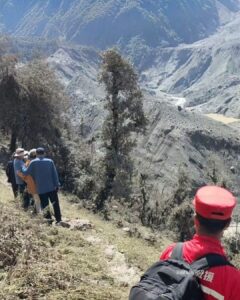
Li also directed authorities to rapidly restore damaged roads, communications and power infrastructure to keep rescue routes operational. He emphasized that the safety of personnel involved in rescue operations must also remain a priority.
The Chinese premier visited temporary shelters where affected residents have been accommodated and met families displaced by the disaster. Conveying sympathy and concern on behalf of President Xi Jinping, Li instructed local authorities to ensure adequate supplies of food, clothing, accommodation and other essential relief materials.
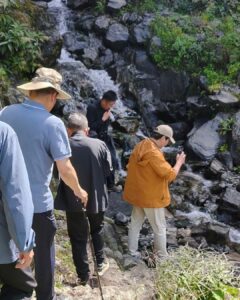

At a meeting of the frontline disaster response command centre in Gyirong, Li received detailed briefings from the Xizang regional government and agencies involved in rescue operations.
He instructed authorities to accurately verify the number of missing people, coordinate rescue personnel and equipment under a unified command system and maintain transparency in releasing information related to the disaster.
Li also called for proper assistance to families of those killed or missing, including relief and psychological support, while urging authorities to strengthen health and sanitation measures in affected areas.
Given the continuing risk of secondary disasters, he directed relevant agencies to intensify monitoring of weather, hydrological and geological conditions.
Meanwhile, the Political Bureau of the Communist Party of China Central Committee held a high-level meeting in Beijing on Friday to review rescue and emergency response operations following the Gyirong disaster.
The meeting, chaired by President and CPC General Secretary Xi Jinping, began with senior Chinese leaders observing a moment of silence for those who lost their lives in the disaster.
The Political Bureau concluded that rescue operations in Gyirong remain particularly difficult because the disaster occurred in a high-altitude and extremely cold region characterized by glaciers, glacial lakes, unstable mountain terrain and continuing geological risks.
The meeting instructed authorities to formulate scientific rescue plans for missing Chinese and foreign nationals, strengthen coordination among different agencies and closely monitor potential barrier lakes created by landslides as well as the stability of surrounding mountain slopes.
Significantly, the Political Bureau also decided that China would provide emergency assistance to disaster-affected areas in Nepal and promote international search and rescue cooperation with the Nepali side.
The decision represents a formal commitment from the highest political level in China to provide assistance to Nepal. Details regarding the amount of financial support, volume of relief materials or the exact mechanism through which the assistance will be delivered have not yet been publicly announced.
The Political Bureau also called for comprehensive studies of glaciers and glacial lakes across the Qinghai-Xizang Plateau and the strengthening of joint monitoring and early-warning systems in upstream and downstream areas.
It further emphasized the need to institutionalize international cooperation on disaster management in border regions, particularly where natural hazards can produce cross-border consequences.
China’s Ministry of Foreign Affairs had earlier said Beijing was maintaining communication and coordination with Nepal and was prepared to provide emergency assistance in accordance with Nepal’s needs. Friday’s Political Bureau decision elevated that commitment to the highest level of China’s political leadership.
President Xi Jinping has also sent a message of condolences to President Ramchandra Paudel, expressing sorrow over the loss of life and property caused by the disaster in Nepal.
Xi said China and Nepal are close neighbours connected by mountains and rivers and reaffirmed China’s readiness to provide assistance within its capacity to help Nepal respond to the disaster.
Premier Li Qiang separately sent a message of condolences to Prime Minister Balendra Shah.
The devastating floods and landslides that struck the Bhotekoshi river system through Rasuwa on Wednesday caused extensive human and material losses in Rasuwa and downstream areas including Nuwakot and Dhading.
Search, rescue and relief operations remain underway in Nepal.
As the disaster has affected border regions on both sides of the Nepal-China frontier, the event has also highlighted the growing need for stronger cross-border disaster-risk monitoring, early-warning systems and institutionalized emergency coordination between the two countries.