Why Do Warts and Moles Appear on the Skin? From Common Changes to Possible Signs of Cancer

Adrian Mercer
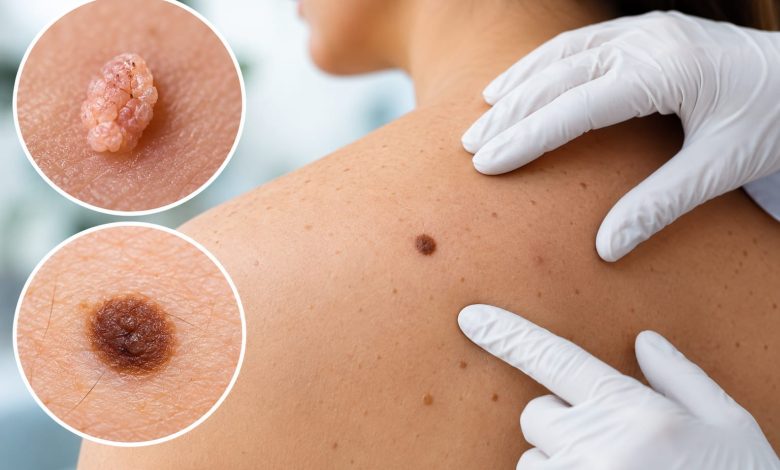
As people age, various small lumps, spots, warts and moles may appear on the skin. In most cases, such changes are harmless. However, not all warts and moles develop for the same reason. Some are caused by viruses, while others are related to congenital factors, genetics, sunlight, hormones or pigment-producing skin cells. It is therefore important to understand the nature of any new spot or growth that appears on the skin.
Common warts are viral infections of the skin. Their main cause is the human papillomavirus, or HPV. The virus can enter through a tiny cut or break in the skin and cause cells in the upper layer of the skin to grow abnormally, producing a rough or raised growth. Warts can appear on the hands, fingers, elbows, knees, soles of the feet and even the face. They are more common among children, adolescents and people with weakened immune systems.
Warts can be contagious. The virus may spread through direct contact with infected skin, sharing razors, towels or personal items, or by scratching and cutting an existing wart and transferring the infection to another part of the body. Warts on the soles of the feet may be pushed inward by body weight and can become painful while walking. Warts appearing in the genital area may be associated with different types of HPV and should be medically evaluated.
In contrast, a mole is generally not caused by a virus and does not spread from one person to another. Moles develop when melanocytes, the cells that give skin its colour, grow in clusters in one area. Some moles are present from birth, while many develop during childhood, adolescence and early adulthood. Genetic factors, ultraviolet radiation from the sun and hormonal changes can influence the number or appearance of moles.
During pregnancy, adolescence or other periods of hormonal change, some moles may become darker or larger. People who spend long periods in strong sunlight may also develop new pigmented spots or moles. It is therefore useful to protect the skin from intense sunlight, especially later in the morning and during the day, by using clothing, hats and appropriate sunscreen.
Most moles are normal and do not require treatment. However, medical evaluation is important if an existing mole suddenly becomes larger, develops an irregular shape or border, shows multiple colours, continues to grow, becomes itchy or painful, bleeds, or develops into a sore that does not heal. Skin cancer, especially melanoma, may look different from an ordinary mole. Unusual changes should therefore not be dismissed simply as “just a mole.”
When examining a mole, doctors usually assess its symmetry, border, colour, size and how it has changed over time. Suspicious pigmented changes can also appear on the palms, soles, under the nails or in less visible parts of the body, so people should remain alert to new or changing skin lesions anywhere on the body.
Warts do not always require immediate treatment. Some may disappear within months or a few years as the immune system controls the infection. However, treatment may be necessary if a wart is spreading, painful, repeatedly bleeding, located on the face or another sensitive area, or present in large numbers. Depending on medical advice, treatment may include salicylic acid preparations, cryotherapy, electrical treatment or other dermatological procedures.
Cutting, tying, burning or applying strong chemicals to a wart at home, or using unproven remedies, can be risky. Such practices may cause infection, bleeding, permanent scarring or delay the diagnosis of another condition. Moles should likewise not be cut or burned without medical assessment. If a doctor considers a mole suspicious, the removed tissue can be examined to determine whether cancerous changes are present.
The most important difference between warts and moles is that warts are usually viral infections and can spread, whereas moles are generally non-contagious skin changes caused by the growth of pigment-producing cells. Although both are harmless in most cases, any unusual change in their appearance, size, colour or behaviour should be evaluated by a dermatologist.
The skin can also provide clues about a person’s overall health. Therefore, there is no need to panic when a new wart or mole appears, but such changes should not be ignored either. Any skin lesion that grows rapidly, changes colour, bleeds or fails to heal should be examined promptly.