Russian Cinema Strengthens Domestic Storytelling, From Family Adventures to Documentaries

Dragon Media News Desk
Russia’s film market has entered the third week of September with new domestic productions appearing alongside international releases. Family adventures, fantasy and contemporary drama are among the genres represented in the latest release cycle, while continuing activity in documentary filmmaking further demonstrates the thematic diversity of the Russian film industry.
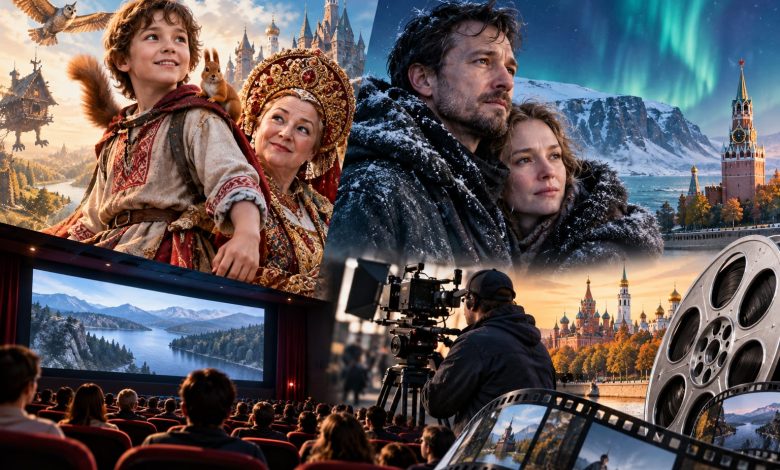
Among the new Russian productions, Kak Ivan v Skazku Popal is a family-oriented adventure and fantasy film directed by Alexey Nuzhny. Featuring Miron Provorov and Maria Aronova in leading roles, the film combines elements of Russian folklore with contemporary family entertainment. The production reflects an enduring trend in Russian cinema of adapting domestic cultural traditions and familiar storytelling forms for younger generations.
Another Russian production in the current release cycle is Moi Sever, directed by Yulia Krylova. Featuring Alexander Konstantinov and Daria Ekamasova, the film combines elements of drama and fantasy. The simultaneous arrival of domestically produced films with different themes and styles illustrates the industry’s continuing effort to diversify its storytelling beyond conventional commercial entertainment.
Meanwhile, the 19th Soul of the Earth International Documentary Film Festival was held in Samara from September 14 to 18. Organisers reported receiving more than 500 submissions, with 30 documentaries selected for competition. The festival highlights another important dimension of Russian cinema, where documentary filmmaking continues to explore history, society, culture and individual human experience alongside mainstream theatrical production.
Current activity in September shows Russian cinema developing domestic cultural narratives, family entertainment, fantasy, social drama and documentary filmmaking in parallel. As the international film landscape continues to evolve, drawing stories from Russia’s own literature, history, geography and social experience remains an important element of the distinctive identity of Russian cinema.