Flaky Skin Around the Ears and Nose, Itchy Rash in the Groin: How to Distinguish Two Similar-Looking Skin Problems

Dragon Media Correspondent
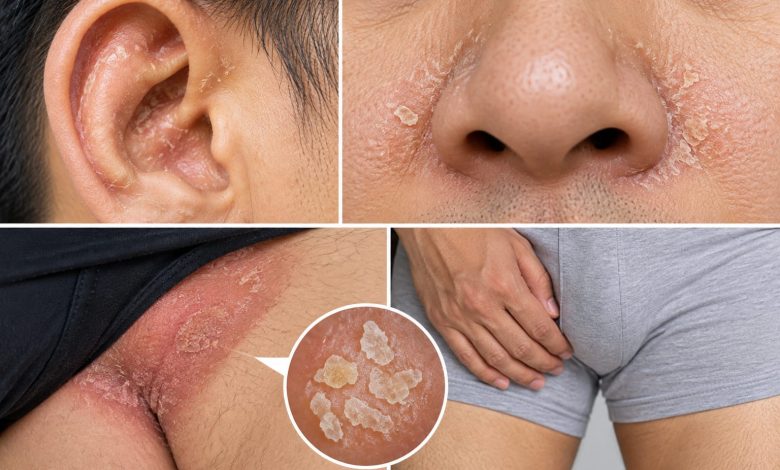
White or slightly yellow, dandruff-like scales inside the outer ear, rough skin around both sides of the nose, and flakes that return within a day or two after cleaning may be more than a hygiene issue. Recurrent symptoms in these areas are commonly associated with seborrheic dermatitis, a chronic inflammatory skin condition. By contrast, redness, scaling or itching in the groin and upper inner thighs may have several causes, including fungal infection, intertrigo or inverse psoriasis. Although these conditions can look similar, their treatment may be quite different.
Seborrheic dermatitis tends to affect areas rich in sebaceous glands. Dandruff on the scalp is its best-known form, but the condition can also involve the outer ears, skin behind the ears, eyebrows, sides of the nose and beard or moustache area. It may produce white or yellowish scales, redness and itching. The condition is associated with an interaction between skin oils, inflammatory responses and Malassezia, a yeast that normally lives on human skin. For this reason, frequent bathing or repeatedly removing the flakes does not necessarily prevent their return. The condition should not be interpreted simply as poor personal hygiene.
Repeatedly rubbing or scraping away the scales can damage the skin barrier and aggravate irritation. Once seborrheic dermatitis has been properly diagnosed, treatment may include topical antifungal medicines such as ketoconazole or ciclopirox. When inflammation is pronounced, doctors may prescribe a mild topical corticosteroid for a limited period or another anti-inflammatory treatment. If dandruff is also present on the scalp, medicated shampoos may form part of the broader treatment strategy. Because seborrheic dermatitis often recurs, some patients require intermittent maintenance treatment even after the visible symptoms have disappeared.
Particular caution is necessary with potent corticosteroid creams. Products containing betamethasone, for example, can rapidly suppress inflammation, redness and scaling, sometimes making the affected skin appear almost normal within a short period. This does not necessarily mean that the underlying cause has been eliminated. Repeated or prolonged use of potent steroids on the relatively delicate skin of the face, ears or groin can cause adverse effects, including thinning of the skin and changes in pigmentation.
A rash in the groin requires a somewhat different approach. An itchy, red or scaly eruption where the upper thigh meets the body may indicate tinea cruris, commonly known as jock itch. Warmth, sweating, moisture, tight clothing and fungal infection elsewhere on the body can increase the risk. In typical tinea cruris, the advancing edge of the rash may be redder, raised or more scaly than the central area.
Not every groin rash, however, is fungal. Intertrigo caused by friction and moisture, Candida infection, irritant or allergic dermatitis and inverse psoriasis can produce similar symptoms. Seborrheic dermatitis can also affect some skin folds. It is therefore unsafe to assume that a groin rash is simply another manifestation of the scaling seen around the nose or ears.
The distinction becomes especially important when corticosteroids are involved. Applying a potent steroid alone to an undiagnosed fungal infection may temporarily reduce redness and itching while allowing the fungus to persist or spread. Steroids can also alter the characteristic appearance of the infection, producing a condition known as tinea incognito. Diagnosis may then become more difficult and treatment more complicated.
When the diagnosis is uncertain, a dermatologist can examine the distribution and appearance of the lesions and, where necessary, take a small skin scraping for microscopic or potassium hydroxide testing to look for fungal elements. Confirmed fungal disease can then be treated with an appropriate antifungal medicine. More extensive or treatment-resistant infection may sometimes require oral medication under medical supervision. Psoriasis, seborrheic dermatitis and other inflammatory conditions require different treatment strategies.
Daily skin care remains important regardless of the eventual diagnosis. The outer ear should not be aggressively scrubbed, and objects should not be inserted into the ear canal for routine cleaning. Groin folds should be kept clean and dry, damp clothing should be changed after sweating, and loose, breathable clothing can reduce moisture and friction. People with scaling or itching between the toes or fungal changes in the toenails should also seek treatment, because fungal infection of the feet can sometimes contribute to recurrent infection in the groin.
The central message is simple: recurrent scales and rashes should not automatically be regarded as dirt that needs more vigorous cleaning. Seborrheic dermatitis around the ears and nose and fungal or inflammatory disorders of the groin may appear relatively minor but can repeatedly return when the underlying cause is not addressed. Accurate diagnosis, condition-specific treatment and appropriate maintenance care can control most cases effectively. A spreading rash, significant pain, open sores, discharge, unusual swelling or symptoms that persist despite treatment warrant examination by a dermatologist.