From Tehran to Aichi-Nagoya: China’s 52-Year Journey Through the Asian Games

Dragon Media News Desk
China’s journey at the Asian Games, which began in Tehran, Iran, in 1974, has evolved over more than five decades into a remarkable chapter in the country’s sporting development. As the 20th Asian Games get underway in Aichi-Nagoya, Japan, China’s achievements reflect the transformation of its sports system, economic capacity and international presence. After finishing third with 33 gold medals at its debut, China has topped the Asian Games gold medal table at 11 consecutive editions since 1982.
China made its first appearance at the seventh Asian Games in Tehran in 1974. Basketball player Zhang Dawei, who carried the Chinese national flag at the opening ceremony, later recalled the occasion as an important moment of national representation. After more than a decade of limited participation in international sporting competitions, Chinese athletes made a significant impression in Tehran. Shooter Su Zhibo secured China’s first Asian Games gold medal in the men’s free pistol event, while Li Yamin set a world record in the women’s 25-meter standard pistol competition.
China’s representation in the International Olympic Committee was restored in 1979, opening wider opportunities for its athletes to compete internationally. At the ninth Asian Games in New Delhi in 1982, China won 61 gold medals and finished at the top of the medal table for the first time, ending Japan’s longstanding dominance of the Games. Among the emerging stars was 19-year-old gymnast Li Ning, who won four gold medals. He later became one of China’s most celebrated athletes and a prominent entrepreneur in the sportswear industry.
The 1990 Beijing Asian Games marked another defining chapter in China’s sporting history. China submitted its bid to host the event in 1983 and secured the hosting rights ahead of Hiroshima, Japan. However, preparing for the Games presented substantial financial and organisational challenges. With a funding gap of approximately 600 million yuan, the organisers launched a nationwide fundraising campaign. Between 1987 and 1990, people across China contributed a total of 270 million yuan to support the event.
The Beijing Asian Games became the first major international multi-sport competition hosted by China. Competing on home soil, Chinese athletes won 183 gold medals. Beyond sporting success, the event helped accelerate the development of sports infrastructure, international event management and China’s emerging sports industry. The sportswear company founded by Li Ning supplied clothing for the torch relay and medal ceremonies, creating an opportunity for a domestic Chinese brand to gain international visibility.
The infrastructure and organisational experience developed for the Beijing Asian Games also contributed to China’s preparations for the 2008 Beijing Olympic Games. The Olympic opening ceremony, centred on the National Stadium, widely known as the Bird’s Nest, demonstrated China’s growing capacity to stage major international sporting events. In this respect, the 1990 Asian Games became an important milestone in the country’s longer-term sporting development.
The Asian Games returned to China in 2010, with Guangzhou serving as the host city. Two decades after Beijing’s historic event, China’s economic circumstances had changed considerably. The country had become the world’s second-largest economy, while Guangzhou’s gross domestic product had exceeded 900 billion yuan in 2009. Unlike the Beijing Games, which had required a nationwide fundraising effort, Guangzhou was able to draw extensively on its municipal economic resources and market-based financing to prepare for an even larger competition.
Chinese athletes won 199 gold medals at the Guangzhou Asian Games. By this stage, the country’s approach to sport was also evolving. Alongside the pursuit of international medals, greater emphasis was being placed on public participation, physical fitness, health and recreation. The designation of August 8 as National Fitness Day and the implementation of national fitness programmes reflected an effort to encourage more people to participate in sport rather than simply watch competitions.
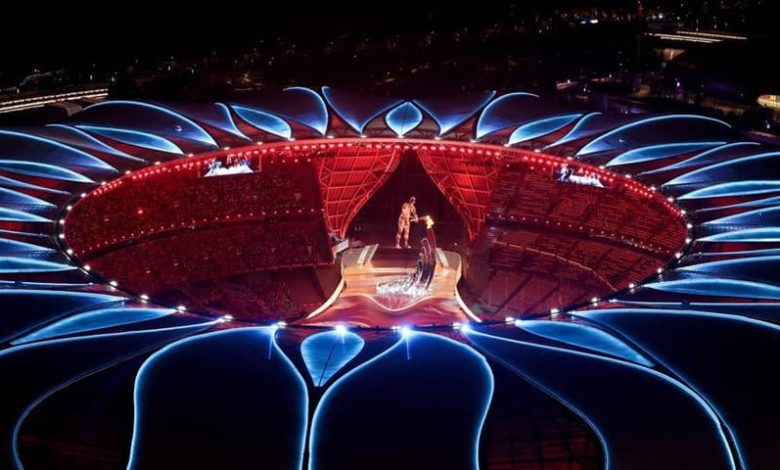
In 2023, Hangzhou hosted the 19th Asian Games, introducing a new technological dimension to China’s sporting journey. Chinese athletes won 201 gold medals, setting a record for the most gold medals secured by a single delegation at one edition of the Games. China also extended its consecutive run at the top of the gold medal table to 11 editions. Artificial intelligence, augmented reality and other digital technologies became prominent features of the event. According to the organisers, more than 100 million people participated in the digital torch relay programme.
China’s first appearance in Tehran, its breakthrough in New Delhi, the historic Beijing Games, Guangzhou’s demonstration of economic capacity and Hangzhou’s digital innovations represent distinct stages of the country’s development. These milestones extend beyond athletic performance, reflecting changes in sports infrastructure, industrial capacity, technology, urban management and public participation in physical activity.
As the 20th Asian Games begin in Aichi-Nagoya, China enters another chapter in its 52-year sporting journey. The country that returned to major international competition in Tehran in 1974 now participates as the winner of the gold medal table at 11 consecutive Asian Games and a three-time host of the event. Its journey illustrates how sporting development has progressed alongside broader economic and social transformation.