Nepal Airlines Faces NPR 900 Million Financial Burden as Both Wide-Body Aircraft Remain Grounded

Dragon Media News Desk
Nepal Airlines Corporation (NAC) is facing an estimated financial burden of at least NPR 900 million after both of its wide-body aircraft were grounded due to technical problems, disrupting international flight operations ahead of the Dashain and Tihar festival season. Preliminary estimates indicate that the national flag carrier has lost more than NPR 400 million in potential business over three weeks, while repairs to the two aircraft could cost at least NPR 500 million.
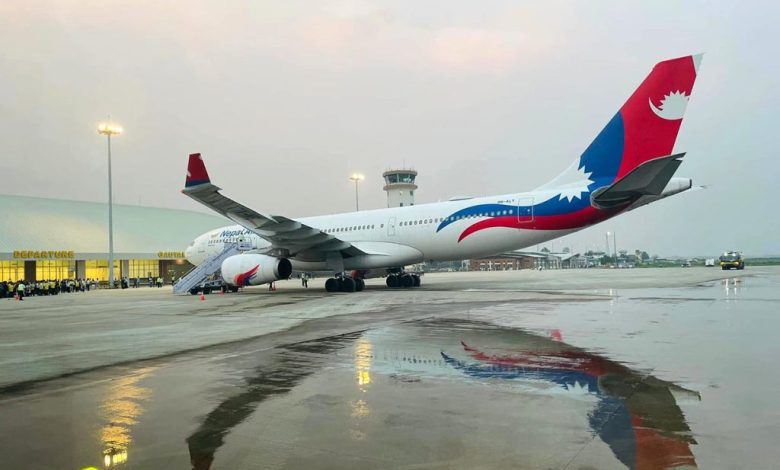
The corporation’s wide-body aircraft Annapurna has remained grounded at Japan’s Narita International Airport since September 14, while its other aircraft, Makalu, has been stranded at a maintenance facility in Italy for approximately 20 days. The simultaneous unavailability of both aircraft has disrupted scheduled international services and created additional financial and operational pressure on the airline.
Flights to Narita, Guangzhou, Kuala Lumpur, Doha and Dubai have been affected. NAC has already cancelled at least a dozen flights, including three services to Japan, leaving hundreds of passengers unable to reach their destinations as scheduled. The airline has been arranging alternative flights through other international carriers, often at significantly higher ticket prices.
Following the cancellation of a scheduled flight from Narita, the corporation arranged hotel accommodation for 226 stranded passengers. They were subsequently transported to Nepal through alternative routes, including connections via Bangkok and Malaysia. Some passengers reported substantial additional expenses resulting from the disruption.
A Nepali professional working at the University of Tokyo said his family incurred approximately NPR 150,000 in additional travel expenses after their original flight was cancelled. The family had purchased one-way tickets from Japan to Nepal for approximately NPR 95,000 per person about six weeks earlier. The cost of an alternative ticket for their five-month-old daughter reportedly increased from NPR 10,500 to NPR 44,000.
According to NAC’s operational estimates, a single wide-body aircraft had recently been generating average daily business of approximately NPR 15.6 million through eight hours of flight operations. During peak travel periods, when aircraft operate for up to 12 hours daily, business generated by one wide-body aircraft can reach NPR 30.6 million per day.
Based on average daily business figures, the grounding of Annapurna for seven days has resulted in an estimated NPR 109.2 million in lost business. Makalu’s prolonged absence from service has contributed approximately NPR 310 million in lost business over 20 days. Combined, the two aircraft have generated an estimated business shortfall exceeding NPR 400 million.
However, lost business should not be confused with the corporation’s actual net financial loss. A comprehensive assessment will require adjustments for operating expenses avoided during the grounding, actual repair costs, additional passenger management expenses and potential insurance recoveries.
Annapurna was scheduled to return to Nepal the day after arriving in Narita on September 14. However, an inspection identified damage to an engine blade. The damage was initially estimated at 25 millimetres but was subsequently measured at 30 millimetres during a detailed examination, preventing the aircraft from returning to service.
According to an official at the Ministry of Culture, Tourism and Civil Aviation, the damaged blade has already been replaced. However, another technical issue involving the engine requires further coordination and approval from Rolls-Royce, the engine manufacturer.
NAC engineers are reportedly examining an alternative arrangement that could allow the aircraft to operate for a limited period of 200 flight cycles following technical approval. The proposed arrangement could cost approximately USD 41,000, although the corporation has yet to make a formal decision. Purchasing new replacement components could cost approximately USD 2.7 million, according to preliminary management estimates.
The decision will depend on technical safety requirements, component availability, repair duration and the financial implications of the available options.
Makalu, meanwhile, developed a technical problem during final inspections following the completion of its scheduled C-check maintenance in Italy. According to NAC Technical Spokesperson Devendra Pun, the aircraft was originally scheduled to return to Nepal on September 1, but a problem involving its thrust reverser system prevented its departure from the maintenance facility.
The corporation is awaiting the necessary technical documentation and approval from French aerospace manufacturer Safran. Ministry officials indicated that repairs could take an additional three to four days after the remaining technical requirements are completed.
NAC Acting General Manager Janak Raj Kalakheti said the corporation intends to submit insurance claims through the National Insurance Company for repair expenses and replacement components associated with both aircraft. The actual amount recoverable through insurance remains uncertain until the relevant assessments and claim procedures are completed.
The airline is also facing substantial additional costs associated with passenger accommodation, airport transportation, ticket rebooking and alternative flight arrangements. Available seats on Air India, Cathay Pacific and other international carriers are being used to transport affected passengers.
According to Kalakheti, priority has been given to passengers whose visas are approaching expiration, children, elderly travellers, patients and individuals facing urgent family circumstances. The corporation has yet to finalize the total expenditure incurred through hotel accommodation and alternative travel arrangements.
The simultaneous grounding of both wide-body aircraft comes at a particularly challenging time for Nepal Airlines, with international travel demand expected to increase during the upcoming festival season. The prolonged disruption has placed additional pressure on the corporation’s revenue, flight scheduling, passenger services and financial stability.
Restoring both aircraft to service while maintaining full technical and operational safety standards remains an immediate priority. The situation also highlights the importance of effective fleet maintenance planning, timely procurement of replacement components and contingency arrangements to protect passengers and sustain international operations when major aircraft become temporarily unavailable.