Iran’s High Military Alert and Diplomatic Possibilities: A Balanced Picture of Rising Tensions in West Asia

Dragon Media Newsroom
The security situation in West Asia has become more sensitive due to Iran’s reported “Code 100” high military alert, possible U.S. military activity, and ongoing diplomatic efforts. Various international media outlets have described “Code 100” as a military signal indicating that the Islamic Revolutionary Guard Corps, the regular army, and other security structures have been placed on a high state of readiness. However, there has been no independent confirmation that the Iranian government, armed forces, or official news agencies have formally announced such an alert using the term “Code 100.”
Meaning and Limitations of a High Military Alert
According to published reports, “Code 100” is a high-level alert intended to keep Iran’s security structures ready to respond immediately to a possible major military attack. Such a state may involve reducing the response time of military units, keeping command and communication systems active, strengthening the security of sensitive military facilities, and remaining prepared for immediate defensive or retaliatory action if necessary. However, no detailed Iranian military document publicly defining “Code 100,” its levels, or its implementation has been made available.
For this reason, reports of a high military alert must be interpreted cautiously. Increased military preparedness and a political decision to start a war are not the same thing. Even if “Code 100” has been activated, it cannot be understood as a declaration of war or an order for an immediate attack. Its purpose may be to prevent surprise attacks, protect the command structure, and maintain the ability to respond immediately through defensive or retaliatory action if necessary.
Iranian Warnings and Military Activity
Meanwhile, Iran’s central military command has said it received information that the United States is preparing to launch renewed military action against Iran with the support of some regional countries. It warned that any new U.S. attack would be met with continuous retaliatory action against American military bases and interests, and that regional countries providing their territory or facilities for such an attack would also be considered parties to the conflict.
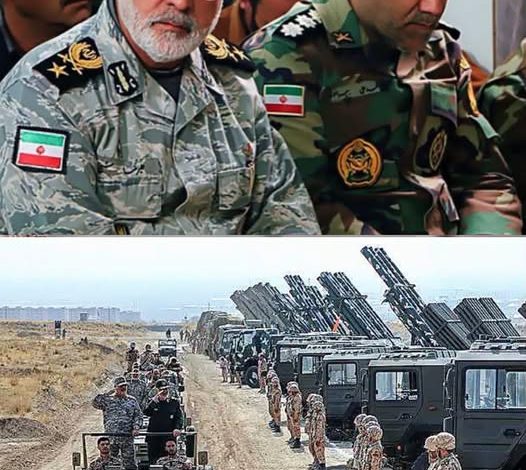
Reports also indicate that Iran has increased the activity of its ground forces. Citing the Iranian news agency Fars, published accounts said that regular army units had been deployed in border areas and along the Makran coast toward the Gulf of Oman. Special forces, rapid-response units, mechanized military formations, and artillery were reportedly deployed, although the actual number of troops has not been made public. No evidence has been publicly released that the United States is preparing to enter Iran by land.
These activities suggest that Iran is taking the risk of a possible attack seriously. However, independent confirmation and additional context are needed before interpreting them as an immediate warning of an attack or conclusive evidence of an expanding war.
U.S. Activity and Uncertainty
The developments have attracted further attention after U.S. President Donald Trump returned to the White House from Camp David earlier than scheduled. His unexpected return has been linked by various commentators to Iran’s alleged “Code 100.” However, the White House has not confirmed that Trump’s return was related to “Code 100” or a possible military operation against Iran. There is still insufficient public evidence to establish the coincidence in timing as a cause-and-effect relationship.
At the same time, the United States has urged its citizens in West Asia to exercise additional caution, warning that the security situation is complex. U.S. security advisories have cautioned about the possibility of unexpected escalation, airspace closures, flight cancellations, and travel disruptions. Although these warnings indicate increased regional risk, they cannot be taken as proof that the United States has already decided to launch an immediate new attack on Iran.
The Strait of Hormuz and Regional Risks
The Strait of Hormuz has become another focal point of military tension. This maritime route connects the Persian Gulf with the Arabian Sea and global markets and is extremely important for the world’s energy supplies. As military activity and attacks on vessels in the area have increased, maritime transportation has been affected. If tensions rise further, oil and gas supplies, shipping insurance, maritime transport costs, and global energy markets could be directly affected.
A possible disruption of the Strait of Hormuz could connect military tensions among regional actors with global economic risks. Therefore, the security of the strait is not merely an issue in the dispute between Iran and the United States; it is also a broader question involving energy supplies, international trade, and maritime security.
Diplomatic Options Remain Open
Despite the tensions, the diplomatic door has not been completely closed. The Iranian side has indicated that it is prepared to reopen the Strait of Hormuz if the United States reduces military pressure and lifts the blockade on Iranian ports. Reports have also emerged that the Iranian delegation in New York for the United Nations General Assembly has been authorized to advance diplomatic negotiations and that proposals are being exchanged through intermediaries.
These signals show that the possibility of negotiations remains alongside military pressure. On the one hand, Iran is maintaining a high level of military readiness and warning of a strong response to a possible U.S. attack; on the other, it is keeping open the option of reducing tensions through diplomatic negotiations under acceptable conditions. The parallel use of military preparedness and negotiations can be understood as a strategy to demonstrate deterrence while creating diplomatic pressure.
Key Signals in the Coming Days
The true seriousness of the reports concerning “Code 100” will become clearer through future developments. Important indicators will include whether Iranian officials formally confirm it, whether there are unusual changes in U.S. military deployments, whether additional activity is observed in Iran’s missile and air-defense systems, how the situation in the Strait of Hormuz develops, and whether diplomatic contacts in New York gain momentum.
Military activity and diplomatic contacts should not be viewed separately but as interconnected processes. Negotiations may continue even as military deployments increase, and the risk of a sudden military incident does not disappear simply because diplomatic contacts are taking place. Therefore, future assessments will need to clearly distinguish between claims, official confirmations, independent evidence, and actual operational activity.
Conclusion: A Sensitive Phase Between Deterrence and Dialogue
Based on the evidence currently available, it is confirmed that Iran is maintaining a high level of military preparedness and warning of a strong response to a possible new U.S. attack. However, the claim that the highest level of military alert known specifically as “Code 100” has been formally activated has not been independently confirmed. It is therefore more factually cautious to understand the situation as a report that Iran has intensified preparations for a possible major military confrontation, rather than as a sign that war has begun.
West Asia has now entered an extremely sensitive phase between military deterrence and diplomatic dialogue. U.S. and Iranian military activity over the coming days, along with diplomatic contacts held during the United Nations General Assembly in New York, will provide greater clarity on whether the tensions move toward a new confrontation or are brought under control through negotiations.