Pratima Tamang Lama: A Life Dedicated to Rasuwa, a Dream Left Unfulfilled by the Bhotekoshi Flood

Dragon Media News Desk
Pratima Tamang Lama, deputy chairperson of Gosaikunda Rural Municipality in Rasuwa, was a nurse, former volleyball player and public representative whose life was devoted to healthcare, education and community service. Her commitment to helping disadvantaged children, expanding access to medical treatment and improving public education came to an abrupt end when the devastating Bhotekoshi flood struck Syabrubesi on August 26. The 32-year-old disappeared while working at her office, and her whereabouts remain unknown.
Pratima had been in Kathmandu until August 21 to receive treatment for migraine, a condition she had experienced for years. Her husband, KD Lama, who worked at a bank in the capital, urged her to remain in Kathmandu for further consultation with a specialist. However, she insisted on returning to Rasuwa, explaining that urgent responsibilities awaited her at the rural municipality. Just days later, the catastrophic flood devastated the community she had dedicated herself to serving.
On the morning of August 26, KD received a warning about a major flood in the Bhotekoshi River from a relative living in upper Rasuwa. He immediately called Pratima. At 9:16 a.m., she answered, but the connection was unclear. He heard indistinct sounds and someone calling out for their mother before the call abruptly ended. Despite repeated attempts, he was unable to reach her again. It became their final telephone conversation.
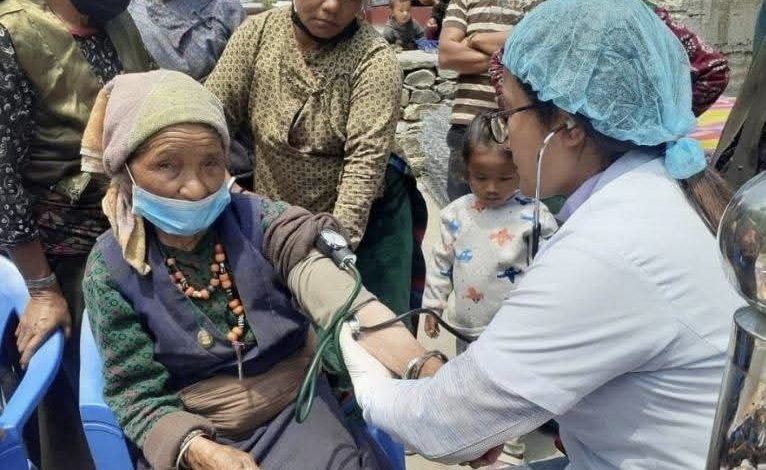
Pratima’s commitment to public service began long before she entered politics. After completing her bachelor’s degree in nursing at Yeti Health Science Academy in Kathmandu in 2017, relatives and friends encouraged her to pursue professional opportunities abroad. She declined, choosing instead to return to her home district and work at a health desk in the border-region rural municipality. She regularly walked to remote settlements to conduct sanitation campaigns, provide basic medical assistance and raise awareness about public health.
Her concern for disadvantaged families extended beyond her professional responsibilities. She purchased medicines for children from economically vulnerable households and personally helped arrange financial assistance for those requiring surgery. She even used money received as wedding gifts to purchase notebooks, pens and other educational materials for local students. Her actions reflected a conviction that access to healthcare and education should not depend on a family’s financial circumstances.
While serving under the Bagmati Provincial Government’s One School, One Nurse programme at Shree Komin Shyame Wangphel Secondary School, where she had once studied, Pratima helped a ten-year-old student, Nimajemo Tamang, who was experiencing problems with vision in her left eye. She arranged for the child to receive treatment in Kathmandu at her own expense. The treatment restored the student’s sight.
During the early stages of the COVID-19 pandemic, when health authorities were still developing response protocols, Pratima had already begun visiting households to distribute masks, medicines and sanitizers. Her dedication to public healthcare earned her the Outstanding Nurse Award from the Bagmati Provincial Government.
Her experience in healthcare gradually strengthened her interest in public policy and political participation. Active in the Communist Party of Nepal (Unified Marxist-Leninist) since her student years through the Kathmandu-Rasuwa Contact Forum, she resigned from her school nursing position one day before registering her candidacy for deputy chairperson of Gosaikunda Rural Municipality in the 2022 local elections. She subsequently won the election.
After assuming office, Pratima worked to translate her professional experience into local government policy. Her first rural municipality budget included provisions for free education, which she helped implement. She also continued advocating improvements in healthcare delivery, particularly for remote communities where geographical isolation and limited resources often restrict access to essential services.
Her ambitions extended beyond local government. According to her husband, Pratima believed that many structural weaknesses in Rasuwa’s healthcare system could not be resolved through local initiatives alone and required changes in national policy. She dreamed of becoming Nepal’s health minister, hoping to use that position to address systemic problems affecting healthcare access across the country.
Four days after the flood, KD reached Syabrubesi and searched for Pratima, his elder brother and sister-in-law, who had also disappeared. However, the enormous deposits of sand, mud and debris left by the flood made the search extremely difficult. Their remains could not be located.
About a week later, KD’s 83-year-old father, Singi Nurpu Lama, performed Buddhist funeral rites for 33 missing people from the settlements of Thulo Bharkhu and Sano Bharkhu. The ceremonies reflected the immense human loss suffered by communities whose families had been separated from loved ones without the opportunity for a final farewell.
Nearly a month after the disaster, Rasuwa and other affected districts have begun the long and difficult process of reconstruction. Authorities are assessing the financial cost of rebuilding roads, bridges, public facilities and settlements. Yet the emotional losses experienced by families cannot be measured in monetary terms.
For KD, the passage of time has done little to diminish the pain of losing his wife. He continues to struggle with sleepless nights and the painful expectation that a call or message from Pratima might somehow arrive.
Pratima’s story illustrates the profound contribution that dedicated healthcare professionals and local public representatives can make to communities facing geographical isolation and economic hardship. Her journey from nursing to local government was guided by a commitment to improving the lives of others, particularly children and families with limited access to essential services.
The Bhotekoshi flood interrupted a journey that she hoped would eventually take her from grassroots healthcare to national health policy leadership. Although her ambitions remain unfulfilled, her contribution to medical care, free education, public health awareness and community welfare will remain part of Rasuwa’s collective memory.
For the people whose lives she touched, Pratima Tamang Lama will be remembered not simply as a missing deputy chairperson, but as a healthcare professional and public servant who chose to remain with her community when opportunities elsewhere were available.