China-US Youth Exchanges Gain Momentum as 50,000-Visitor Target Reached Ahead of Schedule

Dragon Media News Desk
A Chinese initiative to expand youth and student exchanges with the United States has achieved its target well ahead of schedule. Announced in November 2023, the initiative aimed to invite 50,000 young Americans to China for study and exchange programs over five years. According to China’s Ministry of Education, the target was reached two and a half years early.
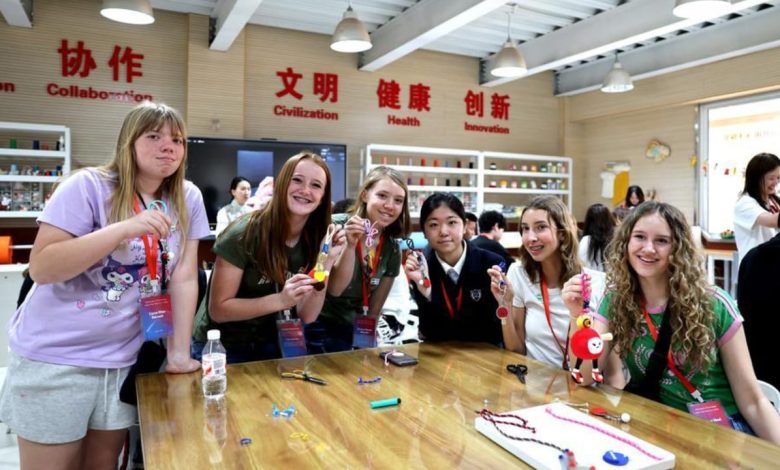
More than 50,000 young Americans from all 50 US states and Washington, DC, have visited China under the initiative. Their activities have covered all 31 provincial-level regions on the Chinese mainland, as well as Hong Kong and Macao. Participants have taken part in cultural experiences, language learning, academic programs, science and technology exchanges, and sports activities. The Ministry of Education has pledged to develop these exchanges into sustained, long-term cooperation.
A voyage aboard the China-US Youth Friendship vessel earlier this year illustrated the practical value of the program. Sailing from Hong Kong through Ningbo to Shanghai, the vessel brought together 20 university students, ten from each country, for marine studies, scientific activities and cultural exchanges. Participants also conducted a simulated international negotiation on mercury pollution in the oceans, representing different countries and international organizations.
Zhou Xinyi, then a student representative from Tsinghua University, said the experience provided opportunities to solve problems together and develop personal friendships. Meredith Kime, a doctoral candidate at Columbia University who joined the voyage, similarly described the initiative as a bridge connecting young people from both countries.
Diao Daming, a professor at Renmin University of China, said reaching the target ahead of schedule reflected American students’ interest in experiencing China firsthand. David Chong, founder and president of the US-China Youth and Student Exchange Association, described the initiative as more than a numerical achievement, emphasizing its potential to establish lasting relationships. He noted that some participants had begun learning Chinese after returning home, while others continued promoting exchanges between educational institutions.
Wang Yijie, founder of Noice China, an organization arranging visits for American students, reported growing demand for exchange opportunities. According to Wang, places for a recent program involving approximately 160 Harvard students were filled in less than a minute. She said students who visit China frequently encourage friends and family members to experience the country themselves.
The expansion of youth exchanges also recalls the historic Ping-Pong Diplomacy of 1971, when a visit by an American table tennis delegation helped create conditions for the normalization of China-US relations. Commemorative events marking its 55th anniversary have been held in both countries this year. Judy Hoarfrost, the youngest member of the 1971 American delegation, returned to China in April and emphasized the importance of giving young people opportunities to meet and understand one another.
Beyond sports, cultural and technological visits have created additional opportunities for engagement. American students have explored China’s historical sites, traditional medicine, calligraphy and cultural heritage. Visits to Baidu’s technology facilities, Xiaomi’s automobile factory and Beijing’s hydrogen energy demonstration zone have also provided firsthand exposure to contemporary Chinese industrial and technological development.
American student Ty DeVito, who visited the Beijing Daxing International Hydrogen Energy Demonstration Zone, expressed hope that China and the United States could combine their respective strengths to advance green development. Author Rebecca Fannin also noted changing international perceptions of China’s technological capabilities.
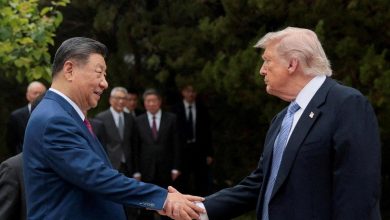
Wang Dong, executive director of the Institute for Global Cooperation and Understanding at Peking University, said understandings reached between the two countries’ leaders had established a framework for continued people-to-people engagement and practical cooperation. China’s Ministry of Education has announced plans to expand participation by non-governmental organizations, schools, universities and other stakeholders to make youth exchanges more sustainable.
David Firestein, president and CEO of the George H. W. Bush Foundation for US-China Relations, acknowledged China’s efforts to promote youth dialogue and expressed hope for greater American participation. Jan Berris, vice president of the National Committee on US-China Relations, emphasized that visiting another country and speaking directly with its people enables young people to develop their own informed understanding.