The Bharat Dahal Case Raises Larger Questions: Foreign Influence, Freedom of Expression and State Accountability

Lucky Chand
The arrest of political analyst Bharat Dahal, the subsequent response from the US-based online publication The Grayzone, and the intervention of Nepal’s Supreme Court have transformed the controversy from a dispute over a social media post into a broader debate over freedom of expression, the application of cyber law, transparency surrounding foreign-funded political programmes, and the legal threshold the state must meet when taking action against critical political speech.
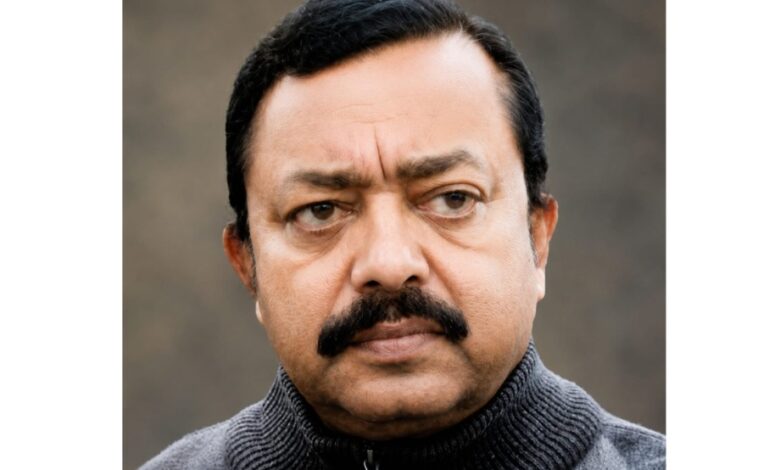
Dahal was arrested in Morang after police initiated an investigation into online material attributed to him. Publicly reported accounts linked the case to content concerning geopolitical issues and senior political figures. The controversy intensified because Dahal had shared and commented on a report published by The Grayzone concerning alleged links between US-supported political and leadership-development programmes and individuals who later emerged as prominent figures in Nepal’s political landscape.
The Grayzone report, citing documents said to date from 2019, raised questions about programmes associated with the Consortium for Elections and Political Process Strengthening and the US National Endowment for Democracy. It mentioned several figures in contemporary Nepali politics, including Prime Minister Balendra Shah, Home Minister Sudan Gurung, parliament member Sagar Dhakal and Rastriya Swatantra Party Chair Rabi Lamichhane. The publication sought to place the programmes within the broader context of US strategic engagement in the Indo-Pacific.
A crucial distinction, however, must be maintained between documented programmes, claims made about those programmes and broader political conclusions drawn from them. The existence of foreign-funded democracy, governance, election, civil-society or leadership programmes does not by itself establish that subsequent political movements, changes of government or the political rise of particular individuals were externally directed. Establishing such a conclusion would require considerably stronger evidence concerning funding, implementation, institutional relationships, decision-making and demonstrable causation.
Dragon Media has applied this distinction in its previous coverage of the controversy. Earlier analyses examined the questions raised by The Grayzone while cautioning against treating the publication’s interpretation as conclusive evidence. Dragon Media’s reporting distinguished between the existence of programmes and networks, the authenticity and meaning of documents attributed to them, and the much broader allegation that external actors shaped Nepal’s subsequent political transformation.
That distinction has become even more important following Dahal’s arrest. The central constitutional question is no longer simply whether The Grayzone’s interpretation is correct. It is also whether sharing an international publication’s report and offering political commentary on it can, without additional legally prohibited conduct, justify criminal investigation and detention.
Dahal’s daughter, Denika Dahal, subsequently filed a habeas corpus petition before the Supreme Court, arguing that her father had been unlawfully detained. A single bench of Justice Kumar Regmi sought the government’s explanation for the detention and ordered that Dahal, together with the relevant investigation records, be presented before the Court. Subsequent proceedings brought the legality and proportionality of the state’s action under direct judicial scrutiny.
The case has also generated political reactions. UML leader Mahesh Basnet questioned the arrest and argued that if the report contained false information, the appropriate response would be to demonstrate its inaccuracies with evidence. Political allegations surrounding who may have ordered or encouraged the arrest, however, remain allegations unless established through documentary evidence or an authoritative investigation. They should therefore not be presented as settled fact.
The Grayzone, for its part, has portrayed Dahal’s detention as a consequence of his sharing and commenting on its investigation. That remains the publication’s characterization of the case. The precise legal basis for the investigation must ultimately be assessed against the police record, applicable law and judicial findings rather than solely through the interpretation of either the publication or Dahal’s political supporters.
The controversy has consequently revived a longstanding debate over Nepal’s cyber legislation. The state has a legitimate responsibility to address conduct prohibited by law, including genuine cybercrime, unlawful threats and other clearly defined offences. At the same time, political criticism, controversial analysis and criminal conduct cannot be treated as interchangeable categories. A democratic system requires a sufficiently clear legal boundary between them so that criminal law does not produce a chilling effect on legitimate public debate.
The same evidentiary standard must apply to the original allegations concerning foreign influence. If the documents cited by The Grayzone are authentic, the programmes, funding, participants, objectives and implementation mechanisms identified in them deserve transparent examination. If documents or conclusions drawn from them are inaccurate, the individuals and institutions concerned have the opportunity to respond with verifiable evidence. Neither unquestioning acceptance nor automatic dismissal provides an adequate basis for serious journalism.
Foreign assistance, political training or leadership-development programmes are not inherently evidence of improper interference. Nepal receives cooperation from multiple international partners. The more fundamental issue is transparency. Who financed a programme, for what purpose, who participated, what activities were undertaken, whether political organisations or emerging leaders were involved, and what reporting or disclosure requirements applied are legitimate matters of public interest. The same standard should apply irrespective of whether assistance originates from the United States, China, India, Europe or any other external partner.
Dragon Media has previously argued that the appropriate response to concerns about foreign engagement is not indiscriminate rejection of international cooperation but greater transparency and preservation of Nepal’s sovereign decision-making. The Dahal case adds a second principle to that debate: the right to raise questions must coexist with the responsibility to substantiate serious allegations.
The controversy therefore should not be reduced to a choice between supporting Bharat Dahal and defending the government, nor between accepting and rejecting The Grayzone. It raises three larger questions: where the legal boundary lies when the state applies criminal law to critical political expression; how transparent foreign-funded political and leadership programmes should be; and whether disputed international reporting should primarily be answered through detention or through evidence, disclosure and accountable public explanation.
A credible resolution requires the same evidentiary discipline from government agencies, political parties, the people named in the reports, foreign organisations and the media. Treating The Grayzone’s claims as established fact without sufficient corroboration would be unsound. Dismissing testable questions without examining the underlying evidence would be equally inadequate.
For a democratic society, the strongest response to controversial political claims is a transparent examination of the evidence under the rule of law. Questions are not proof. But the freedom to ask questions, investigate documents and challenge competing claims with evidence remains an essential part of democratic accountability.