Beyond the Red Carpet: The Test of Xi–Trump Dialogue

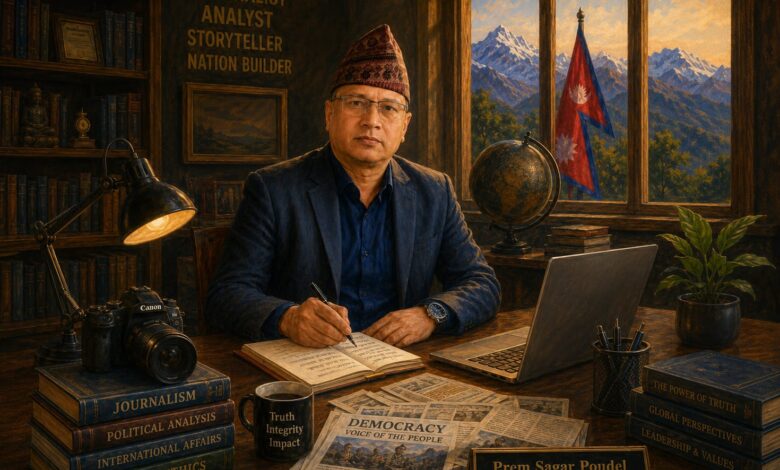
Prem Sagar Poudel
In diplomacy, a brief image can draw more attention than a long speech. The sight of a red carpet being arranged at Joint Base Andrews in Maryland before Chinese President Xi Jinping arrived on September 23, 2026, was one such image. U.S. President Donald Trump and First Lady Melania Trump went to the air base to welcome Xi and his wife, Peng Liyuan. National anthems, an honor guard, a 21-gun salute and a military flyover gave the reception a distinctive formality. Yet the diplomatic value of the visit cannot be measured by the grandeur of the carpet. It must be judged by the White House talks on September 24 and by what both governments do afterward.
The two leaders discussed difficult issues in trade, artificial intelligence and bilateral relations. According to an account of the talks published by China’s Foreign Ministry on September 25, Xi said the two countries’ economic and trade teams had reached a new joint arrangement. Trump also said the latest consultations had produced results and called for further talks. The available official account does not set out all the arrangement’s substantive areas, terms or implementation schedule. It would therefore go beyond the evidence to conclude that a specific new agreement has been reached on agriculture, energy or technology. The visit’s first achievement is the continuation of dialogue; its economic results remain to be tested.
The United States and China are deeply connected through trade, production, finance and supply chains. Issues such as export controls on advanced chips and the supply of critical minerals also show how competition bears on that relationship. A restriction in one area or a disruption in supply can affect industries beyond the two countries. Economic interdependence does not remove their strategic differences, but it makes uncontrolled confrontation costly. The real test of any trade arrangement is therefore its implementation, not its announcement. It should be clear which commitments take effect, when they do so and how disputes will be resolved.
Both leaders supported dialogue on artificial intelligence. Xi proposed exchanging views on its benefits and risks and working together to prevent misuse. Trump also said the two countries should maintain contact in this field. A shared willingness to talk, however, is different from agreement on technology policy. China wants to avoid obstacles to its development; for the United States, protecting its technological capabilities and security interests is a central concern. Whether cooperation is possible despite those differences will become clearer through regular meetings, designated institutions and procedures for responding to crises. The public account does not yet establish that a joint working group has been formed.
Taiwan makes the distance between a cordial welcome and strategic disagreement especially clear. According to China’s Foreign Ministry, Xi reiterated Beijing’s position on national reunification and territorial integrity and urged the United States to handle the Taiwan question with caution. Washington has its own established framework for its “one China” policy and security relationship with Taiwan. U.S. arms sales to Taiwan and Chinese military activity around it can deepen mistrust. It cannot be assumed that the two sides mean the same thing by “healthy competition.” On sensitive issues such as Taiwan, conduct will show where each side believes the limits lie.
That is why the proposal for military contact matters. At the White House welcome ceremony, Xi called for regular dialogue between the two militaries and stronger mechanisms for preventing crises. Strategic stability does not mean ending every dispute. It means preventing an unexpected incident at sea or in the air from escalating through miscalculation. Direct, reliable contact between responsible officials during a crisis is essential. The effectiveness of such a mechanism must be measured by evidence that it has been established and can be used, not merely by the leaders’ endorsement of it.
The state reception should be understood in the same way. Trump’s decision to greet Xi at the air base and hold a formal White House welcome the following day showed the priority given to the visit. It did not prove that U.S. policy positions had changed. Equally, Xi’s emphasis on cooperation did not erase China’s security concerns. Competing powers can treat each other with respect while remaining firm about their interests. A personal relationship can make talks easier; difficult decisions still require agreements, clear procedures and sustained implementation by government institutions.
The direction of this relationship also matters to Nepal. Sharper polarization between major powers can increase pressure on smaller countries to choose sides. Continued dialogue gives them more room to work with different partners according to their needs. Nepal should assess projects involving China, India, the United States and other partners against its own national priorities and standards of public accountability. Decisions to accept or reject a project should not be driven solely by reactions to competition among outside powers. Preserving the ability to make sovereign decisions is Nepal’s practical interest in a changing international environment.
Three clear tests will help assess Xi’s visit. First, will the scope and implementation schedule of the trade arrangement be made public? Second, will regular meetings and responsible institutions sustain the dialogue on artificial intelligence? Third, will military contact and crisis-management mechanisms become operational? Until those questions are answered, it would be premature to treat an elaborate welcome as a historic settlement. The red carpet helped create an atmosphere for talks. The harder task now is to build reliable practices that keep competition within bounds.
About the Author: Prem Sagar Poudel is a senior journalist and international relations analyst from Nepal. He has conducted in-depth studies on Nepal-China relations, the geopolitics of the Himalayan region, and Asian security issues.