Palden Pema Brings Baseball Dreams to the High Plateau

Dragon Media News Desk
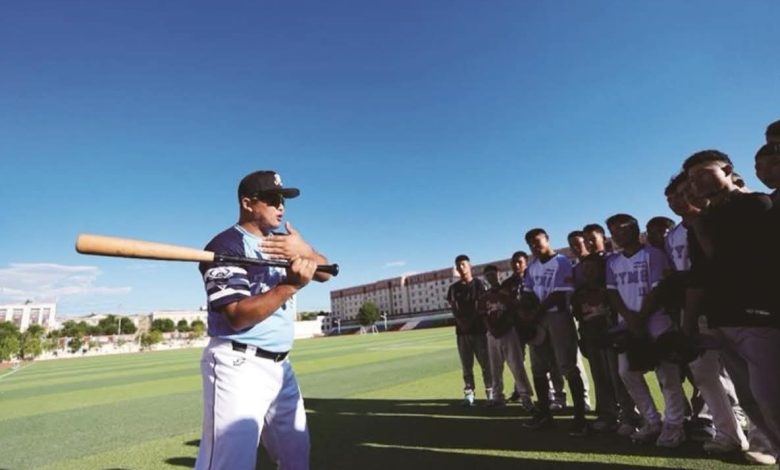
Cold winds sweep across the grasslands of Gonghe County in Hainan Tibetan Autonomous Prefecture, Qinghai Province, at an altitude of about 3,000 metres. On the grounds of Hainan Prefecture Ethnic Senior High School, the sounds of baseball break the quiet of the plateau. The school’s 29-year-old coach, Palden Pema, is teaching students how to swing a bat. A sport once unfamiliar to many children in the pastoral region has become a window onto the wider world.
Pema first played baseball at the age of nine. South Korean coach Tan Changji selected young players from an ethnic boarding primary school in Gonghe County. More than 40 children took part in trials involving throwing, running and jumping. Pema was among the 19 selected. Despite a shortage of proper fields and training equipment, he practised hundreds of times while others practised once.
His dedication opened a new opportunity in 2009, when he received a scholarship for outstanding performance from the China Baseball Development Center of Major League Baseball in the United States. He left the plateau for professional training on the mainland, playing at increasingly larger venues in Wuxi, Changzhou and Nanjing. He continued his studies alongside baseball and graduated in 2020 from Shanghai International Studies University with degrees in law and English literature.
Although he received attractive job offers in major cities in translation and legal work, Pema returned home. Remembering how the support of local elders and his community had helped him see new possibilities, he wanted young people in the highlands to have opportunities to shape their own futures. He became a baseball coach at Hainan Prefecture Ethnic Senior High School. The school team initially had only four players. Building the team and its training programme amid limited resources and parents’ concerns that sport could distract their children from academic studies became his responsibility.
Pema teaches discipline, responsibility and how to accept defeat alongside baseball skills. He insists that playing the sport must not come at the expense of education. He has established a pathway for developing players from primary through senior secondary school and has also taken part in preparations to establish a Qinghai provincial baseball association. Of the 60 to 70 students he has coached over the years, some have entered university, others have joined national or professional teams, and several have become coaches themselves.
Today, about 1,000 young people play baseball in Hainan Prefecture, and more than 10 teams have been formed across Qinghai Province. Pema hopes to organise provincial competitions, improve player registration and promote the construction of standard baseball fields. For him, the small baseball has become a way to connect highland youth with the wider world and help them choose their own path.