Nepal and India Agree to Make Kathmandu–Bhairahawa–Lucknow Air Route Bidirectionalg


Dragon Media News Desk
Nepal and India have agreed to convert the currently one-way Kathmandu–Bhairahawa–Lucknow air route into a bidirectional corridor, marking progress in Nepal’s longstanding efforts to expand international air connectivity.
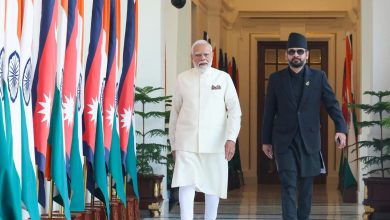
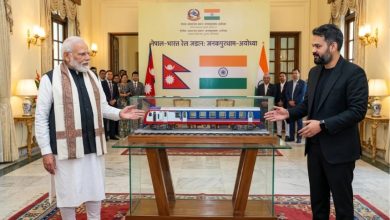
The agreement was announced in a 24-point joint press statement issued on Monday following Prime Minister Balendra Shah’s two-day official visit to India.
Paragraph eight of the statement confirms that both countries have agreed to make the existing B345 air route, connecting Kathmandu, Bhairahawa and Lucknow, operational in both directions.
The joint statement also acknowledges the importance of ongoing civil aviation discussions in improving air connectivity and promoting economic activities between the two countries.
According to the statement, aviation authorities from Nepal and India will hold further technical consultations to finalise the necessary operational arrangements and implementation procedures.
Nepal has long sought additional international air entry routes through Indian airspace, particularly to support the effective operation of Gautam Buddha International Airport in Bhairahawa and Pokhara International Airport.
The agreement to make the B345 route bidirectional could provide Nepal with greater flexibility in managing international flights and strengthen regional aviation connectivity.
It is also expected to create opportunities for improving the utilisation of Nepal’s international airports and facilitating cross-border air traffic.
However, an agreement in principle to operate a route in both directions does not mean that commercial flights can begin using the new arrangement immediately.
Technical approvals, air traffic management procedures, coordination between aviation authorities and other regulatory requirements must be completed before the route becomes operational.
The joint statement does not specify a date for the commencement of bidirectional operations.
Meanwhile, India’s proposal concerning the use of Nepalese airspace for flight operations associated with Bagdogra Airport in West Bengal has also been part of bilateral aviation discussions.
Earlier reports indicated that India had sought arrangements allowing aircraft operating from Bagdogra to use Nepalese airspace.
Questions were subsequently raised about whether the proposal could extend to military aircraft, although conflicting accounts emerged from Nepalese and Indian sources regarding the nature of the request.
Monday’s joint statement does not announce any separate agreement concerning Bagdogra Airport or the use of Nepalese airspace by Indian military aircraft.
Instead, it states that discussions on other civil aviation proposals submitted by both sides will continue, with further technical consultations aimed at addressing the outstanding issues.
Accordingly, while the two countries have reached an understanding on making the Kathmandu–Bhairahawa–Lucknow route bidirectional, other aviation proposals remain under consideration.
The agreement represents a positive development in Nepal’s efforts to secure improved air access through India.
Nevertheless, its practical significance will depend on the completion of technical procedures, regulatory arrangements and the establishment of a clear implementation timetable.
For Nepal, the immediate priority will be to translate the agreement into operational reality while continuing negotiations on additional air entry routes to strengthen the country’s international aviation network.