Eighty-Four Years Later, Doolittle Raiders’ Descendants and Chinese Researchers Honour Wartime Friendship

Dragon Media Newsroom
The courage and humanity shown by Chinese civilians who risked their lives to rescue American airmen during the Second World War remain a powerful symbol of friendship between the two peoples. Descendants of the airmen and Chinese volunteer researchers commemorated that wartime bond in Quzhou, Zhejiang Province, on Wednesday.
At the event, Beverly Daigle received a fragment of a B-25 bomber flown by Crew No. 13. Her father, Sergeant Robert Bourgeois, served aboard the aircraft as a bombardier. She was moved as she accepted a framed piece of the plane.
“Receiving a fragment of the aircraft has touched me deeply,” Daigle said. “This history and the journey we share are important to both countries.”
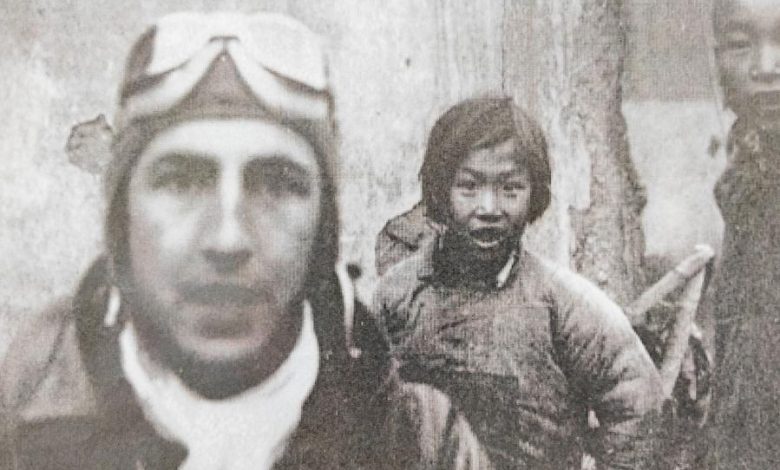
On April 18, 1942, 16 U.S. bombers launched a surprise raid on Japan in retaliation for the attack on Pearl Harbor. After the mission, 15 aircraft heading for Quzhou ran out of fuel and crashed at various locations in eastern China. Chinese civilians rescued 64 of the 75 airmen aboard those planes.
The rescue came at a heavy cost. Japanese troops searching for the American airmen tortured and killed some local residents. After the rescue, Japanese forces heavily bombed Quzhou Airport and spread diseases, including cholera and plague, in what the account describes as biological warfare. In China, the Doolittle Raid has long been remembered as a symbol of friendship forged during the joint struggle against fascism.
Five representatives of the Children of the Doolittle Raiders visited Quzhou this time. They toured an air-raid shelter where their fathers had once taken refuge and visited sites where aircraft had crashed. More than 80 years later, the names of two airmen remain legible on the shelter’s stone wall. Daigle touched the inscriptions and said, “Luckily, they are still here.”
Chinese volunteer researcher Zheng Weiyong has spent two decades documenting the story. A hand-drawn map in his study marks more than 100 crash sites and villages where airmen landed. Measuring 1.2 metres high and 2.4 metres long, it helped the descendants trace the routes their fathers took. Zheng has travelled to the United States four times to meet surviving Raiders and their families.
“We need to tell the world clearly how the Chinese rescued them,” Zheng said.
During the visit, Zheng returned five aircraft fragments from Crews No. 13 and No. 14 to the descendants. Each framed fragment identifies where and when it was found and who recovered it. In return, Kimberly Jane Johnson, granddaughter of Crew No. 14 commander John Hilger, presented a model aircraft to the research association. Its inscription said her grandfather owed his long and fulfilling life to the courage, kindness and sacrifice of the Chinese people.
John Thomas Johnson, a journalism professor at the University of San Francisco and Hilger’s son-in-law, said the full story of the rescue owed much to the dedication and cooperation of people in both countries. Before leaving, he wrote a message for the journey: “Friendship today and tomorrow.”