From Prayers for the Royal Family to Wishes for National Prosperity: Lamjung Kalika’s Dashain Rituals

Dragon Media Newsroom
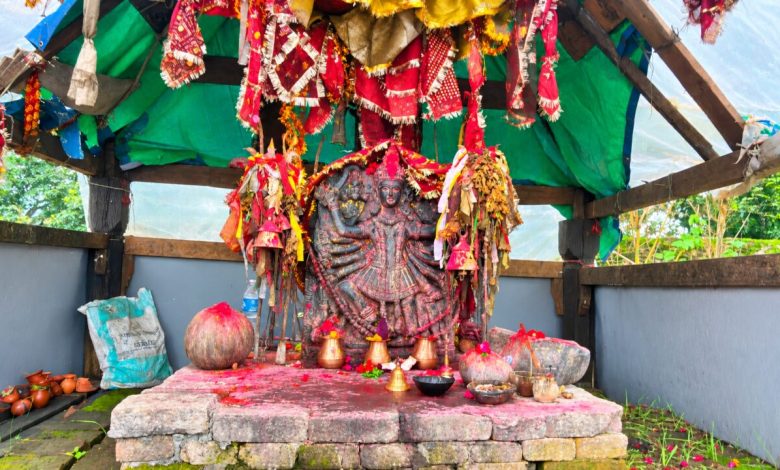
At the historic Kalika Bhagwati Temple in Gaunsahar, beside Lamjung Durbar in Besisahar Municipality-3, the intention behind centuries-old worship has changed over time. Prayers once focused on the welfare of the royal family; today, they seek happiness, peace and prosperity for the country and its people. The rituals, observed from Ghatasthapana to Purnima, continue to follow traditional Tantric and religious practices.
According to local belief, the Lamjung Kalika is the eldest of four sister goddesses, followed by Gorkha Kalika, Udipur Kalika and Baglung Kalika. The temple is believed to have been established as the Shah dynasty’s family shrine after Yashobrahma Shah became king of Lamjung in Bikram Sambat 1550.
Worship at the temple invokes Kalika Bhagwati, Mahakali, Mahalakshmi, Mahasaraswati, Brahma, Vishnu, Maheshwar, the ten incarnations and the 33 koti deities. Twenty-two attendants help manage the ceremonies. Priests from the Baral, Bohora, Ale and Rana communities are entitled to enter the temple and perform worship.
The procession to bring in the sacred flowers and leaves, known as Phulpati, is a major Dashain ritual at the temple. After a special puja at the palace on the sixth day of Dashain, a group of eight attendants travels via the Laxminarayan Temple in Besisahar to the banks of the Marsyangdi River. There, a goat is sacrificed and the group keeps an all-night vigil with devotional singing.
The following morning, after bathing, the group gathers bel leaves, ashoka leaves, jayanti and akurimakuri flowers, among other items, from a garden in Besisahar. The Phulpati is carried without stopping to Chandithumka, where it meets another procession from Lamjung Durbar accompanied by a ceremonial vessel, devotional singers, Malsiri music and traditional Naumati instruments. After offerings that include a squash and animal sacrifices, the Phulpati is taken with music into the temple’s Dashain shrine.
Under the official tradition, 27 animals and six buffaloes are sacrificed during Bada Dashain. Including offerings made by individual worshippers, the total can reach 60. Twenty-seven sacrifices are made during Chaitra Dashain.
The temple’s operating expenses amount to Rs 500,000 during Bada Dashain and Rs 270,000 during Chaitra Dashain. The longstanding rituals and local faith continue to make the temple an important part of Lamjung’s cultural identity.