The U.S. Midterms: Voters’ Message and an Unfinished Contest for Power

Elias Grant
Political and Foreign Affairs Analyst
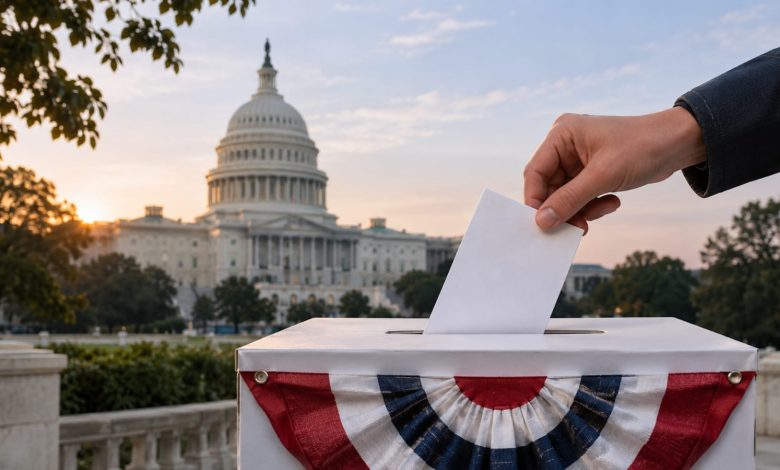
The November 3 U.S. midterm elections have been viewed as a referendum on President Donald Trump’s second term. But it would be premature to assign a single meaning to the early results. Voters may have expressed dissatisfaction with the president and his party, but local candidates, state issues, turnout and campaign strategy also shape election outcomes. As of November 4, preliminary results have brought Democrats several important victories, but control of both chambers of Congress remains undecided.
Democrat Roy Cooper has flipped North Carolina’s Senate seat from the Republicans. In Georgia, Senator Jon Ossoff won re-election, while Chris Pappas won New Hampshire’s open seat. Georgia also elected Keisha Lance Bottoms as the state’s first Black woman governor. These results are encouraging for Democrats, but the balance of power in the Senate and House is still uncertain. Early estimates indicate that Democrats need three more Senate seats to secure a majority, while votes are still being counted in many competitive House races.
The clearest political message from the election is voters’ economic dissatisfaction. Many respondents to exit polls said the cost of living was an important factor in their vote. Reuters reported that roughly two-thirds blamed Trump for high prices and about three-quarters expressed anger or dissatisfaction with the country’s direction. The polls also found voters who felt that the war with Iran and tariffs on imported goods had worsened economic conditions. Such surveys help show the electorate’s mood, but they are not final vote counts and do not mean all voters share the same view.
Household expenses often affect voters more directly than political slogans. If the cost of food, fuel, housing and health care remains high, confidence in the government’s claims of economic improvement may decline. Presenting figures showing lower inflation or economic growth may not be enough if people do not feel the benefit in their daily budgets. This election suggests that economic policy is judged not only by government announcements but also by people’s lived experience.
Still, the results cannot be described as a complete rejection of Trump’s policies or a clear mandate for the Democratic Party. The president’s party has historically tended to lose seats in midterm elections. Republican losses can therefore be read partly as dissatisfaction with the administration, but the outcome in each district also depends on local candidates, state issues and voter mobilisation. Bottoms’ victory in Georgia is historically significant for representation, but it cannot be taken as proof that voters across the country share one political preference.
For Democrats, the early gains signal a recovery in their national competitiveness. But mobilising voters who oppose the president is different from presenting a credible alternative capable of governing. If Democrats win control of the House, they can increase congressional oversight of the Trump administration, hold hearings and influence budget negotiations. A Senate majority would give them greater influence over presidential appointments and legislation. These possibilities depend on the final results and the actual balance of power in each chamber. Unless Democrats offer clear, workable plans on the cost of living, health care and economic opportunity, voter dissatisfaction may not turn into lasting support.
The results also mean more than a win or loss for Republicans. If they retain control of either chamber, they can present that outcome as support for their candidates and policies. But it will not resolve questions about living costs, the war, tariffs or government accountability. Republican victories in some areas would not, by themselves, prove that voters have endorsed the president’s entire approach.
A shift in congressional control would not change the presidency. Trump would remain in office. A Democratic majority in either chamber could increase oversight and political conflict between the executive and legislative branches. If Republicans retain both chambers, the president may find it easier to advance his legislative agenda. In the Senate, the vice president can break a tie. The requirement of 60 votes to end debate on many bills, however, limits what a simple majority can achieve.
The election’s effects on foreign policy will not be immediate or absolute. Congress plays a role in funding, appointments, sanctions and oversight, but policy changes also depend on legal processes, agreement between the chambers and presidential decisions. The results may increase pressure on U.S. policy toward Iran, trade tariffs and relations with allies, but they should not automatically be interpreted as a policy shift.
The early results offer a clear signal of voter dissatisfaction and a desire for change. The final vote count will determine how much authority voters have given each party to govern. Both parties face the same test: address economic concerns, narrow the gap between promises and results, and uphold government accountability. An early lead sends a political message; the ability to govern must be demonstrated afterward.