Japan Says Chinese WZ-7 Drone Flew Through Miyako Strait Twice

Dragon Media News Desk
Japan’s Ministry of Defense said on Monday that a Chinese WZ-7 high-altitude reconnaissance drone had passed through the Miyako Strait twice. Japan also said it had scrambled fighter jets in response.
The Miyako Strait links the East China Sea and the Pacific Ocean and is used by vessels and aircraft from various countries. Chinese military affairs expert Zhang Junshe described the drone’s flights in the area as normal activity and said Japan should not make an issue of them.
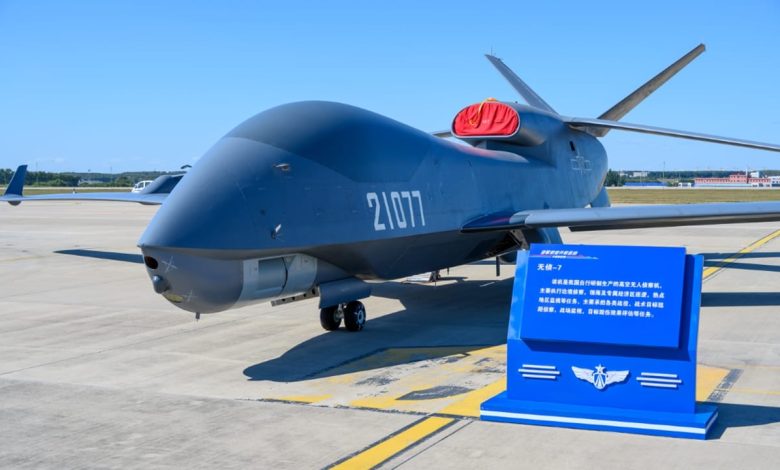
The WZ-7, also known as the Xianglong, or “Soaring Dragon,” is a Chinese-developed strategic reconnaissance drone designed to fly at high altitudes for extended periods. China National Radio says the aircraft is 14 meters long, has a wingspan of 22.8 meters and can carry synthetic aperture radar, high-resolution digital cameras, infrared thermal imaging equipment and electronic reconnaissance systems.
Zhang said the drone can operate at an altitude of about 20 kilometers and is designed for surveillance in different weather and lighting conditions. He said it can remain airborne for about 10 to 12 hours and cruise at around 800 kilometers per hour, allowing it to monitor the Miyako Strait, the East China Sea and the western Pacific for extended periods.
Zhang said the two flights on the same day may have been intended to maintain continuous maritime surveillance. He described such operations as consistent with the drone’s normal operating characteristics. Its optical and infrared sensors, combined with synthetic aperture radar, can capture high-resolution images during the day, detect heat sources at night and collect radar images in cloudy, rainy or low-light conditions, he said.
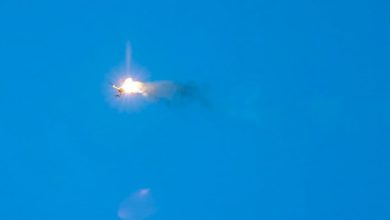
Japan’s published photographs showed the underside of the WZ-7. Zhang said this suggested that the drone was flying higher than the Japanese fighter jets. He said Japan may have deployed F-15 fighters, which generally cruise at altitudes of around 12 to 14 kilometers when carrying weapons and external fuel tanks—below the drone’s estimated operating altitude.
On October 25, China Central Television also aired footage of another WZ-7 taken from below by Japan. Military commentator Du Wenlong said the images suggested a considerable altitude gap between the drone and the aircraft filming it.
Zhang stressed that the WZ-7 is a reconnaissance and surveillance platform, not an attack aircraft. He said its flights over international waters or areas open to international navigation and flight in the East China Sea and western Pacific were normal and consistent with international law and practice. He added that US and Japanese high-altitude reconnaissance aircraft had also conducted surveillance flights in the area for years.
On October 14, the Chinese People’s Liberation Army Navy said the aircraft carrier Liaoning and its accompanying group had departed for routine training in the western Pacific. The navy said the exercise was part of its annual training plan, intended to improve combat readiness and mission capabilities, and was not directed at any specific country or target.