Political Freedom Is Incomplete Without Economic Independence: Prachanda

Dragon Media News Desk
Nepali Communist Party Coordinator and parliament member Pushpa Kamal Dahal “Prachanda” said a country’s political freedom cannot be complete unless it is free to set its own economic policies and development priorities. He described debt dependence, economic sanctions, monopolies over technology and control of strategic supply chains as emerging forms of neocolonial influence, and called for economic democracy, technological sovereignty and national control over natural resources.
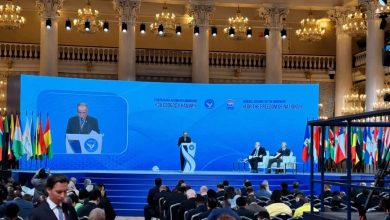
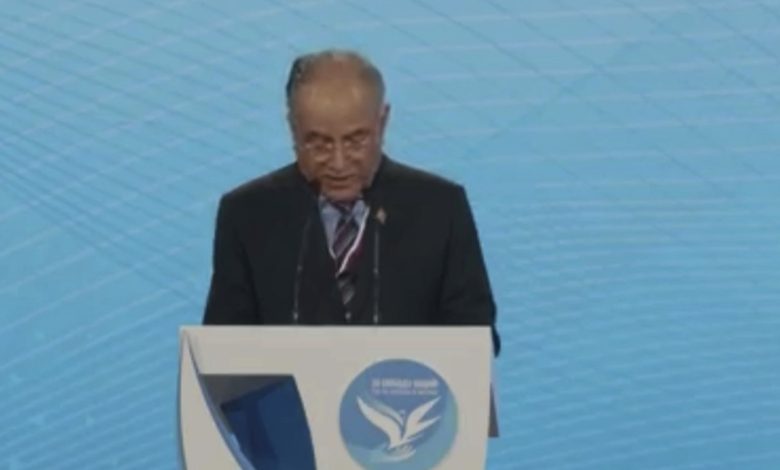
Prachanda made the remarks while addressing the General Assembly of the international movement “For the Freedom of Nations!” in Moscow on November 16. The event, organized by Russia’s ruling United Russia party, was held at the Hall of Columns in the House of Unions. Organizers said 480 representatives from 76 countries, including China, India, the United States, countries in Africa and Europe, attended. Dmitry Medvedev, chairman of United Russia and deputy chairman of Russia’s Security Council, delivered the main report, while President Vladimir Putin sent a written address.
Prachanda said world politics had reached a sensitive juncture amid geopolitical rivalry, trade wars, military tensions, widening economic inequality and environmental challenges. He argued that the concentration of global power in a small number of countries makes it harder for weaker and developing nations to exercise sovereignty and make independent decisions. All nations, he said, should have an equal right to determine their future without external interference. He called for a just and democratic multipolar order based on sovereign equality, mutual respect and peaceful coexistence, adding that multipolarity should not replace one hegemonic structure with another.
Developing countries should reduce their reliance on a limited number of external financial centres by expanding trade, investment and infrastructure partnerships, Prachanda said. He called for more democratic and accountable global financial institutions, greater use of local currencies in trade to reduce economic risks, and the development of alternative financial systems. Countries of the Global South, he said, should not remain confined to supplying raw materials; they should build production capacity through industrialisation, scientific research and digital modernisation.
Prachanda said the principles of the United Nations should not be applied selectively by powerful countries and that international law should apply equally to all. He called for a more democratic and effective United Nations and reform of the Security Council. He also urged an immediate end to wars and called for disputes to be resolved through dialogue and diplomacy.
Reflecting on Nepal’s political transition and peace process, Prachanda said historic democratic movements and the peace process had transformed the country into a federal democratic republic. These changes had widened political participation for workers, farmers, women, Indigenous Peoples and marginalised communities, he said, while economic equality, social justice and national independence remained unfinished goals. He said the Nepali Communist Party was committed to Marxism-Leninism and “socialism with Nepali characteristics,” and called for communist, socialist, anti-imperialist and progressive forces to unite around shared principles.
On Nepal’s foreign policy, Prachanda said the country, situated between India and China, remained committed to an independent and non-aligned approach. “Our geography should be a bridge for cooperation and shared prosperity, not a theatre for geopolitical rivalry,” he said. Nepal would continue to prioritise its national interests and independent decision-making, he added. Prachanda also praised Nepal’s longstanding friendship with Russia and called for stronger cooperation in education, science, trade, tourism and culture.
At the close of his address, Prachanda said no country should become so powerful that it could not respect another, and no nation should be denied its right to development. He expressed solidarity with communities striving for freedom, peace and social justice.