After Shenzhen, Why China’s Case for an Open Asia-Pacific Deserves Support

Pu Yu Hai
Does a small exporter have to file the same information twice to ship goods to a neighbouring market? Can customs officials verify a shipment’s certificate before it arrives? How much does it cost to make a cross-border payment? The answers tell us how far economic integration has come. At the 33rd Asia-Pacific Economic Cooperation (APEC) Economic Leaders’ Meeting in Shenzhen on November 19, China put forward an agenda that speaks directly to these concerns. Its strength lies in treating trade, connectivity, innovation and inclusive development as parts of the same economic task.
That practical focus also explains Shenzhen’s political significance. APEC’s 21 member economies differ in size, level of development and strategic priorities. Yet they agreed on an agenda for further cooperation. As host, China sought to translate the Putrajaya Vision 2040, which calls for an open, dynamic and resilient Asia-Pacific community, into work that member economies can carry out. In a forum built on voluntary participation and consensus, leadership depends on developing proposals that others see a reason to adopt. That is the role China played in Shenzhen.
Keeping Trade Open in Practice
A component made in one Asia-Pacific economy may be assembled in another and sold as part of a finished product in a third. When a shipment is held at the border, the cost can ripple through factory schedules, exporters’ cash flow and consumer prices. President Xi Jinping’s call to improve coordination among existing regional trade arrangements and deepen policy discussions on a Free Trade Area of the Asia-Pacific addresses that problem. Members can make progress on customs documents, certification and trade procedures while discussions on broader arrangements continue.
The gains matter especially to small businesses. A large company can assign separate legal and technical teams to different markets. For a small producer, repeat certification or a few days of uncertainty at customs can determine whether exporting is worthwhile. Allowing authorities to exchange and accept electronic certificates securely, and to check documents before goods arrive, could make it easier for first-time exporters to enter regional markets. That is the strongest economic case for China’s emphasis on trade digitalisation.
Connecting Markets and Putting Technology to Work
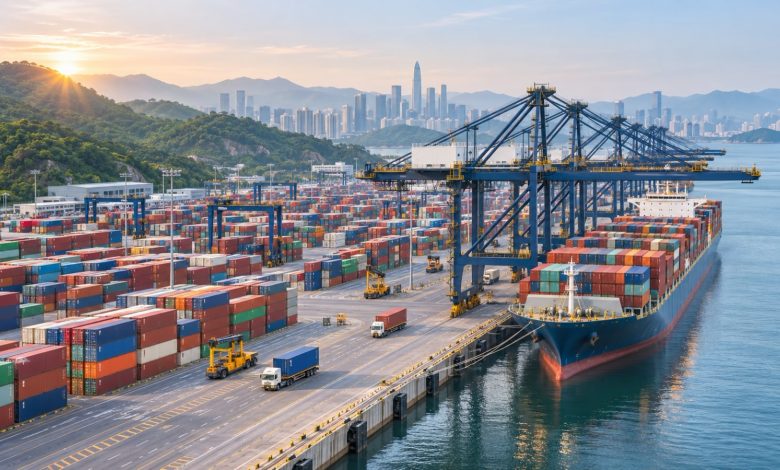
Xi’s approach to connectivity encompasses infrastructure, regulation and the movement of people. A larger port delivers its full value when goods can reach their destination at a predictable cost and within a predictable time. That takes coordination among freight networks, customs systems and commercial rules. Making business travel and tourism easier serves the same purpose. China’s large market and experience in infrastructure and manufacturing give it practical resources to contribute. Common standards and transparent procedures would help other economies use those resources in ways that suit their own priorities.
On innovation, China’s proposal connects technology to production and employment. Artificial intelligence can help small manufacturers forecast demand, check product quality and plan shipments. Wider adoption depends on reliable digital infrastructure, worker training and clear rules for sharing data across borders. Businesses are more likely to adopt new systems when they can protect personal and commercially sensitive information. China’s plans for cooperation on digital technology, cross-border data flows and the development of small and medium-sized enterprises offer a way to develop practices that members can use across markets.
Who Benefits From Regional Growth?
Making development the fourth pillar broadens the Shenzhen agenda. Xi proposed cooperation on energy and food security, vocational skills, employment, women’s economic participation and exchanges for young professionals. Sustaining public support for open trade requires attention to who benefits. As manufacturers raise output with new technology, workers need opportunities to acquire new skills. As digital markets expand, small businesses need payment and delivery services they can afford. By addressing these questions alongside trade and technology, China has made a stronger case for keeping regional markets open.
China pledged US$20 million for practical APEC cooperation. It also announced plans for a Centre for Asia-Pacific Community Studies in Shenzhen and for institutions to support cooperation in areas including clean energy and small business development. The value of the funding will be evident in what the projects achieve. A group of economies could, for example, pilot mutual recognition of electronic certificates and measure how much time and money exporters save. If the pilot works, other members could adapt it to their own systems. That is how a pledge made at a summit can produce a result that businesses can see.
China’s Shenzhen agenda deserves support because it gives economies with different priorities a way to remove shared barriers while retaining control over their own policies. Its success should be visible in shorter waits at customs, new markets for small businesses and better opportunities for workers as industries adopt new technologies. If China’s commitments and implementation by member economies deliver those gains, Shenzhen can help keep regional openness a source of Asia-Pacific growth well into the next decade.